To lower androgens naturally, work on the root cause behind high testosterone in most reproductive-age women: insulin resistance. When insulin runs high, it does two things at once — it signals the ovaries to make more testosterone, and it lowers a carrier protein called SHBG, so more testosterone floats around in its active, "free" form. Improving insulin sensitivity is therefore the single most effective natural lever, and it's the one most "hormone balance" content skips. Below, every popular approach is graded honestly: what has real evidence, what's modest, and what's marketing.
What are androgens, and why do they rise?
Androgens are a family of hormones — testosterone, androstenedione, and DHEA-S are the main ones — that everyone makes, including women. They're normal and necessary. Trouble starts when they run high, because androgens drive the hair follicle: too much can mean coarse hair where you'd rather not have it, oily skin and acne, and paradoxically thinning at the scalp. These aren't three separate problems. Hirsutism, PCOS acne, and androgen-pattern hair loss are the same excess showing up in different follicles.
In women, androgens come from two places: the ovaries and the adrenal glands, with fat tissue and the liver fine-tuning how much stays active. In reproductive-age women, the most common reason they rise is polycystic ovary syndrome (PCOS) — the leading cause of androgen excess and irregular cycles. Thyroid problems, high prolactin, some medications, and rarer conditions can also raise androgens, which is why testing matters before you assume the cause. If you want to see where your own numbers sit, our guide to normal testosterone levels in women explains the reference ranges; think of any lab result as a reference for a conversation, not a self-diagnosis.
The insulin connection: the real lever most articles skip
Here's the mechanism worth understanding, because it turns a vague goal ("balance my hormones") into a concrete one. Many women with PCOS have insulin resistance — their cells respond poorly to insulin, so the pancreas pumps out more of it. There's no single perfect test for insulin resistance, so clinicians read the whole pattern — labs, symptoms, and history together — rather than one definitive number. That chronically high insulin does two specific things:
- It tells the ovaries to make more testosterone. Insulin acts directly on the ovary's theca cells, amplifying androgen production alongside luteinizing hormone (LH).
- It lowers SHBG. Sex hormone–binding globulin is the protein that mops up testosterone and keeps it inactive. High insulin tells the liver to make less of it — so even if your total testosterone looks only mildly high, your free (active) testosterone can be substantially higher.
This creates a self-reinforcing loop: insulin resistance raises androgens, and androgens worsen how the body stores fat and handles insulin. The practical upside is that the loop runs in reverse too. Lower insulin resistance, and free androgens fall. That's why the strongest natural strategies below aren't about the hormones directly — they're about insulin. Our deep dive on PCOS and insulin resistance covers the biology in full.
How to lower androgens naturally — graded honestly
Not all "natural" approaches are equal, and pretending they are does readers a disservice. Here's each one weighed against actual evidence.
| Approach | Evidence grade | What it actually does |
|---|---|---|
| Resistance/strength training | Strong-ish | Improves insulin sensitivity and builds muscle that clears glucose — the most reliable lever on the insulin→androgen loop. |
| Higher protein & fibre, lower refined carbs | Moderate | Blunts insulin spikes and supports satiety; reduces the insulin drive on the ovary over time. |
| Modest weight loss (only if relevant) | Moderate–strong | Even 5–10% loss can raise SHBG and lower free testosterone. Not required for everyone, and not the whole story — lean women get PCOS too. |
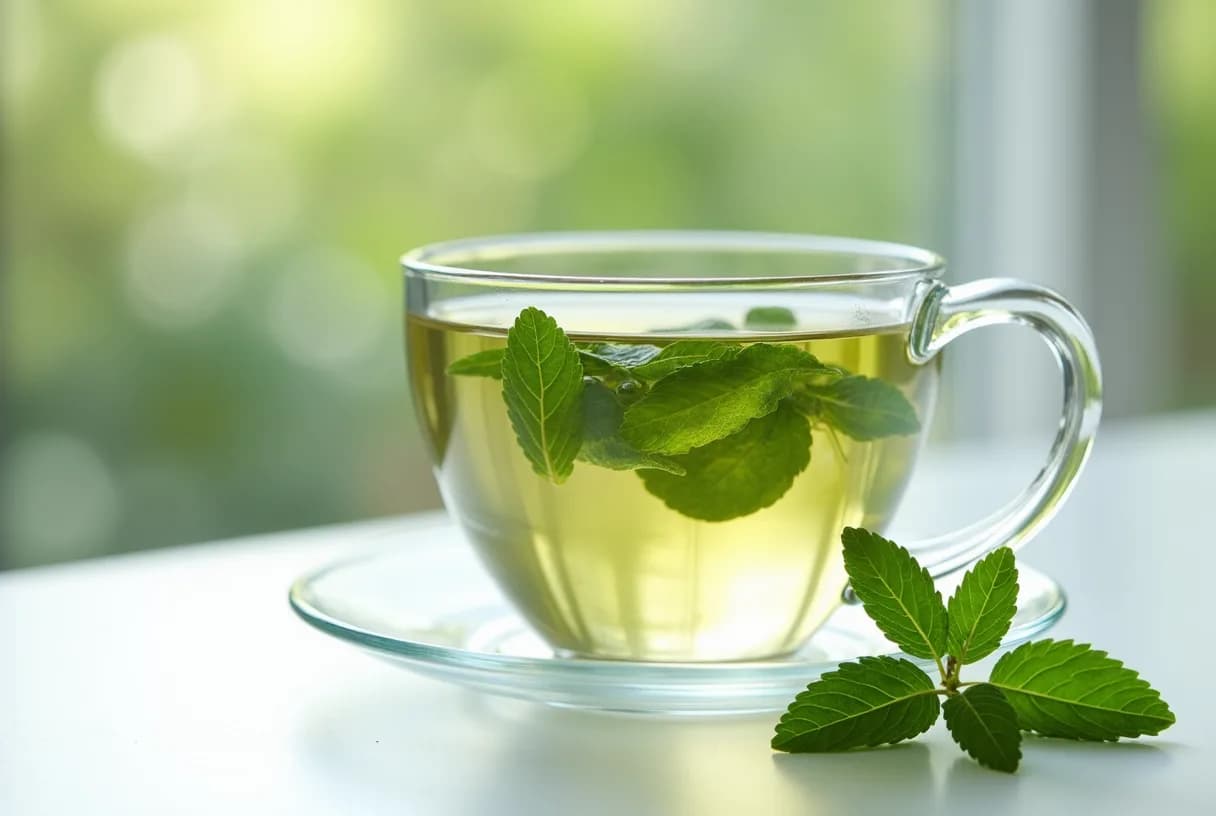
| Spearmint tea | Modest (randomized) | Two small RCTs found two cups daily significantly lowered free testosterone over 30 days. Real signal; visible hair change takes months. |
| Inositol (myo-inositol) | Modest–reasonable | Improves insulin sensitivity and cycle regularity in PCOS; guideline bodies call the evidence promising but not definitive. |
| Stress management & sleep | Uncertain | Plausible via adrenal androgens and insulin, but direct evidence on lowering androgens is thin. Worth doing for other reasons. |
| DIM, "detox," "hormone balance" blends | Weak / marketing | Little to no quality evidence for lowering androgens or treating PCOS symptoms. Money better spent elsewhere. |
The real lever: train your muscles and feed them
If you do one thing, make it resistance training. Muscle is your largest site for clearing glucose, and building it improves insulin sensitivity independent of weight loss. Pair it with enough protein and fibre so blood sugar rises gently rather than spiking. This isn't about a punishing regimen or a number on the scale — it's about giving insulin less reason to stay high. Our guides to strength training for women and exercise for PCOS show how to start. Weight is worth naming plainly here: PCOS makes weight harder to lose, weight isn't a character flaw, and lean women have PCOS too — so weight loss is one tool where relevant, not a prerequisite or a verdict on you.
Where a "natural" remedy earns real credit: spearmint tea
Spearmint deserves the credit hype usually steals. Two small randomized controlled trials found that drinking two cups of spearmint tea daily significantly lowered free testosterone in women with PCOS-related hirsutism, compared with placebo. The trials were small and short, and hormone changes on paper come faster than visible changes on your face, because hair follicles cycle slowly — expect several months, not weeks. But it's a genuine, cheap, low-risk option with actual randomized data behind it, which sets it apart from most of the tea aisle.
Inositol: reasonable evidence, honest caveats
Inositol (usually myo-inositol) works on the same insulin pathway as the lifestyle changes above, which is why it has a foothold in PCOS care. Meta-analyses used to inform international PCOS guidelines found it can improve insulin measures and cycle regularity, with an effect roughly comparable to metformin in some studies — though guideline authors are careful to call the overall evidence promising rather than settled, and quality varies. It's reasonable to try, ideally as a conversation with your clinician rather than a solo experiment. See inositol for PCOS for forms, and check any supplement against your other medications with our interaction checker.
Where the hype outruns the evidence: DIM and "detox"
DIM (diindolylmethane), "hormone balance" blends, and cortisol "detox" formulas dominate PCOS marketing and underdeliver on evidence. DIM is a compound from cruciferous vegetables that shifts estrogen metabolism — not a demonstrated androgen-lowering treatment — and quality trials in PCOS are essentially absent. We wrote an honest breakdown of the DIM supplement claims. The broader lesson: a supplement that promises to "balance" everything usually has data on nothing. Before buying, run the label through our supplement scorecard.
When "natural" isn't enough: what a clinician can add
Natural strategies are real, but they're often partial — and for moderate-to-severe symptoms, medication is legitimate and frequently the faster, more effective route. These are prescriber decisions, described here as reference, not a recommendation or a dose:
- Combined oral contraceptives (the pill). Combined estrogen-progestin pills raise SHBG, which lowers free testosterone, and they steady the cycle. They're a common first-line choice for hirsutism and acne when pregnancy isn't the goal. Which one, and whether it fits your risk profile, is a clinical conversation — see birth control options for PCOS.
- Spironolactone. This medication blocks androgen effects at the follicle rather than lowering the hormone itself, so it's used for hirsutism and androgenic hair changes, often alongside the pill. It's not for use in pregnancy. Details in our reference on spironolactone for women and the spironolactone drug page.
- Metformin. An insulin-sensitizing medication sometimes used in PCOS, especially where metabolic markers are off; its effect on hirsutism is modest. Reference: metformin.
None of these is a moral failure or "giving up on natural." They target the same biology from a different angle, and combining lifestyle change with medication often works better than either alone. For a fuller map, see PCOS treatment options and how androgens surface on the skin in PCOS acne.
When to see a doctor
Most androgen excess builds slowly and is manageable. Some patterns, though, warrant prompt evaluation rather than another supplement:
- Rapid-onset or severe hair growth, or signs of virilization — a deepening voice, balding at the temples, or clitoral enlargement. Fast, marked changes can point to an androgen-producing tumor or Cushing's syndrome and need urgent assessment.
- New symptoms after age 40, or that appear suddenly rather than gradually.
- Very high testosterone on labs, well above the typical PCOS range.
- Symptoms plus heavy or irregular bleeding, missed periods, or trouble conceiving — worth a workup, not just symptom control.
- Unexplained changes you can't account for. Getting tested beats guessing. Don't start iron, a "hormone" supplement, or anything on spec because a symptom seems to fit — ask for the relevant labs first, and use our lab results explainer to prepare questions.
A good starting point if you suspect PCOS is our PCOS symptom check, then a clinician who can order the right tests. You deserve an actual diagnosis and a plan — not a shelf of "balance" powders.