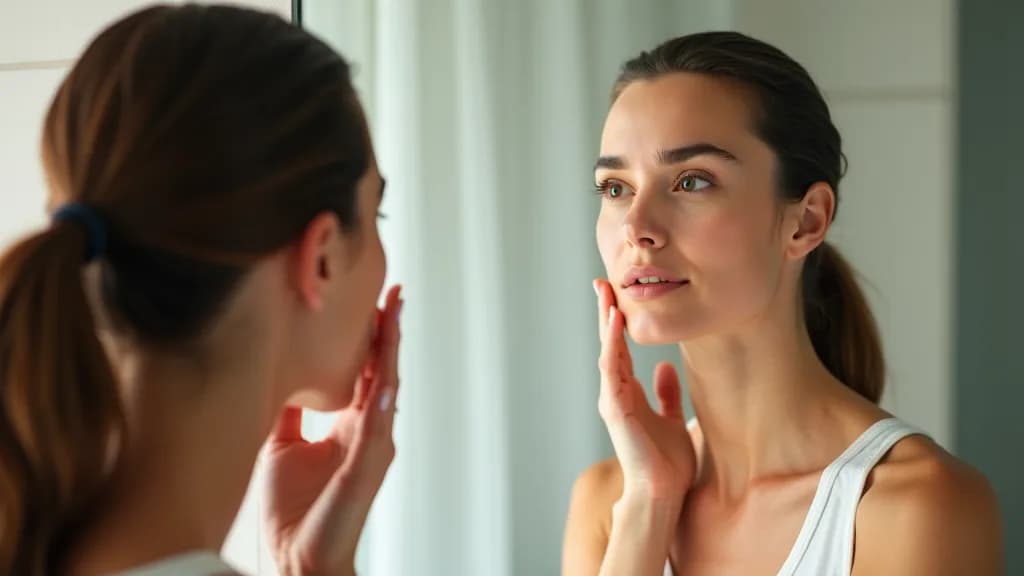
If your breakouts sit low on your face — along the jawline, chin, and neck — flare before your period, and shrug off the cleansers and spot creams that once worked, they may be hormonal. In polycystic ovary syndrome (PCOS), acne is a visible sign of excess androgens, and it usually responds best to treatments that address that hormonal root rather than surface bacteria alone. Here is how PCOS acne works, how to recognize it, and the evidence-based options worth discussing with a clinician.
Why PCOS causes acne
PCOS is one of the most common hormone disorders in women of reproductive age, and higher-than-typical levels of androgens — hormones such as testosterone that everyone makes in small amounts — are a core feature. Androgens act directly on the skin. They enlarge the oil (sebaceous) glands, increase sebum production, and encourage the cells lining your pores to stick together and clog. That combination of oilier skin and blocked pores creates the environment where inflammation and acne take hold.
Many women with PCOS also have insulin resistance, in which the body needs more insulin to keep blood sugar normal. Higher insulin can nudge the ovaries to make still more androgens and lowers a protein called sex hormone-binding globulin that normally keeps testosterone in check — leaving more free, active androgen circulating. This is why PCOS acne, unwanted hair growth (hirsutism), and scalp hair thinning often travel together: they share the same androgen driver.
How PCOS acne differs from ordinary acne
Most acne, including the teenage kind, is also influenced by hormones — but PCOS acne tends to have a recognizable pattern. Knowing it helps you and your clinician decide whether a hormonal workup makes sense.
| Feature | PCOS / hormonal acne | Common acne |
|---|---|---|
| Location | Lower face, jawline, chin, neck; sometimes chest and back | Forehead, nose, cheeks (T-zone), often more widespread |
| Type of lesion | Deep, tender, cyst-like bumps that are slow to surface | Blackheads, whiteheads, smaller surface pimples |
| Timing | Flares before periods; persistent into the 20s, 30s, and beyond | Often peaks in teens; less tied to the cycle |
| Other clues | May come with irregular periods, extra facial/body hair, hair thinning | Usually occurs on its own |
| Response to spot creams | Often stubborn; responds better to hormone-directed treatment | Frequently improves with standard topical care |
No single feature is diagnostic. Plenty of women without PCOS get jawline breakouts, and some with PCOS have mild skin. But adult-onset or persistent acne concentrated on the lower face — especially alongside irregular cycles or excess hair growth — is worth investigating.
When to see a doctor
Consider a medical review if your acne is deep and scarring, is not improving with over-the-counter care, comes with signs of excess androgens such as irregular periods or increasing facial hair, or is affecting your confidence and mood. A clinician can check whether PCOS or another hormonal cause is present — diagnosis usually involves a symptom history, sometimes blood tests, and ruling out other conditions. Early treatment matters because inflammatory acne can leave permanent scarring, which is far harder to treat than active breakouts.
Evidence-based treatment options
PCOS acne is treatable, but it rarely clears overnight — most approaches take two to three months to show their full effect, and hormonal treatments longer still. The most effective plans usually combine a skin-directed topical with a treatment that addresses the underlying androgens. Everything prescription-based below is a conversation to have with a doctor, not something to self-source, because each carries real cautions.
Topical treatments (often the first step)
Topical retinoids — vitamin A-derived gels and creams — are a mainstay of acne care. They keep pores from clogging and reduce inflammation, and they help fade the dark marks acne leaves behind. Some strengths are available over the counter; stronger ones need a prescription. They can cause dryness and irritation at first and increase sun sensitivity, so introduce them slowly and use sunscreen. Retinoids are generally avoided in pregnancy. Benzoyl peroxide and topical antibiotics target acne-causing bacteria and inflammation and are often paired with a retinoid. These can help any acne, including hormonal, but on their own they may not be enough when androgens are the driver.
Combined hormonal contraception ("the pill")
Combined estrogen-progestin birth control is one of the best-studied treatments for hormonal acne. It lowers ovarian androgen production and raises the protein that binds free testosterone, so less active androgen reaches the skin. For many women it also helps regulate periods — a common PCOS goal. It is not right for everyone: it is not suitable during pregnancy, and it carries cautions around blood clot risk, so a clinician will weigh your personal and family history, blood pressure, smoking status, and migraine history before prescribing. Expect gradual improvement over several months.
Anti-androgen medication (spironolactone)
Spironolactone is a prescription medicine that blocks androgen activity at the skin and is widely used for hormonal acne and unwanted hair growth in women, often alongside the pill. Because it affects hormones and can raise potassium levels, it is doctor-managed and sometimes monitored with blood tests. It is not used in pregnancy, so clinicians typically pair it with reliable contraception. It is a genuinely useful option for the stubborn jawline acne of PCOS — but one to explore in a consultation, with dosing and monitoring individualized to you.
Isotretinoin (for severe or scarring acne)
For severe, nodular, or scarring acne that has not responded to other treatments, dermatologists may consider isotretinoin, a powerful oral retinoid that can produce long-lasting clearance. It is tightly regulated for one overriding reason: it causes serious birth defects. Anyone who can become pregnant must use strict pregnancy prevention and regular testing throughout treatment, under close specialist supervision. Isotretinoin also requires monitoring for other side effects. This is strictly a dermatologist-led decision — never a medication to obtain or take informally.
Metformin's indirect role
Metformin is a prescription medicine that improves how the body responds to insulin. It is sometimes used in PCOS to help with insulin resistance, menstrual regularity, and metabolic health. Its effect on acne is indirect and modest at best: by improving insulin sensitivity it may slightly lower androgens over time, but it is not a dedicated acne treatment and should not be expected to clear skin on its own. Whether it fits your picture is, again, a clinician conversation.
Diet, insulin, and lifestyle: what the evidence supports
Because insulin resistance can amplify androgens, it is plausible that steadying blood sugar helps skin — and many women report improvement — but the direct evidence linking specific diets to acne is limited and mixed. Honest framing matters here: eating patterns are supportive, not a cure, and no food is a substitute for treating significant acne medically.
- Build meals around fiber, protein, and whole foods. Pairing carbohydrates with protein, healthy fats, and vegetables blunts blood-sugar spikes. This aligns with general PCOS and heart-health advice even if its acne-specific effect is modest.
- Go easy on high-glycemic foods. Sugary drinks and refined carbohydrates cause sharp insulin rises; some studies link high-glycemic diets to more acne, though results are not uniform.
- Consider dairy cautiously. Some research associates certain dairy — particularly skim milk — with acne, but the evidence is weak and individual. If you suspect a trigger, adjust and observe rather than cutting out food groups wholesale.
- Move regularly and support sleep and stress. Physical activity improves insulin sensitivity, and even modest weight loss (where appropriate) can lower androgens in women with PCOS.
Be wary of supplements and "hormone-balancing" products marketed as PCOS acne cures. Many are sold on the strength of testimonials rather than trials. If you want to try one, discuss it with your clinician first — some interact with medications.
A realistic skincare routine
Good daily habits will not out-muscle strong androgens, but they protect your skin and support your treatment. Keep it gentle: cleanse twice daily with a mild non-stripping cleanser, use a non-comedogenic ("won't clog pores") moisturizer, and apply sunscreen daily — especially while using retinoids, which increase sun sensitivity. Resist picking or squeezing, which worsens inflammation and scarring. Introduce active ingredients one at a time so you can tell what helps and what irritates.
The bottom line
PCOS acne is hormonal at its root, which is why it clusters on the jawline and lower face and resists ordinary spot treatments — and also why it is so treatable once the androgen driver is addressed. The strongest results usually come from combining a topical retinoid with a hormone-directed option such as combined contraception or an anti-androgen, chosen with a clinician who can weigh the real contraindications. If your acne is deep, persistent, or scarring, book that appointment; the sooner hormonal acne is treated, the more skin — and confidence — you protect. For the wider picture, see our guides to PCOS treatment options and eating well with PCOS.
Related: For the supplement side of managing PCOS, see Best Supplements for PCOS.
Related: Because certain pills curb the excess androgens that drive breakouts, many women clear their skin with the right prescription — see Birth Control for PCOS: Options, Benefits, and Risks to weigh your choices.