If you've searched for the "best diet for PCOS," you've probably found a dozen confident, contradictory answers. Here's the honest version: there is no single magic PCOS diet, but the way you eat genuinely can help your symptoms — and the patterns with the best evidence are also the most livable.
The honest headline: no single magic PCOS diet
Polycystic ovary syndrome (PCOS) is a common, lifelong hormonal and metabolic condition. No specific food, plan, or supplement cures it — and any program that promises to "reverse" or "cure" PCOS is overselling. What the research does support is gentler and more useful: a balanced, sustainable eating pattern that improves insulin sensitivity tends to ease symptoms for many women. The single best diet for PCOS is, in practice, the healthy pattern you can actually keep up.
That matters because many women with PCOS have insulin resistance, where the body makes more insulin to keep blood sugar steady. Higher insulin can nudge the ovaries to produce more androgens, contributing to irregular periods, acne, and unwanted hair growth. Calming that insulin signal — through food, movement, and sometimes medication — is the thread that ties the helpful approaches together.
Eating patterns with the best evidence
Two overlapping approaches stand out, and you don't have to choose just one.
Lower-glycaemic-index eating
The glycaemic index (GI) ranks carbohydrate foods by how quickly they raise blood sugar. Favouring lower-GI choices — think whole grains, legumes, and most vegetables over white bread, sugary drinks, and ultra-processed snacks — leads to gentler blood-sugar and insulin swings. For women with PCOS, lower-GI patterns have been linked with better insulin sensitivity and, for some, more regular cycles. You're not banning carbs; you're choosing slower ones and pairing them with protein, fibre, and healthy fat.
A Mediterranean-style diet
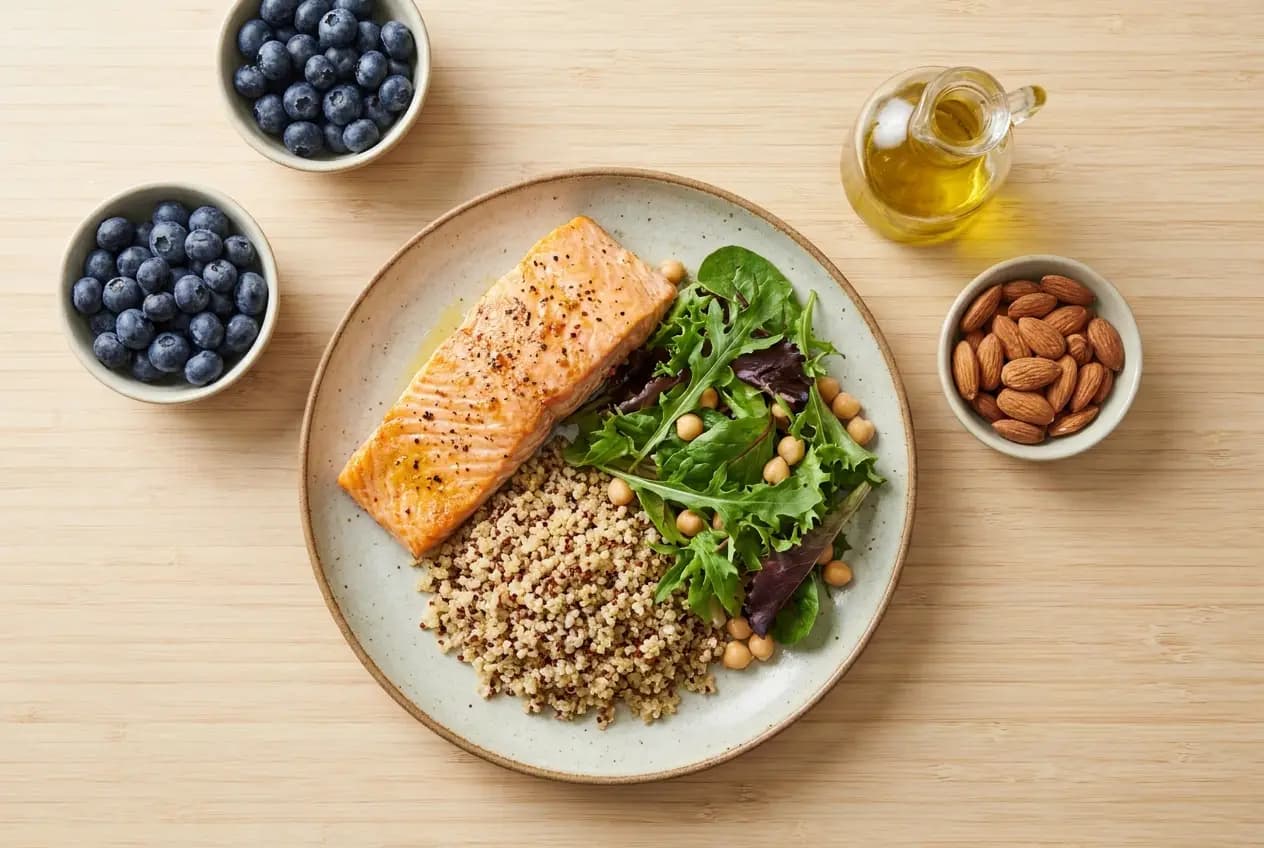
A Mediterranean-style way of eating overlaps heavily with lower-GI principles and is one of the best-studied patterns for metabolic and heart health. It emphasises vegetables, fruit, whole grains, legumes, nuts, fish, and olive oil, with less red and processed meat. Because PCOS can raise long-term cardiometabolic risk, this anti-inflammatory, heart-friendly pattern is a sensible default — and it's the same foundation we recommend in our guide to the best diet for menopause, since the metabolic goals overlap.
Foods to favour and foods to limit
You don't need a rigid list of "good" and "bad" foods. Think of it as a balance you tip in a helpful direction most of the time.
| Favour (most meals) | Limit (smaller amounts, less often) |
|---|---|
| Non-starchy vegetables — leafy greens, broccoli, peppers, tomatoes | Sugary drinks, including soda and sweetened juices |
| Whole grains — oats, brown rice, quinoa, wholegrain bread | Refined carbs — white bread, pastries, many breakfast cereals |
| Legumes — beans, lentils, chickpeas | Heavily processed and packaged snack foods |
| Lean protein — fish, poultry, eggs, tofu | Processed and large amounts of red meat |
| Healthy fats — olive oil, nuts, seeds, avocado | Fried foods and trans fats |
| Whole fruit — berries, apples, pears (fibre intact) | Frequent sweets and added sugar |
A practical tip: build plates around protein, fibre, and vegetables, then add a slow carbohydrate. This combination blunts blood-sugar spikes and tends to keep you fuller for longer.
Where modest weight loss fits — without the judgement
For women who carry extra weight, even a modest weight loss (often cited as around 5–10% of body weight) can improve insulin sensitivity and, for some, restore more regular ovulation. That's worth knowing — but it deserves important context.
- Weight loss is genuinely harder with PCOS. The same insulin resistance that drives symptoms also makes weight loss more difficult. If it has felt harder for you than for others, that is biology, not a lack of willpower.
- Lean women get PCOS too. PCOS is not a "weight problem," and you can have it at any body size. Diet quality and insulin sensitivity matter regardless of the number on the scale.
- The goal is health, not a number. Improving how you eat, sleep, and move helps your metabolism even if your weight changes slowly or not at all.
Combining a balanced diet with regular movement amplifies the benefit; our overview of the science-backed benefits of exercise covers why both resistance training and aerobic activity help with insulin sensitivity.
Supplements: what's promising and what's hype
Walk down any "PCOS supplement" aisle and the claims get loud fast. Here's an honest read of the evidence.
Inositol (myo-inositol) has the most credible support. Several randomized trials suggest myo-inositol — sometimes combined with D-chiro-inositol — may improve insulin sensitivity and some hormonal and menstrual measures in PCOS, and it's generally well tolerated. That's encouraging, but it is not a cure, the research is still maturing, and quality varies between products. Talk to a clinician before starting it.
Most other heavily marketed "PCOS supplements" are unproven for this condition. Vitamin D may be worth checking and correcting if you're deficient, but routine megadoses and proprietary "hormone-balancing" blends are not backed by strong evidence. As with our take on the best supplements for menopause, the rule holds: be skeptical of cure claims, check for real evidence, and don't let a supplement replace a clinician's plan.
Fad diets and "cure" claims to skip
Extreme PCOS diets tend to share the same red flags — they're restrictive, hard to sustain, and promise more than any food can deliver. Approach these with caution:
- "This diet cures PCOS." Nothing does. PCOS is manageable, not curable.
- Total carb elimination. Very-low-carb plans help some people short-term, but cutting whole grains, legumes, and fruit isn't necessary and is hard to maintain. Carb quality matters more than zero carbs.
- "Detoxes," cleanses, and single-food rules. These don't fix insulin resistance and can fuel disordered eating.
- One-size-fits-all rigid plans. What helps your cycle, energy, and labs is personal.
If a plan makes food stressful or feels impossible to live with, it's the wrong plan — even if it's popular online.
How diet fits the bigger PCOS picture
Diet is one lever among several. It works alongside the symptoms you may be tracking — see our guide to PCOS symptoms — and any treatments a clinician recommends, which can include combined birth control, metformin, anti-androgens, or fertility medications depending on your goals (more in our overview of PCOS treatment). Encouragingly, most women with PCOS who want to conceive can do so, often with lifestyle changes and, when needed, fertility help. Because PCOS raises long-term risk of conditions like type 2 diabetes, the eating patterns above do double duty: easing day-to-day symptoms while supporting long-term health. PCOS also doesn't end at midlife — our piece on PCOS and menopause explains what shifts as you reach the menopause transition.
When to see your doctor
Food is powerful, but it isn't a diagnosis or a treatment plan. Speak with a clinician or registered dietitian for individualised advice — especially before making big dietary changes, starting supplements like inositol, or if you're trying to conceive. PCOS is diagnosed using the Rotterdam criteria (any two of: irregular or absent ovulation, signs of high androgens, or polycystic ovaries seen on ultrasound — or, in adults, a raised anti-Müllerian hormone level) and only after other causes are ruled out. An ultrasound is not always needed — for example, when irregular cycles and high androgens are both already present — so a proper clinical evaluation matters more than any single test.
Reach out promptly if you have:
- Very irregular, absent, or unusually heavy periods, or trouble conceiving after several months of trying.
- Rapidly worsening acne, hair loss, or excess hair growth.
- Symptoms of high blood sugar — excessive thirst, frequent urination, or unexplained fatigue.
- Signs of disordered eating, or distress around food and weight.
No diet cures PCOS — but with the right pattern for you and good clinical support, it can become genuinely more manageable.