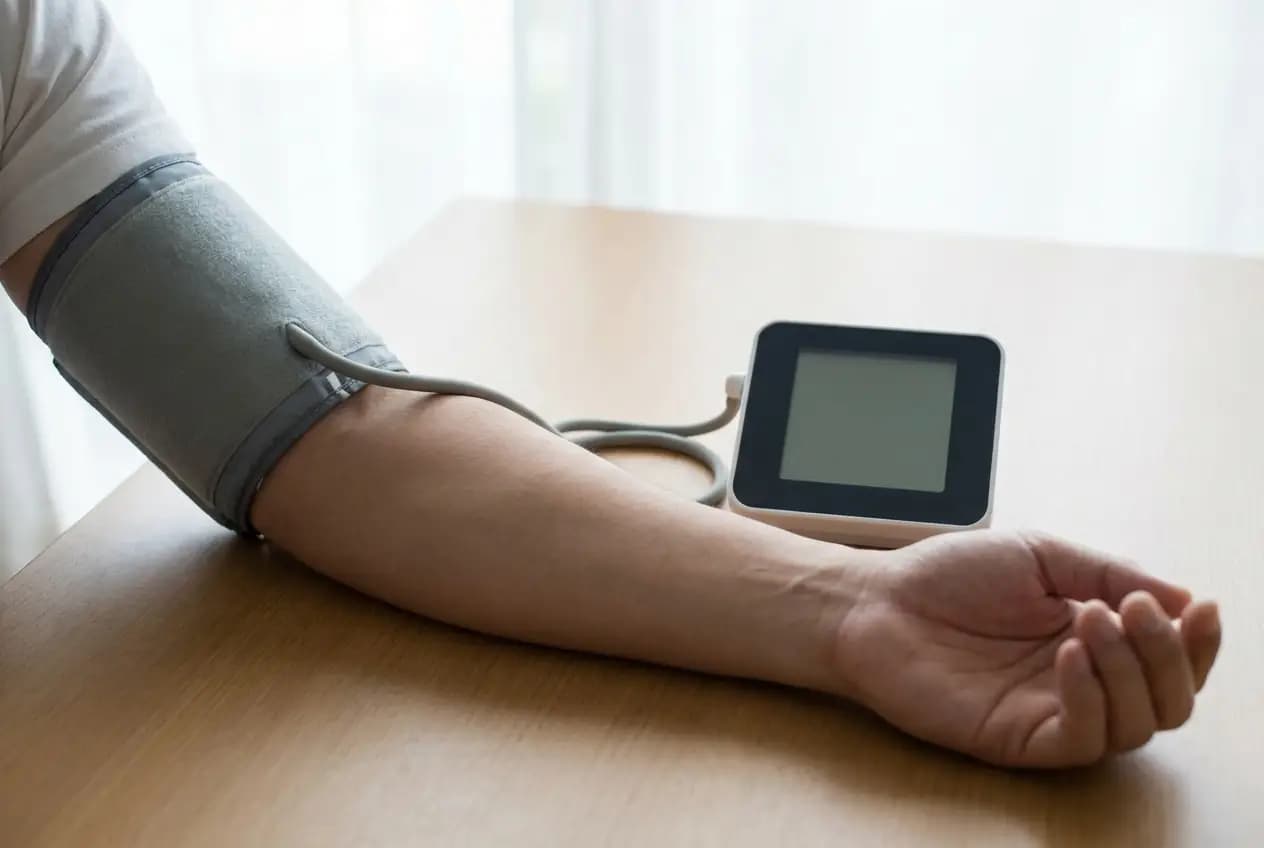
What is high blood pressure?
Blood pressure is the force of blood pushing against the walls of your arteries, written as two numbers: systolic (the higher number, when the heart beats) over diastolic (the lower number, between beats), measured in mmHg. High blood pressure (hypertension) means that force stays elevated over time.
Common categories (US/ACC-AHA) are roughly:
- Normal: below 120/80
- Elevated: 120–129 systolic and below 80 diastolic
- Stage 1 hypertension: 130–139 systolic or 80–89 diastolic
- Stage 2 hypertension: 140/90 or higher
Thresholds differ slightly between guidelines, so your clinician interprets your numbers alongside your overall risk.
Why high blood pressure matters
Hypertension is often called the "silent killer" because it usually causes no symptoms while quietly damaging your arteries and organs. Over years, it raises the risk of heart attack, stroke, heart failure, kidney disease, and vision loss. The good news is that lowering blood pressure substantially reduces those risks — which is why finding and treating it matters even when you feel fine.
Symptoms
Most people with high blood pressure have no symptoms at all, which is why regular checks are so important. Contrary to popular belief, it doesn't reliably cause headaches, flushing, or nosebleeds — these tend to occur only with dangerously high readings. The only way to know your blood pressure is to measure it.
Causes and risk factors
For most people there's no single cause (this is called primary hypertension), and it develops gradually with a mix of factors:
- Older age and a family history of high blood pressure
- Being overweight, physical inactivity, and a diet high in salt
- Drinking too much alcohol and smoking
- High stress and, for some, too little potassium in the diet
Less often, it's caused by another condition (secondary hypertension) such as kidney disease, sleep apnea, or certain medications.
How it's diagnosed
A diagnosis isn't made on a single reading. A clinician confirms hypertension with multiple measurements on different occasions, and may use home or 24-hour (ambulatory) monitoring, since blood pressure varies and can rise from anxiety at the clinic ("white-coat" effect). Knowing your numbers — and checking regularly — is the foundation of managing it.
Treatment and management
Treatment usually combines lifestyle changes with medication when needed.
Lifestyle steps can meaningfully lower blood pressure:
- Eat a heart-healthy, lower-salt diet (the Mediterranean and DASH patterns are well supported)
- Be physically active — see the benefits of exercise
- Reach or keep a healthy weight, limit alcohol, and don't smoke
- Manage stress and get enough sleep
Medications are added when lifestyle alone isn't enough. Several effective classes exist (such as ACE inhibitors, ARBs, calcium channel blockers, and diuretics), and a clinician tailors the choice to you. Don't start or stop blood-pressure medicine without medical advice.
Can you lower it without medication?
Often, yes — especially with mildly elevated readings, lifestyle changes can lower blood pressure and sometimes avoid or reduce medication. But many people need medicine as well, and that's not a failure: the goal is a healthy blood pressure, however it's achieved. Never stop prescribed medication on your own, even if you feel well.