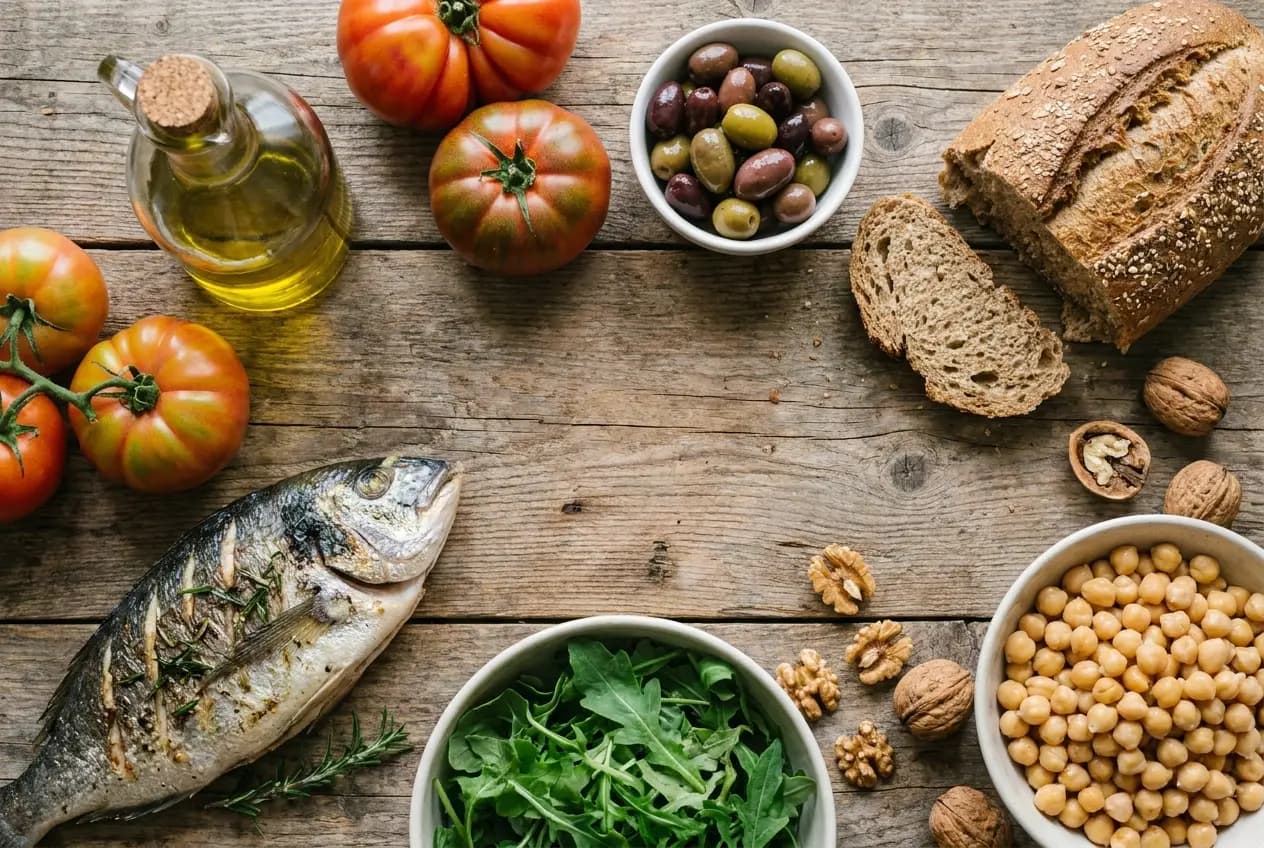
The Mediterranean diet is a way of eating modeled on the traditional foods of countries around the Mediterranean Sea: plenty of vegetables, fruit, whole grains, beans and lentils, nuts, and extra-virgin olive oil, with fish a few times a week, moderate poultry and dairy, and very little red or processed meat and added sugar. It is one of the most thoroughly studied eating patterns in the world, and it is consistently linked with a lower risk of heart disease, type 2 diabetes, and cognitive decline. You do not need to overhaul your kitchen overnight; the best way to begin is with a handful of simple swaps.
Think of it less as a diet with rules to follow and more as a template you adapt. It supports overall health rather than curing any specific disease, and if you have a medical condition or take medication, it is worth personalizing the details with your doctor or a registered dietitian.
What the Mediterranean diet actually is
There is no single "official" version, because the pattern reflects real regional cooking rather than a branded program. Still, decades of research converge on a recognizable shape. The base of the plate is plants; animal foods are seasonings and occasional centerpieces rather than the daily default; and the fat of choice is olive oil instead of butter or ultra-processed spreads.
A practical way to picture the balance:
| Frequency | Foods |
|---|---|
| Every meal | Vegetables, fruit, whole grains, olive oil, herbs and spices |
| Daily | Beans and lentils, nuts and seeds, some dairy (often yogurt or cheese) |
| Weekly | Fish and seafood (a few times), poultry, eggs |
| Occasionally | Red meat, sweets, refined grains, processed foods |
Two features do most of the heavy lifting. First, the diet is rich in fiber, unsaturated fats, and plant compounds, and low in the refined carbohydrates and processed meats that tend to crowd out better options. Second, it is genuinely sustainable for many people because it emphasizes flavor, variety, and shared meals rather than restriction.
Why the evidence is so strong
The Mediterranean diet stands out not because of one dramatic study but because so many different lines of research point the same direction. Long-running observational studies of populations, controlled feeding trials, and dietary guidelines from major health bodies all describe a similar pattern when they ask what "healthy eating" looks like in practice.
Heart and blood vessels
This is where the case is strongest. Replacing saturated fats (from butter, fatty processed meats, and many packaged snacks) with the unsaturated fats in olive oil, nuts, and fish is associated with better cholesterol profiles and lower cardiovascular risk. The American Heart Association and the U.S. Dietary Guidelines both endorse a Mediterranean-style pattern as one of their recommended templates for heart health.
Blood sugar and type 2 diabetes
Because the pattern is high in fiber and slow-digesting carbohydrates and low in sugary drinks and refined grains, it tends to blunt blood-sugar spikes and support insulin sensitivity. It is frequently recommended as one of several evidence-based patterns for people managing or trying to prevent type 2 diabetes. The Mayo Clinic summarizes this broad benefit profile well.
Brain and healthy aging
Observational research links Mediterranean-style eating with slower cognitive decline and a lower risk of some age-related brain conditions, though this evidence is more suggestive than proven. The likely mechanisms overlap with the heart benefits: healthier blood vessels, less inflammation, and steadier blood sugar all support the brain over time.
The building blocks, food by food
Vegetables and fruit
Aim to make produce the largest part of most meals. Variety and color matter more than any single "superfood." Leafy greens, tomatoes, peppers, eggplant, onions, and cruciferous vegetables like broccoli are all staples. Fruit is the default dessert.
Whole grains and legumes
Whole grains such as oats, barley, farro, brown rice, and whole-grain bread and pasta supply steady energy and fiber. Beans, lentils, and chickpeas are arguably the quiet stars of the pattern: cheap, filling, protein-rich, and endlessly flexible in soups, salads, and stews.
Olive oil, nuts, and seeds
Extra-virgin olive oil is the primary cooking and finishing fat. Nuts and seeds add crunch, protein, and healthy fat. These foods are calorie-dense, so if weight is a goal, keep portions reasonable while still using them generously enough to enjoy your food.
Fish, poultry, eggs, and dairy
Fatty fish like salmon, sardines, and mackerel provide omega-3 fats and are eaten a couple of times a week. Poultry and eggs appear in moderation. Dairy tends to be modest and often fermented, such as plain yogurt and cheese in reasonable amounts.
Herbs, spices, and what to limit
Herbs, garlic, lemon, and spices do the flavoring that salt and heavy sauces do elsewhere. Red and processed meats, sugary drinks, refined grains, and ultra-processed snacks are the foods to pull back on, not because a single serving is harmful but because they tend to displace better choices.
How to start: simple swaps
The most reliable way to adopt this pattern is to change one habit at a time until it sticks, then add the next. You are shifting proportions, not banning foods.
- Cook with olive oil instead of butter or margarine.
- Make half your plate vegetables at lunch and dinner.
- Swap refined grains for whole grains — brown rice, whole-grain bread, whole-wheat pasta.
- Have a "beans night" once or twice a week where legumes replace meat.
- Snack on nuts, fruit, or plain yogurt instead of packaged snacks.
- Add fish twice a week, even canned sardines or salmon on toast.
- Make fruit your usual dessert, keeping sweets for occasions.
A sample day
- Breakfast: plain yogurt with berries, walnuts, and a drizzle of honey; or whole-grain toast with olive oil and tomato.
- Lunch: a big salad of greens, chickpeas, cucumber, feta, and olive oil, with whole-grain bread.
- Dinner: baked salmon, roasted vegetables, and farro; fruit afterward.
- Snacks: a handful of almonds, an orange, or hummus with vegetable sticks.
Common questions and honest caveats
Is it good for weight loss?
The pattern is not designed as a weight-loss diet, but many people find they eat well and feel satisfied on it thanks to the fiber and protein. Because olive oil and nuts are calorie-dense, overall portions still matter if weight loss is your goal.
Do I have to drink wine?
No. Wine is often mentioned in descriptions of the traditional pattern, but alcohol carries its own risks and is not a health requirement. If you do not drink, there is no reason to start; the benefits come from the food.
Can I follow it on a budget or as a vegetarian?
Yes to both. Beans, lentils, whole grains, frozen vegetables, canned fish, and eggs are inexpensive and central to the pattern. Vegetarians can lean on legumes, dairy, eggs, and nuts for protein.
Is it right for a midlife woman?
The pattern's emphasis on heart health, blood-sugar stability, and anti-inflammatory foods maps well onto priorities that often become more pressing in midlife and after menopause, when cardiovascular risk rises. Adequate protein, calcium, and vitamin D matter more with age, so pay attention to dairy, legumes, and fish, and talk with a clinician about bone health.
When to personalize with a professional
This is a general wellness pattern, not a treatment. If you have diabetes, kidney disease, a swallowing or digestive condition, food allergies, or take medications such as blood thinners (which can interact with big changes in vitamin-K-rich greens), work with a registered dietitian or your doctor to tailor the details. Anyone starting a new way of eating alongside a medical condition should personalize it rather than follow a template blindly. For trustworthy background reading, the NHS and Cleveland Clinic both offer balanced overviews.
The strength of the Mediterranean diet is that it is realistic. It asks you to eat more of what is genuinely good for you and less of what is not, in a way you can keep up for years rather than weeks. Start with one swap this week, and let the pattern build from there.
Related: The Mediterranean pattern pairs whole foods with plenty of fluids, and this guide breaks down How Much Water Should You Actually Drink Per Day? for midlife women.
Related: The Mediterranean pattern is one of the most studied ways to eat for lower inflammation, so it pairs naturally with The Anti-Inflammatory Diet: What It Is and What the Evidence Says.
Related: If certain foods still leave you feeling off, don't rush to order a kit — read At-Home Food Sensitivity Tests: What the Science Really Says before trusting the results.