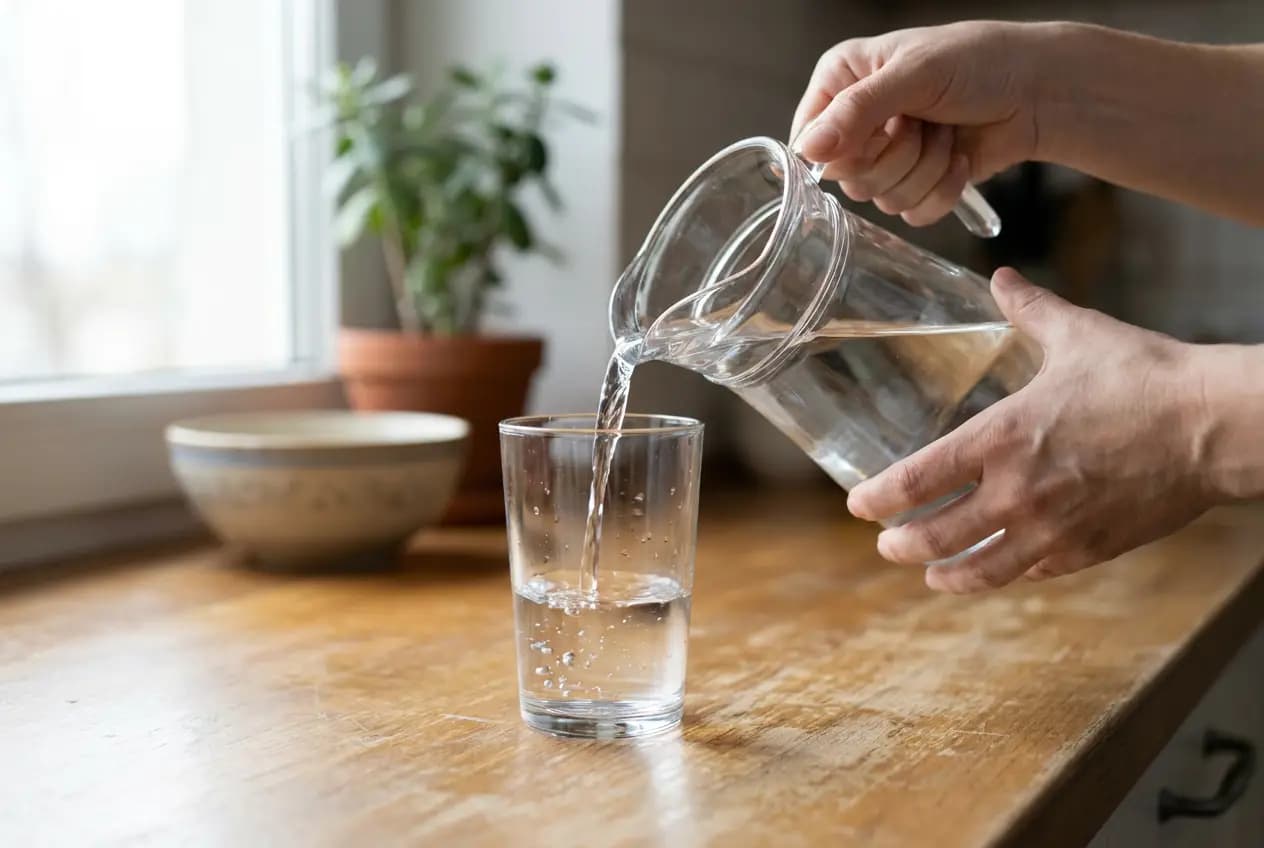
"Drink eight glasses of water a day" is one of the most repeated pieces of health advice — and one of the least evidence-based. The truth is more flexible and more reassuring: your body is good at telling you when it needs water, and you get a lot of it from food and other drinks, not just from a glass of plain water.
How much water do you really need?
The often-quoted U.S. reference values from the National Academies are about 2.7 liters (11.5 cups) of total daily fluid for women and 3.7 liters (15.5 cups) for men. Two things make this less daunting than it sounds:
- It's total fluid — every drink counts, including tea, coffee, milk, and the water in food.
- Food provides roughly 20% of it, especially fruits, vegetables, soups, and yogurt.
So most people meet their needs by drinking to thirst and eating normally. The "8×8" rule (eight 8-ounce glasses) is a fine, easy target, but it isn't a medical requirement — there's no good evidence everyone needs exactly that.
The easiest way to check: thirst and urine color
You don't need to count cups. Two simple signals tell you most of what you need to know:
- Thirst — for healthy adults, drinking when thirsty keeps you well hydrated. (Thirst can lag in older adults, so they may need to be more deliberate.)
- Urine color — pale straw yellow generally means you're well hydrated; dark yellow suggests you should drink more.
Other signs you may need more fluid include headache, tiredness, dizziness, and dry mouth.
What changes how much you need
| Situation | Effect on fluid needs |
|---|---|
| Exercise | Drink before, during, and after; more for long or intense sessions |
| Hot or humid weather | Increases sweat losses — drink more |
| Fever, vomiting, or diarrhea | Raises needs; rehydration solutions may help |
| Pregnancy and breastfeeding | Higher needs — roughly an extra 0.7–1 liter when breastfeeding |
| High altitude | Can increase fluid loss |
Can you drink too much water?
Yes, though it's uncommon. Drinking very large amounts in a short time can dilute the sodium in your blood — a dangerous condition called hyponatremia — most often seen in endurance athletes who over-drink. For everyday life, this is rare; the takeaway is simply that more is not always better, and you don't need to force fluids well beyond thirst.
Practical ways to stay hydrated
- Keep water within reach and sip through the day; have a glass with each meal.
- Eat water-rich foods — fruit, vegetables, soups, yogurt.
- Flavor water with fruit or herbs if plain water is boring; sparkling water counts too.
- On caffeine: moderate coffee and tea are hydrating overall despite a mild diuretic effect — they still add to your fluid intake.
- Limit sugary drinks; water is the best default. Alcohol is mildly dehydrating, so pair it with water.
Hydration and exercise
Activity is the situation that most changes your fluid needs. A simple, practical approach:
- Before: drink normally through the day so you start well hydrated — a glass or two in the couple of hours beforehand is plenty for most workouts.
- During: sip to thirst. For sessions under an hour, water is all you need.
- After: replace what you lost — a drink with your post-exercise meal usually does it.
For long or intense sessions (roughly over an hour), heavy sweating, or hot conditions, you also lose electrolytes, and a sports drink or adding some salt and carbohydrate can help. For everyday gym sessions and walks, though, plain water is fine — most people don't need sports drinks.
Common hydration myths
- "You must drink 8 glasses of plain water." A handy target, not a rule — all drinks and water-rich foods count toward your total.
- "Your urine should be clear." Aim for pale straw yellow, not completely clear; colorless urine can mean you're drinking more than you need.
- "By the time you're thirsty, you're already dehydrated." For healthy adults in normal conditions, thirst is a timely, reliable signal — you don't need to drink ahead of it constantly.
- "Coffee dehydrates you." Moderate caffeine has only a mild diuretic effect and still adds to your fluid intake.
Easy ways to drink more through the day
If you tend to forget, build water into routines you already have: a glass when you wake up, one with every meal, and a refillable bottle on your desk or in your bag. Herbal teas and sparkling water count and add variety, and eating fruit, vegetables, and soups quietly tops up your fluids. If plain water feels boring, a slice of lemon, cucumber, or a few berries makes it more appealing without added sugar.
When to get medical advice
See a doctor if you feel constantly, excessively thirsty or are urinating far more than usual, as these can signal conditions like diabetes; if you have heart, kidney, or liver disease (which can change how much fluid is safe for you); or if you have signs of significant dehydration such as confusion, a racing heart, or very little urine. People on fluid restrictions should follow their clinician's advice rather than general targets.