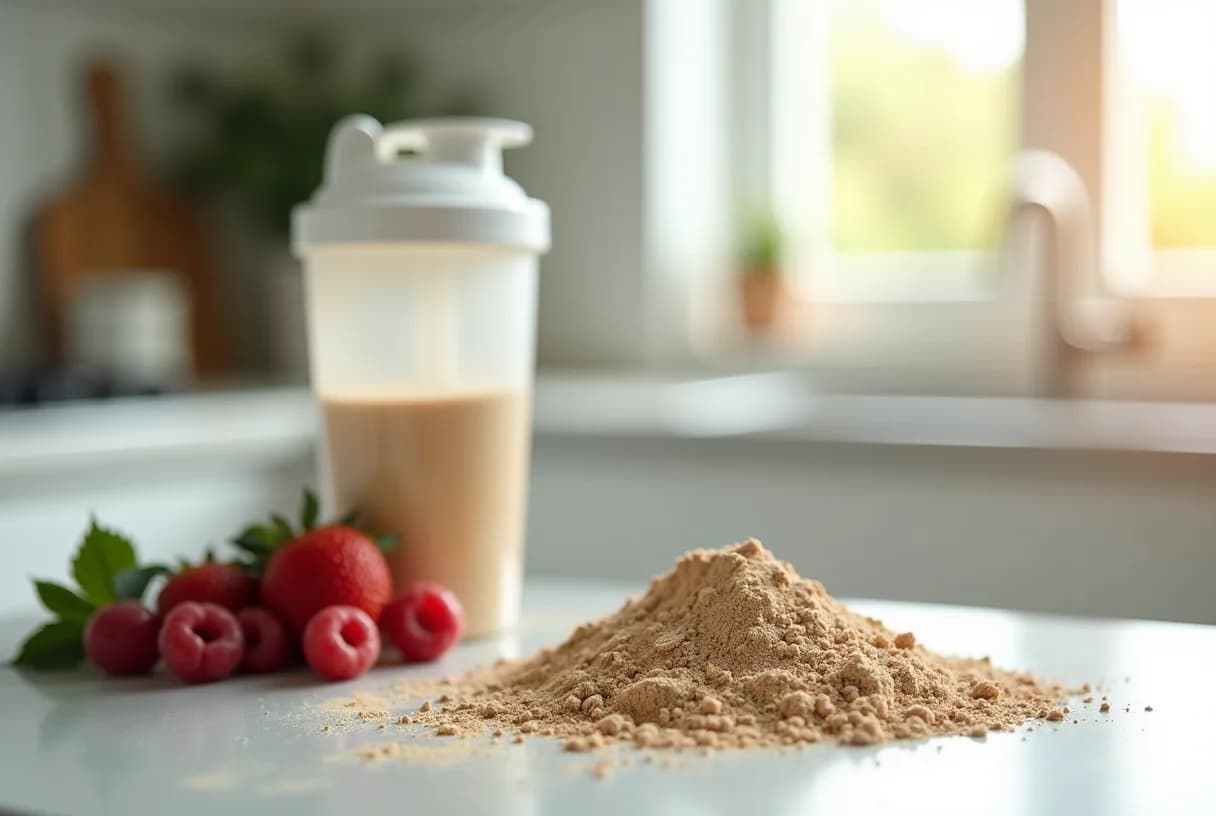
The honest bottom line: there is no protein powder women specifically need. Protein quality is the same for everyone, and your requirement scales with your body weight, activity, and life stage — not your sex. What actually separates a good powder from a hyped one is the amount of complete protein per serving (roughly 20–30 g), an amino-acid profile with enough leucine to trigger muscle repair, low added junk, and independent third-party testing — because heavy-metal contamination in protein powders is a documented, real problem. For most women who tolerate dairy, a whey isolate is the best-absorbed, best-value choice; a pea-and-rice blend is the strongest plant-based option; and collagen, despite the marketing, does not count toward your muscle-protein target.
Quick verdict — by form, not brand
- Best overall Whey protein isolate — about 90% protein, low lactose, fast-absorbed, and high in leucine. The best value per gram for most women who tolerate dairy.
- Best plant-based A pea + rice blend — pea is low in methionine, rice is low in lysine; together they form a complete amino-acid profile that rivals animal protein.
- Best for overnight Micellar casein — slow-digesting; 40 g before sleep raised overnight muscle protein synthesis about 22% in one trial. Also the most filling.
- Best budget Whey concentrate — roughly 80% protein and more lactose, but the cheapest per gram, and it builds muscle just as well when total protein is matched.
- Skip for muscle Collagen — an incomplete protein with almost no leucine. Fine for other goals, but it does not build or preserve muscle.
Whatever the form, favor a product whose exact batch carries NSF Certified for Sport, Informed Sport, USP Verified, ConsumerLab, or Clean Label Project testing.
How we chose — and what we don't do
We don't run a testing lab, and we don't crown a single fabricated brand "winner." Contamination and label accuracy vary batch to batch, so a product that tested clean last year can change suppliers tomorrow. Instead we recommend by form and use case and point you to the one thing that actually protects you: buying a product whose specific lot has passed independent third-party testing, verified on the certifier's own public registry. We name a certification to look for, not a brand to trust blindly.
Is "protein powder for women" actually different?
Mostly, no — the "for women" label is a marketing category, not a nutritional one. The building blocks your muscles need are identical regardless of sex, and the Recommended Dietary Allowance for protein is set per kilogram of body weight, not by gender. In practice, powders marketed to women often do two things worth knowing about. First, they tend to come in smaller servings with less protein per scoop, which can mean worse value and too little protein to matter. Second, some add micronutrients like iron, folate, or B12 — genuinely useful only if you have a documented gap. Iron deficiency is common in menstruating women, but the fix is to address the deficiency directly, not to pay a premium for a trace amount bundled into a protein tub.
What you should ignore entirely are "toning," "slimming," or "skinny" claims. No powder tones or shrinks anything; protein supports the muscle you build through training. If a label leans harder on aesthetics than on grams of protein and testing, that's a signal to look elsewhere. For the bigger picture on hitting your targets from food and supplements, see our guide to a high-protein diet for women.
How much protein do women actually need at midlife?
The 0.8 g/kg/day RDA is a floor designed to prevent deficiency — not a target for preserving muscle as you age or train. Expert groups set the bar higher. The ESPEN Expert Group and the PROT-AGE Study Group recommend 1.0–1.2 g/kg/day for healthy older adults and 1.2–1.5 g/kg for those with illness or sarcopenia, spread across meals of roughly 25–30 g with about 2.5–2.8 g of leucine each. For women doing resistance training, the International Society of Sports Nutrition puts the range at 1.4–2.0 g/kg/day.
Midlife raises the stakes. As estrogen falls, muscle mass and strength decline — by roughly 0.6% per year after menopause — which is why The Menopause Society urges every midlife woman to pair adequate protein with regular strength training. Protein powder isn't magic here — it's a convenient way to reach a per-meal target, especially at breakfast (usually the lowest-protein meal) or if appetite is suppressed on a GLP-1 medication, where protecting muscle matters. Whole-food protein comes first; powder fills the gaps. These are population targets — adjust yours with a clinician based on your body size, activity, and kidney health. More on why this matters at menopause in our explainer on sarcopenia in midlife.
Which type of protein powder is right for you?
The most useful decision isn't the brand — it's the form. Each type has a job it does best.
| Type | Protein / typical serving | Digestion | Best for | Watch-outs |
|---|---|---|---|---|
| Whey isolate | ~25 g (about 90% protein) | Fast, well-absorbed | Most women; post-workout; lactose sensitivity | Dairy-based; costs more than concentrate |
| Whey concentrate | ~18–24 g (about 80% protein) | Fast | Budget; equal muscle results when total protein matched | More lactose, fat, and carbs |
| Micellar casein | ~24 g | Slow (hours) | Before sleep; satiety between meals | Dairy-based; thicker texture |
| Pea + rice blend | ~20–24 g | Moderate | Dairy-free and vegan; complete profile when blended | Single-source pea or rice alone is incomplete; ran highest for heavy metals in testing |
| Collagen | ~10–20 g (incomplete) | Fast | Not a muscle-protein source — see below | No tryptophan; almost no leucine |
A few practical notes. Whey isolate and concentrate deliver the same amino acids and the same muscle results when total protein is matched — isolate just packs more protein and less lactose per scoop, which is why it's the default pick for anyone dairy-sensitive. Casein's slow digestion is its feature, not a flaw: in a controlled trial, 40 g of casein before sleep raised overnight muscle protein synthesis by about 22% versus placebo. On the plant side, buy a blend — pea alone is short on methionine and rice alone is short on lysine, but together they cover each other and reach a complete profile comparable to whey.
What about heavy metals in protein powder?
This is the one genuinely important safety issue, and most buyer's guides skip it. In its 2023–2024 report, the nonprofit Clean Label Project tested 160 products from 70 brands and found that 47% exceeded a federal or state regulatory limit for a contaminant. The pattern matters more than the headline: 77% of plant-based powders exceeded California's Proposition 65 lead level versus 28% of whey powders; plant-based products carried about 5× the cadmium of whey; chocolate-flavored powders ran 110× the cadmium of vanilla; and organic powders averaged about 3× the lead of non-organic. Contaminants come from the soil plants grow in and from cocoa, so plant, organic, and chocolate combine the highest-risk inputs.
Now the honest caveat, because context is our job. Proposition 65's lead threshold (0.5 mcg/day) is deliberately conservative — stricter than federal food limits — so "exceeds Prop 65" is not the same as "acutely dangerous," and the supplement industry has disputed how the findings were framed. Independent testing by ConsumerLab found that no product exceeded levels of general concern, with only a handful slightly over Prop 65. The sensible takeaway isn't panic — it's to minimize a cumulative, avoidable exposure: choose a third-party-tested product, and if you're pregnant, nursing, or drink a daily shake, lean toward whey and vanilla over organic chocolate plant blends. Our supplement scorecard tool walks you through vetting a specific product, and here's how to spot a supplement recall.
Which third-party certification should you look for?
Supplements aren't reviewed by the FDA before they reach the shelf, so independent verification is how you confirm that what's on the label is in the tub — and that nothing else is. Look for one of these seals, then confirm the product on the certifier's public registry rather than trusting the packaging:
- NSF Certified for Sport — verifies contents and screens for roughly 280 banned substances; recognized by USADA and major pro leagues. The strongest all-round mark.
- Informed Sport — tests every manufactured batch against the WADA banned list; ideal if you're drug-tested.
- USP Verified — confirms identity, potency, and purity; excellent for basics, though fewer products carry it.
- ConsumerLab Approved and Clean Label Project Certified — independent testing focused on quality and contaminants like heavy metals.
Any one of these is meaningfully better than none. A "lab tested" claim with no named certifier and no registry entry is marketing, not proof.
Why collagen isn't your protein powder
Collagen is having a moment, but it is an incomplete protein: it contains zero tryptophan and only about 2.5% leucine, compared with roughly 10–11% for whey. Leucine is the amino acid that switches on muscle repair, so on the standard DIAAS quality scale collagen scores near zero as a stand-alone protein, and randomized trials show it doesn't raise muscle protein synthesis even when leucine-matched. Count its calories, but don't count its grams toward your muscle-protein target — nutrition trackers that lump collagen into your protein total overstate what you're actually getting. Collagen may still be worth taking for other reasons; we cover the real evidence in does collagen work and our collagen buyer's guide. Just don't let it replace a complete protein. (If muscle preservation is your goal, creatine has stronger evidence than most "for women" add-ins.)
When to talk to a doctor
Protein powder is safe for most healthy women, but a few situations call for medical input rather than a supplement aisle. If you have kidney disease, the amount and type of protein you should consume is a clinical decision — don't scale up on your own. If you're pregnant or breastfeeding, favor a third-party-tested product and skip powders bundled with botanicals, stimulants, or "detox" blends. If you have a dairy allergy (distinct from lactose intolerance), avoid whey and casein entirely and use a plant blend. And remember that a powder is a supplement, not a diagnosis: persistent fatigue, unexplained weight change, or muscle weakness deserve a workup, not just a scoop. For most women, whole-food protein plus resistance training does the heavy lifting — powder simply makes hitting your daily target easier. Explore more in nutrition, supplements, and fitness.