Most healthy women need at least 0.8 grams of protein per kilogram of body weight each day, which is the official minimum to prevent deficiency. In midlife and beyond, many nutrition researchers suggest aiming a bit higher, often 1.0 to 1.2 grams per kilogram, to help preserve muscle and support bone as estrogen declines. Food-first sources beat powders for most people, and how you spread protein across the day may matter as much as the total.
This guide translates those numbers into real meals, explains why protein quietly becomes more important around menopause, and separates genuine cautions from internet scare stories. As always, it is general information, not a personal prescription.
How much protein do women actually need?
The Recommended Dietary Allowance (RDA) for protein is 0.8 grams per kilogram of body weight per day for adults, set by the National Academies and used as the US reference intake. For a woman weighing 68 kg (about 150 lb), that works out to roughly 54 grams a day. That figure is a floor designed to prevent deficiency in most healthy people, not necessarily the amount that helps you thrive as you age.
If grams-per-kilogram feels abstract, a simpler starting frame used by many dietitians is to make protein a consistent part of every meal rather than chasing a single daily number. The NHS notes that most adults already get enough protein from a varied, balanced diet, so the goal for many women is less about eating dramatically more and more about eating it evenly and from good sources.
| Body weight | RDA minimum (0.8 g/kg) | Higher midlife target (1.0–1.2 g/kg) |
|---|---|---|
| 55 kg (121 lb) | ~44 g | ~55–66 g |
| 68 kg (150 lb) | ~54 g | ~68–82 g |
| 82 kg (181 lb) | ~66 g | ~82–98 g |
These are general estimates, not fixed rules. Very active women, those recovering from illness or surgery, and those intentionally losing weight may benefit from the higher end, while individual needs vary. Use these as a conversation starter with your own clinician or dietitian.
Why protein matters more in midlife
Starting in your thirties and accelerating later, adults gradually lose muscle mass and strength, a process called sarcopenia. Muscle is metabolically active tissue that supports balance, mobility, blood-sugar handling, and independence as you age. Adequate protein, paired with resistance or strength training, is one of the most reliable levers for slowing that loss.
Menopause adds a specific twist. As estrogen falls, women tend to lose muscle and bone density more quickly, and body composition often shifts toward more fat around the midsection. The Menopause Society and other bodies emphasize strength training and overall nutrition during this transition. Protein is the raw material your body uses to rebuild muscle after that training stimulus, which is why the two work best together rather than either alone.
Bone is the other quiet reason. Bone is not just calcium; its framework is largely protein (collagen). Getting enough protein alongside adequate calcium and vitamin D supports the bone remodeling that continues throughout life. The NIH Office of Dietary Supplements covers calcium and vitamin D needs, which work hand in hand with protein for skeletal health.
Protein and appetite: the satiety advantage
Of the three macronutrients, protein tends to be the most filling. Meals built around protein often keep you satisfied longer, which can make it easier to manage appetite and portions without feeling deprived. For women navigating menopausal weight changes, this is a practical benefit: a protein-forward breakfast frequently does more for midmorning hunger than a carbohydrate-heavy one.
Protein also helps protect muscle during weight loss. When you lose weight, some of it can come from muscle unless you combine adequate protein with strength training, which helps steer the loss toward fat while preserving the muscle you want to keep.
Best protein food sources
Whole foods should be your foundation. They deliver protein alongside fiber, vitamins, minerals, and healthy fats that powders lack. Here is how common sources compare.
| Food | Serving | Protein (approx.) |
|---|---|---|
| Cooked chicken or turkey breast | 100 g | ~30 g |
| Salmon or other fish | 100 g | ~22 g |
| Greek yogurt (plain) | 170 g | ~17 g |
| Lentils or beans, cooked | 1 cup | ~15–18 g |
| Tofu, firm | 100 g | ~15 g |
| Eggs | 2 large | ~12 g |
| Cottage cheese | 1/2 cup | ~12 g |
Animal sources — poultry, fish, eggs, and dairy — are "complete," meaning they contain all the essential amino acids in useful proportions. Fish also brings omega-3 fats, and dairy contributes calcium.
Plant sources — beans, lentils, tofu, tempeh, edamame, nuts, and seeds — deliver protein plus fiber and are excellent for heart health. Individual plant foods can be lower in one or another amino acid, but eating a variety across the day (for example, beans plus grains) easily covers the bases. You do not need to combine them at the same meal. The Academy of Nutrition and Dietetics affirms that well-planned vegetarian and plant-forward diets can fully meet protein needs.
Timing: spread it across the day
Many women front-load carbohydrates and save most of their protein for dinner. Emerging thinking in nutrition research suggests it may be more effective to distribute protein more evenly — roughly 20 to 30 grams at each of your main meals — because your body appears to use protein for muscle maintenance more efficiently when it arrives in moderate amounts throughout the day rather than in one large evening dose.
A simple pattern that works for many people:
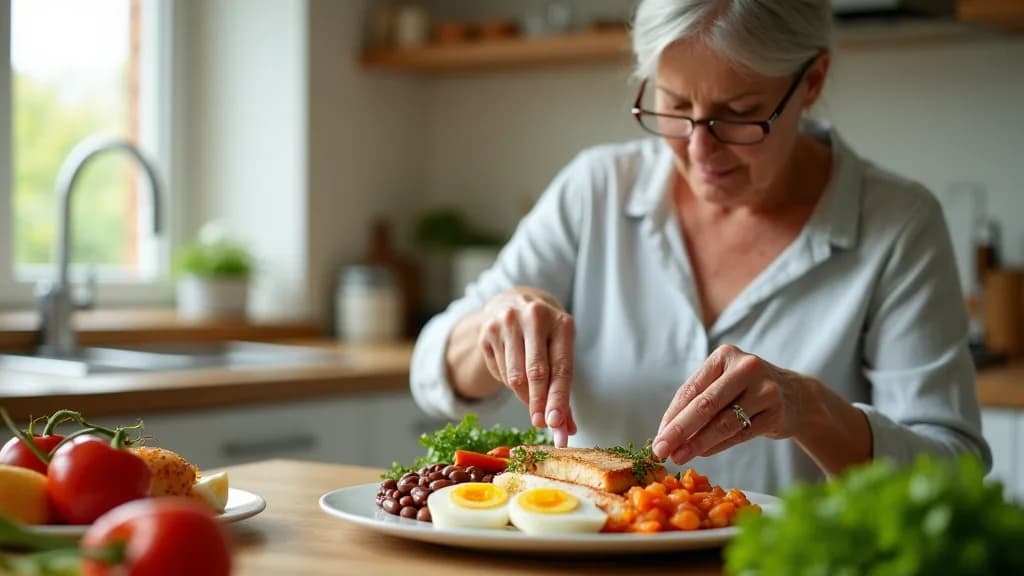
- Breakfast: eggs, Greek yogurt, or tofu scramble instead of toast or cereal alone.
- Lunch: a palm-sized portion of fish, chicken, beans, or lentils with vegetables.
- Dinner: a similar protein anchor, plus plants and whole grains.
- Snacks: cottage cheese, edamame, nuts, or yogurt to fill gaps.
Do you need protein powder?
For most women, no. Powders and shakes are convenient, not magic, and whole foods are the better default because of everything else they carry. That said, protein supplements can be genuinely useful in specific situations: poor appetite, difficulty chewing, recovery from illness or surgery, very high activity levels, or busy mornings when a whole-food option is not realistic. Choose simple products, and be aware that the supplement industry is loosely regulated. When in doubt, "food first, powder to fill a gap" is a sound rule.
Myth-busting: is a high-protein diet dangerous?
"Protein wrecks your kidneys." For people with healthy kidneys, current evidence does not show that higher protein intake causes kidney disease. This worry comes from the fact that people who already have kidney disease are often advised to limit protein to reduce strain on damaged kidneys. That is a very different situation. If you have chronic kidney disease, reduced kidney function, or a single kidney, your protein intake needs to be individualized with your clinician or a renal dietitian — do not adopt a high-protein plan on your own.
"More protein is always better." There is a ceiling to how much protein your body can put toward building and maintaining muscle at once. Extremely high intakes do not deliver proportional benefits and simply displace other valuable foods like vegetables, fruit, whole grains, and fiber. Balance still wins.
"High-protein means low-carb or meat-heavy." Not at all. You can hit generous protein targets with plenty of beans, lentils, yogurt, and fish while keeping whole grains and produce central to your plate. A high-protein pattern and a heart-healthy pattern are entirely compatible.
When to talk to a professional
Protein needs are individual. Consider a conversation with your doctor or a registered dietitian if you have kidney disease, liver disease, diabetes, or are pregnant or breastfeeding; if you are planning significant weight loss; or if you simply want a target tailored to your body, activity, and health goals. The Mayo Clinic offers general nutrition guidance, but personalized advice beats any single number from an article — including this one.
The bottom line: most women benefit from making protein a deliberate, even part of every meal, favoring whole foods, and pairing it with strength training as they move through midlife. That combination does more for muscle, bone, and staying strong than any supplement on its own.
Related: Protein is especially important if you're on a weight-loss medication — see GLP-1 Drugs and Muscle Loss.