Edamame is one of the rare plant foods that gives you complete protein — all nine essential amino acids — in the same handful that delivers fiber, folate, and beneficial soy compounds called isoflavones. These are simply young, whole soybeans, harvested before they harden, then steamed or boiled in the pod. For women navigating midlife, when protein needs rise and muscle and bone quietly decline, that nutrient density makes edamame far more than a restaurant appetizer.
This is food guidance, not medical advice. Edamame is a nourishing food for most people, but a few groups should read the cautions below and check with their own clinician.
Edamame nutrition at a glance
Exact numbers vary by brand and preparation, but the values below reflect widely reported figures for shelled, cooked edamame. Treat them as approximate ranges, not precise measurements.
| Nutrient | Approximate amount | Why it matters in midlife |
|---|---|---|
| Calories | ~180–190 | Filling for the calorie cost |
| Protein | ~17–18 g | Complete plant protein for muscle |
| Fiber | ~8 g | Fullness, digestion, blood sugar |
| Total fat | ~8 g | Mostly unsaturated |
| Folate | High (a large share of daily needs) | Cell and nerve health |
| Iron & magnesium | Meaningful amounts | Energy, muscle, bone support |
| Potassium | Meaningful amount | Blood-pressure balance |
| Isoflavones | Present (a natural soy compound) | Plant estrogen-like activity |
For exact figures on a specific product, the USDA's FoodData Central database is the most reliable reference.
Why edamame matters for women in midlife
Protein for muscle and appetite
From perimenopause onward, women lose muscle more easily and often eat too little protein to counter it. Getting protein spread across the day helps preserve lean mass and keeps you fuller between meals. A single cup of edamame supplies roughly as much protein as three large eggs, and because it is a complete protein, it does not need to be paired with another food to "complete" its amino acids — unusual for a plant. That makes it a genuinely useful snack or salad topper for anyone eating less meat.
Fiber for blood sugar, gut, and heart
Roughly 8 grams of fiber per cup is more than you will find in most snacks. Fiber slows how quickly sugar enters the blood, feeds beneficial gut bacteria, and helps lower LDL cholesterol. The Harvard Nutrition Source notes that most adults fall well short of daily fiber targets, so a high-fiber, high-protein food does double duty.
Soy isoflavones and menopause
Isoflavones are plant compounds that can weakly mimic estrogen in the body, which is why soy foods come up so often in menopause conversations. Here it is important to separate shown from marketed. Research on whole soy foods is generally reassuring, and some studies suggest modest help with hot flashes for some women — but effects are inconsistent and often small. Edamame is not a treatment for menopause symptoms, and no single food replaces the guidance of a clinician. The Menopause Society (menopause.org) is a level-headed source if you want to read more about soy and symptoms. For the bigger picture, see our overview of soy and women's health and our guide to menopause.
Bone and heart support
Bone loss accelerates around menopause as estrogen falls, and heart-disease risk climbs. Edamame contributes to both fronts indirectly: it supplies protein, magnesium, and other minerals involved in bone health, and as a plant protein that displaces some saturated fat from red meat, it fits the eating pattern the American Heart Association recommends for cardiovascular health. Think of it as one supporting player in a whole-diet approach, not a standalone remedy.
How to eat edamame
Edamame is sold frozen (in the pod or already shelled), sometimes fresh, and dry-roasted as a crunchy snack. It cooks in minutes.
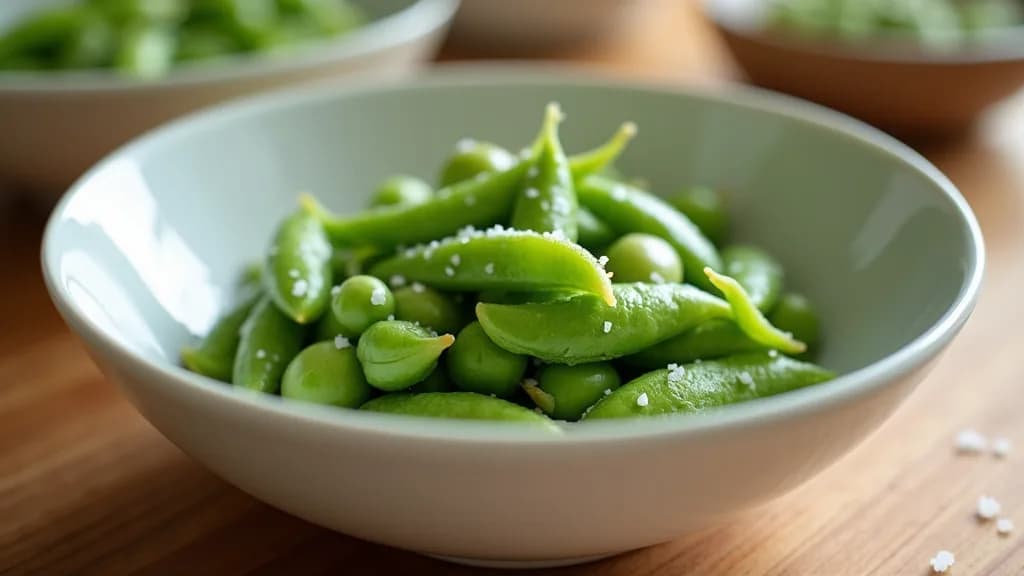
- In the pod: Steam or boil for a few minutes, toss with a little flaky salt, and squeeze the beans out with your teeth. The pods themselves are not eaten.
- Shelled, as a mix-in: Stir warm beans into grain bowls, soups, stir-fries, or pasta for an instant protein boost.
- In salads: Cold shelled edamame adds bite and protein to leafy or grain salads.
- Blended: Purée with garlic, lemon, and olive oil for a green, protein-rich dip in place of hummus.
- Dry-roasted: A portable, crunchy snack — though these are more calorie-dense and often saltier, so watch portions.
Watch added sodium, which is the main pitfall with restaurant and packaged versions. Buying plain frozen edamame and salting lightly at home keeps you in control.
Honest downsides and cautions
Edamame is well tolerated by most people, but a few points deserve straight talk rather than hype.
- Gas and bloating. Its fiber and natural sugars can cause digestive discomfort if you are not used to legumes. Start with a small serving and increase gradually, and drink enough water.
- Soy allergy. Soy is a recognized common allergen. Anyone with a diagnosed soy allergy should avoid edamame entirely.
- Estrogen-sensitive conditions. Because isoflavones have mild estrogen-like activity, women with a history of breast cancer or other hormone-sensitive conditions sometimes worry about soy. Current evidence on whole soy foods in normal food amounts is broadly reassuring, but this is exactly the situation where you should ask your own oncologist or clinician rather than rely on a general article. This caution applies to food-level intake; concentrated isoflavone supplements are a different question and are not covered here.
- Thyroid medication. Soy can interfere with the absorption of thyroid hormone medication (levothyroxine). If you take thyroid medication, separate it from soy foods by several hours and confirm the timing with your prescriber. See our thyroid health guide for context.
- Blood thinners and other medications. As with many nutrient-dense foods, anyone on regular medication — including blood thinners — should mention major diet changes to their clinician or pharmacist.
A recurring myth is that eating edamame lowers testosterone or disrupts hormones in ordinary people. For soy consumed as food in typical amounts, mainstream nutrition reviews — including the Harvard T.H. Chan School of Public Health's "Straight Talk About Soy" — do not support these alarmist claims. There is no need to megadose, and no benefit in doing so; a serving or two as part of a varied diet is the sensible target.
The bottom line
Edamame is a genuinely useful food for midlife women: minimally processed, complete in protein, high in fiber and folate, and a source of soy isoflavones — all for modest calories. It supports the goals that matter most in these years, from holding onto muscle to caring for your heart and bones. Enjoy it as a regular snack or ingredient, keep an eye on added salt, and if you have an estrogen-sensitive condition, a soy allergy, or take thyroid or other daily medication, check with your clinician before making it a staple. For more, explore our guides to plant protein and foods for bone health.