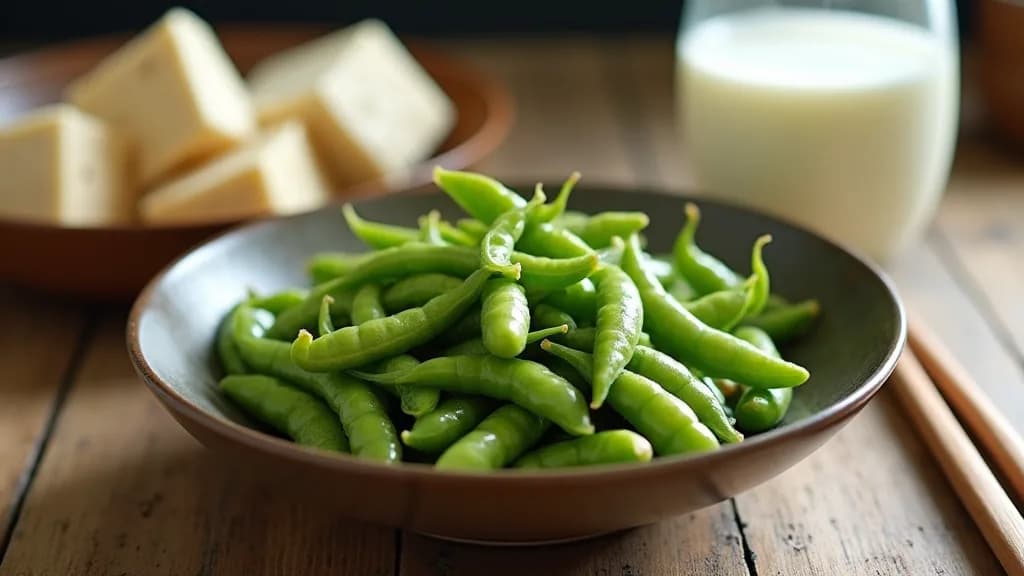
Soy foods such as tofu, tempeh, edamame, and soy milk contain isoflavones — plant compounds that weakly mimic the body's own estrogen. For women navigating perimenopause and beyond, the research is a mixed but reassuring picture: eating whole soy regularly fits well into a bone- and heart-supportive midlife diet, the evidence for taming hot flashes is modest and inconsistent, and the long-standing worry that soy fuels breast cancer is not supported for food-level amounts. Soy is a food, not a hormone therapy, so think of it as one helpful piece of a midlife eating pattern rather than a cure.
Soy nutrition at a glance
Soy is unusual among plant foods because it delivers complete protein — all the essential amino acids — plus fiber, minerals, and those signature isoflavones. Exact numbers vary by product and brand, so treat these as widely known approximate values, not precise figures.
| Food | Serving | Calories | Protein | Fiber | Notable nutrients |
|---|---|---|---|---|---|
| Edamame (shelled, cooked) | 1 cup | ~185 | ~17 g | ~8 g | Folate, vitamin K, iron |
| Firm tofu | ½ cup | ~90–160 | ~10–15 g | ~1–2 g | Calcium (if set with calcium), iron |
| Tempeh | 3 oz | ~160–200 | ~16–18 g | ~5–7 g | Manganese, B vitamins (from fermentation) |
| Soy milk (unsweetened, fortified) | 1 cup | ~80–100 | ~7 g | ~1–2 g | Often fortified with calcium, vitamin D, B12 |
A serving of whole soy foods typically supplies roughly 20–50 mg of isoflavones, which is the range most studies use. That's worth remembering when you see supplements promising far higher doses.
Why soy matters in midlife
As estrogen declines through the menopause transition, many women experience hot flashes, night sweats, bone loss, and shifts in cholesterol. Isoflavones — mainly genistein and daidzein — bind to estrogen receptors gently and selectively, which is why they're called phytoestrogens ("plant estrogens"). They are far weaker than the estrogen your body once made or the estrogen in hormone therapy, so the effects are subtle, not dramatic.
Hot flashes and night sweats
This is soy's most-studied — and most debated — benefit. Some reviews suggest regular intake may reduce the frequency and severity of hot flashes for certain women, with stronger results in those whose gut bacteria convert daidzein into a compound called equol (an ability roughly a third of Western women have). But the effect is small and the studies disagree. It's important to be straight about this: The Menopause Society's 2023 nonhormone therapy position statement does not recommend soy isoflavones — or the soy-derived equol metabolite — for hot flashes, judging the evidence insufficient and mixed rather than a clear benefit. That doesn't make soy worthless; it remains a nutritious food. It does mean you shouldn't count on it as a reliable treatment. If you try it, give it several weeks and keep expectations modest.
Bone health
Bone loss accelerates around menopause, raising the risk of osteoporosis. Some studies link soy isoflavones to slightly better preservation of bone density, and calcium-set tofu and fortified soy milk are practical ways to add both protein and calcium. Soy is not a substitute for a bone-protective routine — adequate calcium, vitamin D, and weight-bearing exercise still do the heavy lifting — but it fits neatly into one.
Heart health
Swapping some animal protein for soy protein may nudge LDL ("bad") cholesterol down slightly, which is one reason the FDA has historically allowed a qualified heart-health claim for soy protein. The American Heart Association encourages plant proteins like soy as part of a heart-healthy eating pattern, while noting the evidence that soy isoflavones themselves protect the heart is limited. Much of the benefit comes from what soy replaces — red and processed meat — as well as from soy itself.
The breast-cancer myth versus the evidence
For years, women were told to avoid soy because its estrogen-like activity might feed hormone-sensitive breast cancer. That fear grew mostly out of rodent studies using isolated, high-dose isoflavones — not whole foods eaten by humans. In people, the picture looks different: large population studies, especially in Asian countries where soy is a dietary staple from childhood, associate moderate soy intake with no increased risk, and in some cases a lower risk, of breast cancer. Major cancer organizations now consider moderate soy-food intake safe for the general population and for most breast cancer survivors.
The important caveats: this reassurance applies to whole and minimally processed soy foods in normal dietary amounts, not to concentrated isoflavone pills. If you have a current or past estrogen-sensitive cancer, this is a conversation to have with your oncologist rather than a decision to make from a blog — including ours.
Whole soy versus supplements
This distinction matters more than almost anything else on this page. The evidence for benefit — and the reassurance about safety — is strongest for foods: edamame, tofu, tempeh, miso, natto, and fortified soy milk. Isoflavone supplements deliver a concentrated, often much higher dose stripped of soy's fiber, protein, and other nutrients, and their long-term effects are far less certain. Marketing frequently blurs "shown in food studies" with "our pill does this," which is not the same claim. Unless a clinician specifically recommends a supplement, favor the food.
How to eat soy
Getting one to two servings of whole soy a day is an easy, realistic target. A few practical ideas:
- Toss steamed edamame with sea salt as a high-protein snack, or add shelled beans to salads and grain bowls.
- Cube and roast or pan-sear firm tofu; press it first for better texture and marinate it to carry flavor.
- Slice tempeh into stir-fries or sandwiches — its firm, nutty character satisfies like meat and adds fiber.
- Pour fortified, unsweetened soy milk over cereal, into coffee, or into smoothies for a protein and calcium boost.
- Stir a spoonful of miso into dressings or soups (add off the heat to keep it gentle).
Choose minimally processed forms most of the time and go easy on ultra-processed soy-based meat substitutes, which can be high in sodium. Pairing soy with other plant-forward menopause staples — vegetables, legumes, whole grains, and healthy fats — gives you far more than any single food can.
Honest downsides and who should be careful
Soy is well tolerated by most people, but a few cautions are worth naming:
- Soy allergy: soy is a common allergen; anyone allergic must avoid it entirely.
- Thyroid medication: soy can interfere with the absorption of levothyroxine and similar thyroid drugs. If you take thyroid medication, separate it from soy foods by a few hours and tell your clinician — don't stop your medication on your own.
- Blood thinners (warfarin): edamame and other soy foods contain vitamin K, which can affect how warfarin works. You don't have to avoid them, but keep your intake steady from week to week and let the clinician who manages your warfarin know about big diet changes.
- Estrogen-sensitive conditions: if you have or have had a hormone-sensitive cancer, discuss soy — and especially any isoflavone supplement — with your specialist before making changes.
- Digestive comfort: soy's fiber and oligosaccharides can cause gas or bloating; increase intake gradually and drink enough fluid.
- Supplements and medications: concentrated isoflavone products may interact with certain drugs; anyone on prescription medication should check with a pharmacist or clinician first.
The takeaway: whole soy foods are a safe, nutritious part of a midlife diet for most women. They can support bones and heart and may take a little edge off symptoms for some — but they work alongside, not instead of, the fundamentals and any care your clinician recommends.
This article is food and general-health information, not medical advice. If you have a medical condition, take medication such as thyroid drugs or blood thinners, or are considering isoflavone supplements, talk with your doctor or a registered dietitian about what's right for you.