Salmon is one of the most useful single foods for women moving through their 40s, 50s, and beyond. It delivers EPA and DHA omega-3 fats, a helpful dose of vitamin D, and high-quality protein — a trio that supports the heart, brain, joints, and muscle at a stage when all four need extra attention. Most major health bodies suggest aiming for two servings of oily fish a week, and salmon is an easy, versatile way to get there.
This is food guidance, not medical advice. Salmon is a food, not a treatment, and it works best as part of an overall eating pattern rather than as a single fix.
Salmon nutrition at a glance
Exact numbers vary by species, cut, wild versus farmed, and cooking method, so treat the figures below as widely-cited approximate values for a typical cooked portion.
| Nutrient | Approximate amount | Why it matters in midlife |
|---|---|---|
| Calories | ~180–210 kcal | Satisfying protein-and-fat food |
| Protein | ~22–25 g | Helps preserve muscle and bone |
| Total fat | ~10–13 g | Mostly healthy unsaturated fats |
| Omega-3 (EPA + DHA) | ~1.5–2.3 g | Heart, brain, joint, eye support |
| Fiber | 0 g | Pair with vegetables or whole grains |
| Vitamin D | ~5–15 mcg (farmed often lower, wild higher) | Bone and immune health |
| Vitamin B12 | High (well above daily needs) | Nerve and blood-cell health |
| Selenium & potassium | Meaningful amounts | Antioxidant and blood-pressure support |
Wild salmon tends to be slightly leaner; farmed salmon is often a little fattier and can carry a similar or higher total omega-3 load. Vitamin D content in particular swings widely — wild sockeye can run high, while farmed portions often deliver less. For exact figures on a specific product, the USDA's FoodData Central database is the reference to trust.
Why salmon matters for women in midlife
Heart health
Cardiovascular risk climbs for women after menopause as the protective effect of estrogen fades. The omega-3 fats in oily fish are among the most consistently studied nutrients for heart health. Regularly eating fish is linked with better triglyceride levels and is a cornerstone of heart-friendly eating patterns. The American Heart Association recommends two servings of fish, preferably oily fish like salmon, each week — where a serving is about 3 ounces (85 g) cooked.
Brain and mood
DHA is a major structural fat in the brain, and diets rich in fish are associated with healthier cognitive aging. Evidence for omega-3s directly lifting mood is mixed and generally modest — worth knowing if you're managing perimenopausal mood swings. Fish can be part of a supportive pattern, but it is not a substitute for mental-health care. If low mood is persistent, talk with your clinician.
Joints, eyes, and skin
Omega-3s have anti-inflammatory properties, and some women with inflammatory joint conditions report less stiffness with regular fish intake. Omega-3s are also studied for dry-eye symptoms, which can worsen around menopause. These effects tend to be gentle rather than dramatic, so frame salmon as helpful support rather than a cure.
Muscle and bone
Muscle mass naturally declines with age, and protein needs may be higher in midlife. Salmon's high-quality protein, combined with its vitamin D, makes it a strong choice for protecting muscle and supporting the bones — both priorities as fracture risk rises after menopause. For the bigger picture, see our guide on omega-3s for women.
How much salmon, and wild vs. farmed
The standard target is two servings of oily fish per week, where a serving is roughly 3–4 oz (85–100 g) cooked. That amount comfortably supplies the omega-3s most guidelines aim for, without needing a supplement for most people.
On wild versus farmed: both are nutritious. Wild salmon is leaner and prized for flavor; farmed salmon is more affordable, consistently available, and typically rich in omega-3s. Choosing responsibly-sourced fish and varying your seafood is more important than fixating on one label. Canned salmon (including varieties with soft, edible bones) is an inexpensive option that also adds calcium.
Mercury and other cautions
Salmon is a low-mercury fish, which is one reason it's so widely recommended — including for women who are pregnant or breastfeeding, who are specifically advised to favor low-mercury choices like salmon over high-mercury fish such as shark, swordfish, king mackerel, and bigeye tuna. See the joint FDA and EPA advice on eating fish for the full list. If you're planning a pregnancy or are pregnant, confirm current guidance with your clinician.
A few honest downsides to keep in mind:
- It's not a magic bullet. Salmon supports health as part of a whole diet; no single food offsets an otherwise unbalanced pattern.
- Supplements aren't the same as fish. High-dose fish-oil capsules are marketed heavily, but eating fish has stronger, more consistent evidence behind it than megadosing pills. Don't assume more is better.
- Sustainability and cost can be real barriers; canned salmon and other oily fish (sardines, mackerel) are budget-friendly alternatives.
Who should be careful
Salmon is safe for most people, but check with a clinician first if any of these apply:
- Blood thinners: Very high omega-3 intake — usually from concentrated supplements rather than from eating fish — can affect bleeding. If you take anticoagulants, ask before adding fish-oil capsules.
- Thyroid or other medication: If you take thyroid medication or any regular prescription, ask your clinician before making big changes to your fish intake or starting a supplement, so timing and dosing stay on track.
- Fish or shellfish allergy: Avoid salmon entirely and speak with your doctor about alternatives.
- Pregnancy and breastfeeding: Salmon is encouraged as a low-mercury choice, but follow current per-week limits and cook it thoroughly.
- Kidney or other medical conditions: If you have a health condition, confirm that increasing fish or starting a supplement fits your situation.
How to eat more salmon
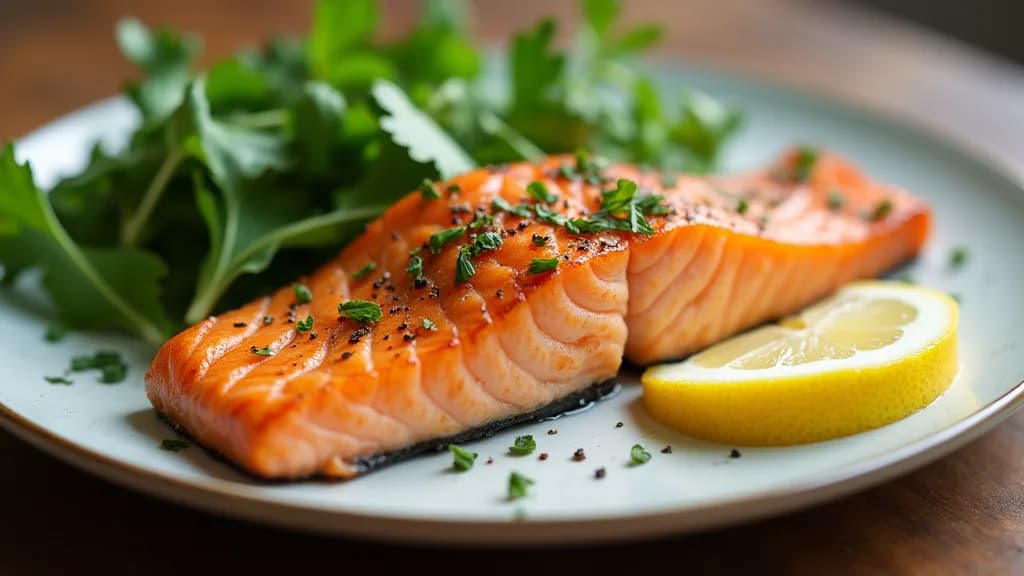
- Roast or pan-sear a fillet with lemon and herbs — ready in under 15 minutes.
- Flake canned salmon into salads, patties, or whole-grain bowls.
- Add cold-smoked or poached salmon to eggs for a protein-rich breakfast.
- Pair it with fiber-rich vegetables and whole grains, since salmon itself contains no fiber.
Two thoughtful servings a week is a realistic, evidence-aligned habit — one of the simplest dietary upgrades a woman can make in midlife. Build it into a varied, plant-forward plate rather than treating it as a stand-alone remedy, and talk with your clinician about how it fits your personal health picture.