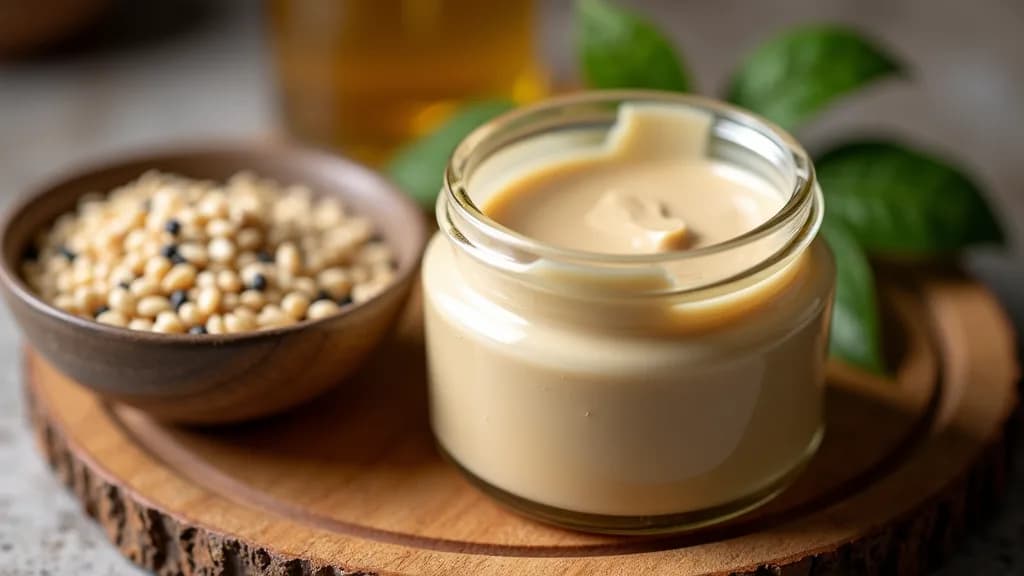
Tahini is a smooth paste made from ground sesame seeds, and it carries most of the same nutrition as the seeds themselves: unsaturated fats, a little plant protein, and a useful mix of minerals including calcium, iron, magnesium, and copper. Sesame seeds also bring fiber and plant compounds called lignans. For women navigating perimenopause and beyond, these foods fit naturally into a heart- and bone-supportive way of eating — not as a cure for anything, but as a nutrient-dense addition to everyday meals.
Sesame and tahini nutrition at a glance
Exact numbers vary by brand, by whether the seeds are hulled or unhulled, and by portion. The figures below are widely cited approximate values, given as ranges where products differ. Treat them as ballpark, not precise measurements.
| Nutrient | Approximate amount | Notes |
|---|---|---|
| Calories | ~170–190 kcal | Energy-dense; a little goes a long way |
| Total fat | ~15–16 g | Mostly poly- and monounsaturated |
| Protein | ~5 g | Plant protein |
| Carbohydrate | ~6 g | Low in sugar |
| Fiber | ~2–3 g | Higher in unhulled versions |
| Calcium | ~60–130 mg | More in tahini made from unhulled seeds |
| Iron | ~2–3 mg | Non-heme (plant) iron |
| Magnesium | ~30–40 mg | Contributes to daily needs; higher in unhulled |
| Copper, zinc, phosphorus | Notable amounts | Tahini is a good copper source |
One point worth flagging: whole, unhulled sesame seeds are far richer in calcium than hulled ones. The hull holds much of the mineral, so unhulled seeds and tahini made from them offer meaningfully more. If calcium is your goal, look for "unhulled" or "whole" on the label. You can confirm specific product values on USDA FoodData Central.
Why sesame and tahini matter in midlife
Bone and calcium support
After menopause, falling estrogen speeds up bone turnover, and calcium intake becomes more important. Sesame seeds — especially unhulled — are one of the more calcium-dense plant foods, and tahini is an easy way to get them in. That said, no single food meets your daily calcium needs alone, and the calcium in seeds is accompanied by compounds (such as oxalates and phytates) that modestly reduce how much your body absorbs. Think of tahini as one contributor alongside dairy, fortified foods, leafy greens, and, where advised, supplements. For the bigger picture, see our guides to bone health and osteoporosis. The NIH Office of Dietary Supplements outlines how much calcium adults need.
Heart-friendly fats
The fat in sesame is mostly unsaturated, the kind that can help support healthy cholesterol levels when it replaces saturated fat in the diet. Sesame also contains plant sterols and the lignans sesamin and sesamolin, which have been studied for effects on blood lipids and blood pressure. The evidence in humans is still limited and mixed, so it is fair to say sesame is part of a heart-healthy pattern rather than a proven treatment. The American Heart Association and the Harvard Nutrition Source both favor swapping saturated for unsaturated fats. Our heart health guide covers the wider strategy.
Magnesium, iron, and lignans
Tahini contributes magnesium, a mineral many women fall short on and one involved in muscle, nerve, and bone function — more in our magnesium guide. It also offers plant (non-heme) iron, useful during perimenopause when heavier or irregular periods can strain iron stores; pairing it with vitamin C helps absorption. The lignans in sesame act as mild phytoestrogens — plant compounds that weakly interact with estrogen receptors. Marketing sometimes overstates this, so be clear-eyed: current evidence does not show that eating sesame reliably relieves hot flashes or other menopause symptoms.
How to use tahini and sesame seeds
These are versatile, everyday ingredients rather than special-occasion foods. A tablespoon or two is a realistic serving.
- Sauces and dressings: whisk tahini with lemon, garlic, and water for a pourable dressing over salads, grain bowls, or roasted vegetables.
- Hummus and dips: tahini is the backbone of hummus and baba ganoush — an easy way to fold it into meals.
- Breakfast: drizzle tahini on oatmeal or yogurt, or spread it on toast with a little honey.
- Sprinkle seeds: toast sesame seeds and scatter over stir-fries, noodles, salads, and roasted squash for crunch and minerals.
- Baking and blending: stir tahini into energy balls, cookies, or smoothies.
Store tahini in a cool cupboard or the fridge, and stir it well — natural tahini separates, with oil rising to the top. If your goal is calcium and fiber, choose whole or unhulled seeds and tahini where you can. For how these ingredients fit a broader plan, see our best diet for menopause guide.
Honest downsides and cautions
This is food guidance, not medical advice. Sesame and tahini are nutritious for most people, but a few things are worth knowing.
- Calorie density: tahini is high in fat and calories, so portions add up quickly. That is fine within a balanced diet, but worth noticing if you are managing weight.
- Sesame is a major allergen: in the United States, sesame is now a recognized top allergen and must be labeled. Reactions can be serious. If you have a known sesame allergy, avoid both seeds and tahini, and read labels carefully, since sesame hides in many products. See the FDA on food allergens.
- Fiber and fluid: if you increase seeds and other high-fiber foods, raise your water intake alongside to keep digestion comfortable.
- Oxalates: sesame contains oxalates. If you have a history of calcium-oxalate kidney stones, ask your clinician about how much is sensible for you.
- Iron absorption: the phytates in seeds can reduce absorption of iron and some minerals from the same meal; variety across the day offsets this.
Who should be careful, and the phytoestrogen question
Because sesame lignans are mild phytoestrogens, some women with estrogen-sensitive conditions — such as certain breast cancers, or while taking hormone-modulating medication — understandably ask whether sesame is safe. Culinary amounts of sesame are generally considered food, not a hormonal intervention, and are very different from concentrated lignan or phytoestrogen supplements. Still, if this applies to you, it is a reasonable question to raise with your oncologist or clinician before adding large amounts or supplements.
More broadly, anyone with a medical condition or taking regular medication should check with a healthcare professional before making big dietary changes. That includes people on blood thinners, thyroid medication, or blood-pressure or cholesterol drugs, since food patterns can interact with treatment plans. Avoid megadose or "detox" claims about sesame oil or lignan pills — the human evidence does not support them, and whole-food amounts are where the reassurance lies. Used sensibly, tahini and sesame seeds are a flavorful, nutrient-rich part of a midlife-friendly diet. When in doubt about your own situation, talk with your doctor or a registered dietitian.