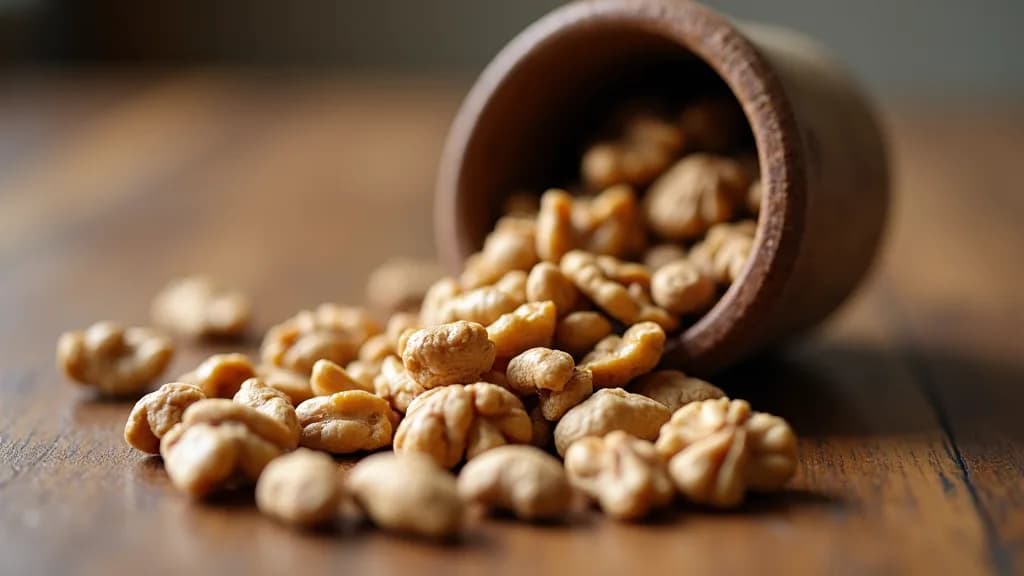
Walnuts are a nutrient-dense tree nut and the standout plant source of omega-3 fat, specifically alpha-linolenic acid (ALA), along with fiber, protein, and a rich mix of antioxidant polyphenols. Eaten as a small daily handful, they fit neatly into a heart- and brain-friendly eating pattern. This guide walks through what walnuts actually offer women in midlife, how much to eat, easy ways to use them, and where the honest cautions lie.
Walnut nutrition at a glance
A standard serving of walnuts is about 1 ounce (28 grams), roughly 14 halves or a small cupped handful. Nuts are calorie-dense because they're mostly fat, so portion awareness matters — but that fat is largely the unsaturated kind. The values below are widely cited approximate figures; exact amounts vary by variety and source.
| Nutrient | Approximate amount |
|---|---|
| Calories | ~185 kcal |
| Protein | ~4 g |
| Total fat | ~18 g (mostly polyunsaturated) |
| ALA omega-3 | ~2.5 g |
| Fiber | ~2 g |
| Carbohydrate | ~4 g |
| Magnesium | ~45 mg |
| Copper | a significant share of daily needs |
| Manganese | a significant share of daily needs |
For exact, database-grade numbers you can look up walnuts in USDA FoodData Central. Walnuts also supply small amounts of vitamin B6, folate, and vitamin E, plus polyphenols concentrated in the papery skin (which is why blanched or over-toasted nuts lose some antioxidant value).
Why walnuts matter for women in midlife
Perimenopause and the years after bring shifts that make nutrition choices count more: cholesterol and blood pressure often creep up as estrogen declines, cardiovascular risk rises, and many women notice changes in memory and focus. Walnuts touch several of these areas at once.
Heart and cholesterol
Walnuts are one of the most studied nuts for heart health. Their unsaturated fats — including that plant omega-3, ALA — can help improve the balance of blood cholesterol, particularly by nudging LDL ("bad") cholesterol down when they replace less healthy snacks or saturated fats. The American Heart Association and the Harvard Nutrition Source both include nuts as part of heart-protective eating patterns. It's worth being precise here: walnuts are shown to fit into diets associated with better cardiovascular outcomes, not proven to single-handedly prevent heart disease. They work best as one part of an overall pattern rich in vegetables, whole grains, legumes, and fish. If you're tracking numbers, our guide to lowering cholesterol naturally puts nuts in context.
Brain health
The brain is largely fat, and diets higher in unsaturated fats and antioxidants are associated with better cognitive aging. Walnuts contribute ALA plus polyphenols and vitamin E — a combination that's plausibly supportive of brain health, though the human evidence is still developing and shouldn't be oversold. Think of walnuts as a reasonable, low-risk habit rather than a memory cure.
Fullness, weight, and blood sugar
Because they pair protein, fiber, and fat, walnuts are satisfying and slow to digest, which can steady appetite between meals. Despite being calorie-dense, nuts are not consistently linked to weight gain in research — likely because they curb hunger and some of their fat isn't fully absorbed. For midlife women managing shifting metabolism, a measured handful is a genuinely useful swap for refined snacks. See our overview of menopause weight changes for the bigger picture.
Bone and general nutrient support
Walnuts deliver magnesium and copper, minerals involved in bone and connective-tissue health — a helpful bonus during years when bone density becomes a priority. They're a modest contributor, not a substitute for calcium and vitamin D, which you can read more about in our bone health guide.
How to eat and use walnuts
The easiest win is simply eating them as they are. Beyond that, walnuts are endlessly flexible:
- Straight snack: a small handful (about 1 oz) on its own or with a piece of fruit.
- Breakfast: chopped over oatmeal, yogurt, or a smoothie bowl.
- Salads and grains: toasted and scattered over leafy salads, roasted vegetables, or grain bowls for crunch.
- Baking and cooking: folded into muffins, breads, or blended into pesto and sauces.
- Savory crumb: ground walnuts make a nutty coating for fish or a base for plant-based "meat" crumbles.
A few practical tips: buy raw or dry-roasted rather than heavily salted or candied versions, keep the skins on for the polyphenols, and store walnuts in the fridge or freezer. Their high polyunsaturated fat content means they go rancid faster than most nuts — a bitter, paint-like smell is the signal to toss them.
Honest downsides and cautions
This is food guidance, not medical advice. Walnuts are safe and beneficial for most people, but a few caveats deserve a clear-eyed look:
- Tree nut allergy: walnuts are a common and potentially serious allergen. Anyone with a tree nut allergy must avoid them entirely.
- Calories add up: the benefits come from a handful, not handfuls. There's no advantage to megadosing, and large quantities can crowd out other foods or add unwanted calories.
- Fiber and digestion: if you're not used to nuts, ramping up quickly can cause bloating or loose stools. Increase gradually and drink enough fluid.
- Oxalates: walnuts contain oxalates, which is worth knowing if you're prone to calcium-oxalate kidney stones — moderation and good hydration help.
- Medication interactions: because omega-3 fats can have a mild effect on blood clotting, anyone on blood thinners (such as warfarin) or with a bleeding disorder should keep intake steady and check with their clinician. Walnuts also add potassium and phosphorus, relevant for some kidney conditions.
- Not a phytoestrogen powerhouse — but a note on estrogen-sensitive conditions: walnuts are not a major source of phytoestrogens the way soy or flax are, so they don't carry the same hormone-related questions. Still, if you have an estrogen-sensitive condition and are reworking your diet around hormone-active foods, discuss the overall plan with your care team.
Who should be careful
Skip or limit walnuts if you have a tree nut allergy. Talk with a clinician or dietitian before making them a big daily habit if you take blood thinners, have a history of kidney stones, live with chronic kidney disease, or manage any condition affected by potassium or phosphorus. And as with any single food, remember that walnuts support health as part of a varied pattern — they're a helpful ingredient in a good diet, not a standalone remedy.
The bottom line
Walnuts earn their reputation: a small daily handful supplies plant omega-3s, fiber, protein, and polyphenols in a way that supports heart and, plausibly, brain health through midlife. Keep portions sensible, store them cool, favor the plain versions with skins on, and fold them into meals you already enjoy. If you have a relevant medical condition or take medication, a quick conversation with your doctor turns a smart snack into a confident one.