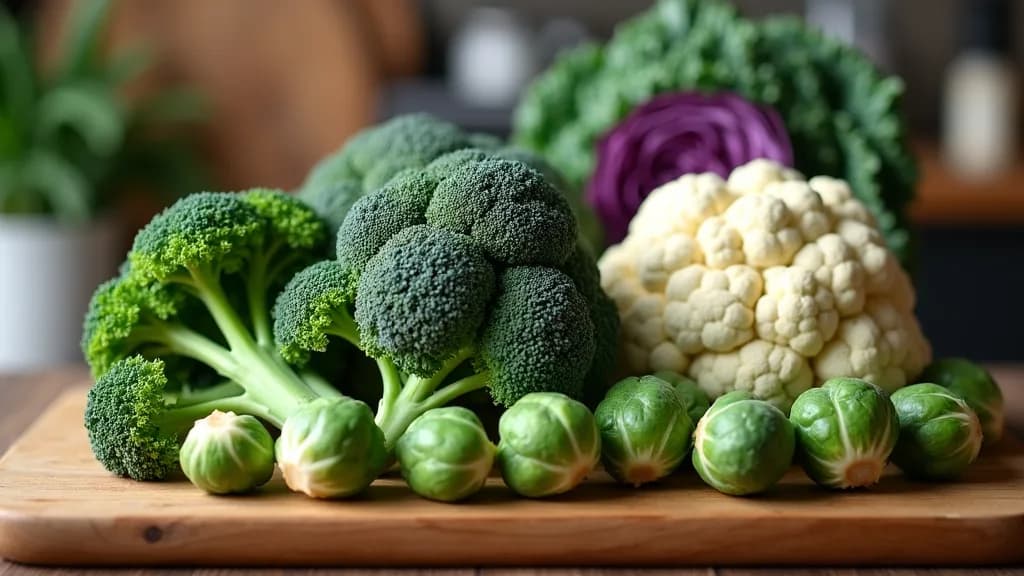
Cruciferous vegetables are the botanical family that includes broccoli, kale, cabbage, cauliflower, Brussels sprouts, bok choy, collards, arugula, watercress and radishes. They stand out for a specific reason: alongside generous fiber, vitamin C, vitamin K and folate, they contain sulfur compounds called glucosinolates, which the body converts into active molecules such as sulforaphane and indoles when the vegetable is chopped, chewed or lightly cooked. For women moving through perimenopause and beyond, that combination touches several things at once: gut health, bone-supporting vitamin K, heart-friendly fiber, and the way the body processes estrogen.
This is food guidance, not medical advice. Cruciferous vegetables are healthy for the vast majority of people, but if you take certain medications or have a thyroid condition, read the cautions below and check with your clinician.
Nutrition at a glance
Exact numbers vary by vegetable, portion and cooking method, so these are widely-cited approximate values for a typical cooked serving. For precise figures for a specific food, the USDA FoodData Central database is the best source.
| Nutrient | Approximate amount | Why it matters in midlife |
|---|---|---|
| Calories | ~30–55 kcal | Low energy density, high volume |
| Protein | ~3–4 g | Modest plant protein |
| Fiber | ~2.5–5 g (kale nearer the low end, broccoli the high end) | Gut, satiety, cholesterol, blood sugar |
| Vitamin C | High (often ~50–100%+ daily value) | Antioxidant, collagen, iron absorption |
| Vitamin K | Very high (kale especially) | Bone and clotting support |
| Folate | Moderate | Cell and DNA maintenance |
| Calcium | Modest, well-absorbed (bok choy, kale) | Bone density |
The headline is that you get a lot of nutrition and fiber for very few calories, which makes crucifers a useful base for meals when appetite, weight or blood-sugar shifts arrive with hormonal change.
Why they matter for women in midlife
Estrogen metabolism
Cruciferous vegetables supply indole-3-carbinol and its derivative DIM, compounds that influence how the liver metabolizes estrogen. This is a real and interesting area of research, but it is important to be honest: eating broccoli is not a hormone treatment, and the evidence does not support the strong claims made for concentrated DIM or I3C supplements. Whole vegetables in normal amounts are a sensible part of a hormone-supportive diet; high-dose extracts are marketed far beyond what the science has shown. If you are considering a supplement, talk to your clinician first.
Cancer risk, honestly
Large population studies have long associated diets rich in vegetables, including crucifers, with lower risk of some cancers. Laboratory work on sulforaphane is genuinely promising. But observational links are not proof that the vegetable itself prevents cancer, and no single food does. The honest framing, echoed by the Harvard Nutrition Source and the NHS, is that a mostly-plant pattern with plenty of vegetables is one of several factors that support long-term health. Enjoy crucifers as part of that pattern, not as a cure.
Gut, heart and blood sugar
The fiber in cruciferous vegetables feeds beneficial gut bacteria, adds bulk that eases constipation, and helps blunt post-meal blood-sugar spikes. Soluble fiber also helps manage cholesterol. Because cardiovascular risk rises for women after menopause, the American Heart Association emphasis on fiber-rich vegetables is directly relevant here.
Bone support
Bone loss accelerates around menopause as estrogen declines; The Menopause Society notes that fracture risk climbs in the years after menopause, so bone-supportive habits matter early. Crucifers contribute vitamin K (important for bone metabolism) and, in the case of kale and bok choy, well-absorbed calcium. They are a helpful complement to weight-bearing exercise and adequate vitamin D. For more, see our related guides on bone health after menopause and calcium-rich foods.
The thyroid question
You may have heard that cruciferous vegetables are "goitrogens" that harm the thyroid. Here is the calm version: crucifers contain compounds that can, in theory, interfere with iodine uptake, but this matters mainly with very large amounts of raw vegetable eaten alongside low iodine intake. For the vast majority of people eating normal, varied, mostly-cooked portions, cruciferous vegetables are safe and healthy, including for most people with well-managed hypothyroidism. Cooking substantially reduces goitrogenic activity.
Two sensible cautions: if you have a diagnosed thyroid condition or low iodine status, keep raw crucifer intake (like daily large raw-kale smoothies) moderate and discuss it with your clinician. And time your thyroid medication carefully — levothyroxine is best taken on an empty stomach, and many clinicians suggest leaving about four hours between your dose and high-fiber or calcium-rich foods, since both can reduce how much drug you absorb.
How to eat them
- Chop and wait, or chew well. Sulforaphane forms when the enzyme myrosinase acts on glucosinolates. Chopping raw and letting it sit ~10 minutes, or thorough chewing, helps.
- Cook lightly. Steaming or quick sautéing preserves more nutrients than prolonged boiling. Boiling leaches vitamin C and glucosinolates into the water.
- Pair with fat. A drizzle of olive oil aids absorption of fat-soluble vitamins and improves taste.
- Vary the family. Rotate broccoli, cabbage slaws, roasted cauliflower, sautéed bok choy, arugula salads and Brussels sprouts so you get the full range of compounds and flavors.
- Ease in gradually. If you are not used to much fiber, increase portions slowly and drink water to limit gas and bloating.
Downsides and cautions
- Bloating and gas. The fermentable fiber that feeds your microbiome can cause wind, especially raw. Cooking and gradual increases help; this is normal, not harmful.
- Blood thinners. Kale and other crucifers are high in vitamin K, which interacts with warfarin. You do not have to avoid them, but keep your intake consistent and coordinate with your clinician, per MedlinePlus.
- Thyroid. As above, moderate raw intake if you have thyroid disease or low iodine, and separate levothyroxine from fiber- and calcium-rich meals.
- Kidney stones. Some crucifers contain oxalates, though generally less than spinach; those prone to oxalate stones can favor lower-oxalate choices and stay well hydrated.
- Supplements. Skip megadose DIM, I3C or sulforaphane pills unless a clinician advises them. Whole food is where the reassuring safety record lives.
Bottom line: for most women in midlife, cruciferous vegetables are one of the highest-value additions to the plate — filling, protective of the gut and heart, supportive of bones and estrogen metabolism, and remarkably low in calories. Aim for a serving most days, vary the family, and raise any thyroid or medication questions with your own clinician.