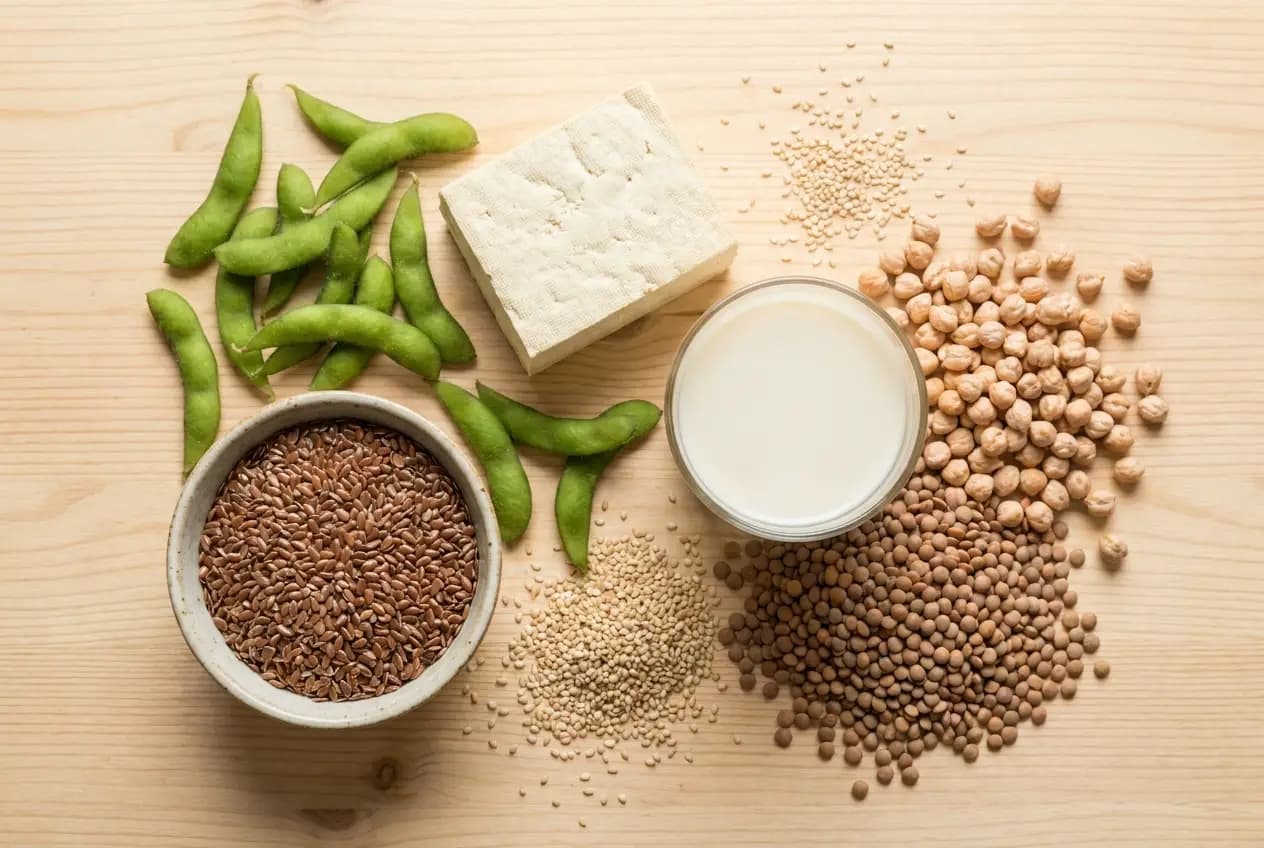
If you have read that certain plant foods contain natural "estrogen," you have met phytoestrogens. They are real, well-studied, and a normal part of many healthy diets, but their effects are gentler than the name suggests. Here is a clear look at the foods highest in them, what the evidence honestly shows, and how to fit them into everyday meals.
What are phytoestrogens?
Phytoestrogens are plant compounds with a structure similar enough to estrogen that they can bind, weakly, to the same receptors in the body.[4] Because the effect is much milder than the body's own hormones, they are sometimes described as acting "estrogen-like." Depending on the tissue and a person's own hormone levels, they may have a slight estrogen-like or a slight blocking effect. That two-way behavior is one reason their impact is modest and varies from person to person.
There are three main families:
- Isoflavones — most concentrated in soy foods and other legumes.
- Lignans — found in flaxseed, sesame seeds, whole grains, and many fruits and vegetables.
- Coumestans — found in smaller amounts in sprouts such as alfalfa and clover, and in split peas.
It is also worth knowing that gut bacteria help convert some phytoestrogens into their more active forms. Because everyone's gut microbes differ, two people eating the same soy meal can end up with different levels of the active compounds, which helps explain why studies do not all point the same way.
Foods with estrogen-like compounds: the top sources
The phrase "foods with estrogen" is a little misleading, since plants do not contain human estrogen. What they contain are these plant compounds. The richest phytoestrogen foods are easy to recognize once you know where to look.
| Food group | Examples | Main phytoestrogen |
|---|---|---|
| Soy foods | Edamame, tofu, tempeh, soy milk, miso | Isoflavones |
| Flaxseed | Ground flaxseed (a top lignan source) | Lignans |
| Other legumes | Chickpeas, lentils, beans, split peas | Isoflavones, lignans, coumestans |
| Seeds | Sesame seeds | Lignans |
| Whole grains | Oats, barley, wheat, rye | Lignans |
| Sprouts | Alfalfa and clover sprouts | Coumestans |
| Fruits | Berries, dried apricots, prunes | Lignans |
| Beverages | Tea | Lignans |
Among all of these, soy foods are the standout source of isoflavones, and flaxseed is one of the richest known sources of lignans, ounce for ounce.[4] The other foods contribute smaller amounts, which is why variety across the week matters more than any single item.
What the evidence actually shows
It helps to set realistic expectations. Phytoestrogens are not a hormone replacement and they are not a treatment, but research suggests some genuine, if modest, benefits. The strongest evidence is for soy isoflavones; lignans from foods like flaxseed are studied too, but the picture there is less consistent.
Menopause symptoms
Some studies suggest soy isoflavones may modestly reduce the frequency or intensity of hot flashes and related vasomotor symptoms for some women.[3] The effect tends to be mild and inconsistent across studies, it can take several weeks to appear, and it does not work for everyone. Flaxseed has been studied for hot flashes as well, but results have been more disappointing. If symptoms are disrupting your sleep or daily life, phytoestrogen foods are best seen as one small part of a broader plan rather than a fix on their own. You can read more in our guide to the best diet for menopause.
Heart and bone health
As part of an overall healthy, plant-forward eating pattern, phytoestrogen-rich foods may support heart and bone health. This is partly because the foods themselves, such as soy, legumes, flaxseed and whole grains, bring fiber, plant protein and healthy fats while displacing less healthy options. Much of the benefit likely comes from the whole food and the overall dietary pattern, not the phytoestrogens alone. A Mediterranean-style approach naturally includes many of these foods, which is one reason it is often recommended around menopause.
Are soy foods safe? The honest answer
Soy makes some people nervous because of its estrogen-like isoflavones, but current mainstream evidence is reassuring. Moderate amounts of soy foods are considered safe for most people, and large reviews of the evidence have not found that eating soy foods raises breast cancer risk.[4] Current evidence also suggests moderate soy foods are safe for most breast-cancer survivors, though anyone in that situation should still confirm with their own care team.
Two distinctions matter most:
- Whole soy foods (edamame, tofu, tempeh, soy milk, miso) are different from concentrated, high-dose isoflavone supplements, which deliver far more isoflavone than you would ever get from food and have a less settled evidence base.
- Anyone with a hormone-sensitive cancer, or taking related medication such as a hormone-blocking therapy, should check with their own doctor before relying on phytoestrogen supplements. Food amounts are generally fine, but they are still worth raising at an appointment.
For everyday eating, "moderate" typically means a few servings of soy foods a day at most, not heaping amounts at every meal. There is no need to avoid soy out of fear, and no need to force large quantities in hope of a hormonal effect.
Phytoestrogens and "estrogen dominance"
You may see phytoestrogen foods discussed alongside the popular term "estrogen dominance." It is worth being clear: estrogen dominance is a lay phrase about the balance between estrogen and progesterone, not a formal medical diagnosis your clinician would code. Eating phytoestrogen foods will not meaningfully tip that balance one way or the other, because these compounds act only weakly at estrogen receptors. If you are curious about how these hormones relate, our explainers on estrogen versus progesterone and the signs of high estrogen walk through it in plain language. For any real concern about hormone levels, a clinician's assessment matters more than a food list.
Phytoestrogens in foods: how to add them to meals
Adding phytoestrogen rich foods can be simple and pleasant. A few easy, realistic portions:
- Stir one tablespoon of ground flaxseed into oatmeal, yogurt or a smoothie (ground absorbs better than whole).
- Snack on a half-cup of edamame, or add cubed tofu or tempeh to stir-fries and grain bowls.
- Build meals around chickpeas, lentils and beans a few times a week.
- Sprinkle sesame seeds over salads and vegetables, or use a spoon of tahini.
- Choose whole grains like oats, barley and rye, and add berries or dried fruit.
- Swap one drink for a cup of tea.
Spreading these foods across the week is more useful than chasing a single "superfood," and pairing them with the rest of a balanced plate is what makes the difference. For other support, see our overview of the best supplements for menopause.
Realistic expectations
Phytoestrogen foods are a worthwhile, generally safe addition to a balanced diet. They will not replace medical treatment, restore hormone levels, or work the same way for everyone. Think of them as a gentle, supportive piece of the picture, helpful as part of an overall healthy pattern, but not the whole answer when symptoms are significant. If a food approach is not easing what you are feeling, that is useful information to bring to a clinician rather than a reason to keep adding more soy or flax.
When to seek medical care
Diet alone is not the right tool for every symptom. Talk with a clinician if you have hot flashes, night sweats or other menopause symptoms that disrupt your sleep, mood or daily life; if you have a personal or family history of a hormone-sensitive cancer and want guidance on soy or supplements; if you are considering high-dose phytoestrogen or isoflavone supplements, especially alongside other medication; or if you have any unexplained or concerning symptoms, such as unexpected bleeding. A clinician can help you weigh the options and connect food choices to your wider health picture.
Related: Flaxseed for Menopause: Nutrition, Lignans, and the Evidence.
Related: Red clover for hot flashes — whether this isoflavone-rich plant, taken as a supplement, appears to ease hot flashes in the research.