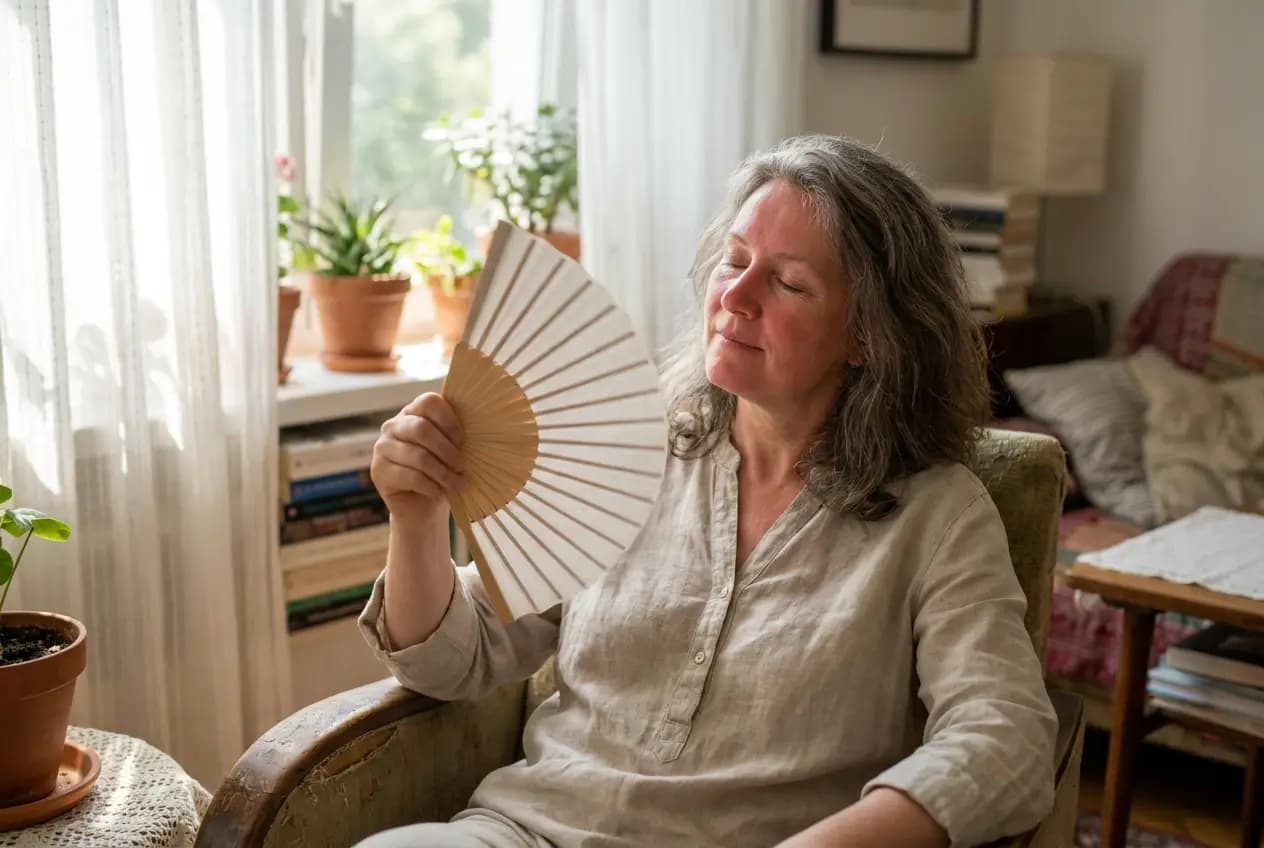
Hot flashes are the most common — and most recognizable — symptom of the menopause transition, affecting up to about 80% of women.[1] They can range from a brief, mild flush to drenching, disruptive waves of heat that interrupt sleep and daily life for years. The good news: hot flashes are well understood, and there are more effective treatments now than ever, from hormone therapy to a new class of non-hormonal medication.
Here's a complete, evidence-based guide to why hot flashes happen, how long they last, and every option for relief.
What are hot flashes?
A hot flash (also called a hot flush) is a sudden feeling of heat that spreads through the upper body — most often the face, neck, and chest. Doctors group hot flashes and their night-time version, night sweats, under the term vasomotor symptoms (VMS). They're a normal part of perimenopause and the years after the final period, though they can also occur after surgery to remove the ovaries or with certain cancer treatments.
What a hot flash feels like
Hot flashes vary a lot from person to person, but a typical episode involves:
- A sudden wave of heat in the face, neck, and chest
- Flushing or red, blotchy skin
- Sweating, sometimes heavy
- A rapid or pounding heartbeat
- A chilled, shivery feeling as the flash fades
- Sometimes anxiety or a sense of unease
A single hot flash usually lasts 1 to 5 minutes.[2] Some women have a few a week; others have several an hour. When they happen during sleep and cause sweating, they're called night sweats — a major reason menopause disrupts rest.
What causes hot flashes?
Hot flashes are driven by falling and fluctuating estrogen, but the trigger is in the brain, not the body's temperature itself. As estrogen declines, it affects the hypothalamus — the brain's thermostat — and narrows what scientists call the "thermoneutral zone," the comfortable range of body temperatures the brain tolerates without acting.[2] With a narrower zone, even a tiny rise in core temperature is read as overheating, so the brain triggers rapid cooling: blood vessels widen (the flush), and you sweat.
Recent research has identified specific brain cells — KNDy neurons, which use a signal called neurokinin B — as a key part of this pathway. That discovery led directly to a new class of non-hormonal drugs (see below) that block this signal.
How long do hot flashes last?
Individually, a hot flash lasts a few minutes. As a symptom, though, hot flashes persist far longer than many people expect. Landmark research (the SWAN study) found that vasomotor symptoms last a median of about 7 years — and for some women, 10 years or more.[1]
| Factor | What the research shows |
|---|---|
| Typical total duration | A median of ~7 years; often longest when symptoms start early in perimenopause |
| When they peak | Usually around the final period and the first year or two after |
| Length of one flash | 1–5 minutes |
| Who has them longer | Symptoms tend to last longer in some groups, including Black women, and in people who start having them earlier |
For how this fits the wider menopause timeline, see how long menopause lasts.
What triggers hot flashes?
Falling estrogen sets the stage, but specific things can set off an individual flash. Common triggers include:
- Heat — warm rooms, hot weather, hot showers, electric blankets
- Stress and anxiety
- Alcohol, especially red wine
- Caffeine and hot drinks
- Spicy food
- Smoking (which also makes hot flashes worse overall)
- Tight or synthetic clothing
Keeping a short diary for a week or two can reveal your personal pattern, so you can avoid your biggest culprits.
How to treat hot flashes
Treatment ranges from simple self-care to prescription medication. The right choice depends on how much hot flashes bother you, your health history, and your preferences — so it's worth discussing options with a clinician.
Hormone therapy (HRT) — the most effective option
Menopausal hormone therapy (estrogen, combined with a progestogen if you still have a uterus) is the most effective treatment for hot flashes, typically reducing them by around 75% or more.[5] According to The Menopause Society, it's appropriate for many women, especially those under 60 or within 10 years of menopause without specific contraindications.
Like any treatment, it carries considerations: combined hormone therapy is linked to a small increase in the risk of breast cancer with longer-term use, and oral forms slightly raise the risk of blood clots and stroke (transdermal patches or gels carry a lower clot risk). It's generally not recommended for people with a history of breast cancer, certain other cancers, or unprovoked blood clots. The benefits and risks are individual — a clinician can help you weigh them.
Non-hormonal prescription options
If you can't or prefer not to take hormones, several prescription medicines help:
| Medication | How it helps |
|---|---|
| Fezolinetant (Veozah) | A newer non-hormonal drug that blocks the neurokinin B (NK3) pathway behind hot flashes; FDA-approved specifically for VMS |
| SSRIs / SNRIs | Certain antidepressants — low-dose paroxetine (Brisdelle, the first non-hormonal drug FDA-approved for hot flashes; fezolinetant is now also approved), venlafaxine, escitalopram — modestly reduce flashes |
| Gabapentin | An anti-seizure medicine that can reduce hot flashes, and may help most with night-time symptoms |
| Oxybutynin | A bladder medicine that also reduces vasomotor symptoms |
These vary in effectiveness and side effects; a clinician can match one to your situation, especially if you also have mood symptoms or trouble sleeping.
Lifestyle and self-care
Simple changes won't switch hot flashes off, but they reduce how often and how intensely they hit:
- Dress in light layers you can remove quickly, and choose breathable fabrics like cotton.
- Stay cool — lower the thermostat, use a fan, keep cold water handy, and cool your room before bed.
- Avoid your triggers — particularly alcohol, caffeine, and spicy food if they affect you.
- Don't smoke — smoking worsens hot flashes (and quitting has many other benefits).
- Reach or keep a healthy weight — a higher body weight is linked to more bothersome hot flashes for some women.
- Stay active — regular exercise supports sleep, mood, and overall health during menopause.
Mind-body approaches
Some of the best-supported non-drug options work through the mind-body connection:
- Cognitive behavioral therapy (CBT) has good evidence for reducing how much hot flashes bother you and improving sleep.
- Clinical hypnosis has been shown to reduce hot flash frequency in studies.
- Paced, slow breathing and mindfulness help some women cope, though the evidence is more mixed.
Supplements and "natural" remedies — what the evidence shows
Many supplements are marketed for hot flashes, but the evidence is generally weak and mixed. Be skeptical of strong claims, and talk to a clinician before trying these — especially if you've had a hormone-sensitive cancer or take other medicines.
| Remedy | Evidence |
|---|---|
| Black cohosh | Mixed; some studies show modest benefit, others none. Rare liver-safety concerns have been raised. |
| Soy isoflavones / phytoestrogens | May offer modest benefit for some women, often slowly over weeks; results are inconsistent. |
| Red clover | Weak and inconsistent evidence. |
| Evening primrose oil | Generally no better than placebo in trials. |
| Vitamin E | At most a small effect. |
For a fuller breakdown, see our honest guide to menopause supplements.
Hot flashes at night
When hot flashes happen during sleep, they're called night sweats — and they're a leading cause of the broken sleep and daytime fatigue that many women find one of the hardest parts of menopause. The same treatments apply, with extra attention to keeping the bedroom cool and breathable.
When to see a doctor
Hot flashes are not dangerous, but you should see a clinician if they disrupt your sleep, work, or quality of life — effective treatment exists, and you don't have to just endure them. Also mention any unusual features, such as hot flashes with a markedly pounding heartbeat, drenching sweats with weight loss or feeling unwell, or symptoms that started alongside other new health changes, which occasionally point to another cause worth checking. To explore your options, see how to get menopause care.
The bottom line
According to The Menopause Society, hot flashes affect most women during the menopause transition and can last several years, but they're highly treatable. Hormone therapy is the most effective option; non-hormonal medicines like fezolinetant, certain antidepressants, and gabapentin help when hormones aren't right for you; and lifestyle changes plus CBT can meaningfully reduce the burden. If hot flashes are affecting your life, talk to a clinician — there's a lot that can help.
Related: Curious what else women search about menopause? The Menopause Symptoms Women Are Really Googling ranks them by search demand.
Related: Beyond medical treatments, the right fans, cooling pillows, and moisture-wicking fabrics can help you stay comfortable — explore the Best Cooling Products for Hot Flashes and Night Sweats.
Related: If hormone therapy isn't an option for you, a newer drug works on the brain pathway behind hot flashes — read about Veozah (Fezolinetant) for Hot Flashes: How It Works and Side Effects.
Related: Does red clover help with hot flashes? — a look at what the evidence actually says about this popular isoflavone supplement for menopausal hot flashes.
Related: whether evening primrose oil eases hot flashes — A look at what the research actually shows for this widely marketed remedy.