Hot flashes and night sweats are among the most disruptive symptoms of the menopause transition, and many people want practical ways to feel cooler between medical appointments. This is an honest buyer's guide to the main categories of cooling products for hot flashes and night sweats — organised by product type and what to look for, not a ranked list of brands. We have not tested individual products and name none here; instead, this is a neutral framework to help you choose well and avoid paying for hype.
Start here: what cooling products can and can't do
Cooling gear works by helping heat leave your body faster, or by making a hot flush feel less intense. That is genuinely useful, but it is comfort management, not treatment. These products ease the experience of vasomotor symptoms; they do nothing about the underlying hormonal shifts that drive them.[3] For the bigger picture, the menopause hub and our complete guide to menopause put these changes in context, and we cover the symptoms themselves in depth in our articles on hot flashes and night sweats. Use the categories below alongside — not instead of — the medical options a clinician can offer.
Breathable, moisture-wicking sleepwear
What you sleep in matters more than almost anything else on this list, because fabric sits against your skin all night. The goal is material that lets heat and sweat escape rather than trapping them.
- Natural fibres such as cotton, linen, bamboo-derived viscose and lightweight merino wool breathe well and absorb moisture; loose cuts help air circulate.
- Technical performance fabrics engineered to wick moisture can also work well, especially for heavy sweaters, because they move dampness off the skin so it can evaporate.
- Everyday synthetics like standard polyester and nylon tend to trap heat and hold damp against the skin — the opposite of what you want.
Look for a loose fit, flat seams, and simple designs you can peel off quickly if a night sweat hits.
Bedding and cooling the sleep surface
The layer you lie on can quietly bank heat. Swapping heavy synthetic-filled duvets for breathable bedding — and using separate lighter layers you can throw off — gives you more control through the night.
- Sheets and duvet covers in cotton percale, linen or lyocell feel cool and breathe better than microfibre.
- Mattress toppers and pillows labelled "cooling" vary widely. Breathable, open-structure materials that avoid trapping heat have a plausible benefit; gel-infused surfaces often feel cool only briefly before warming to body temperature.
- Layering a lightweight blanket instead of one thick duvet lets you and a partner adjust independently.
Fans: bedside and handheld
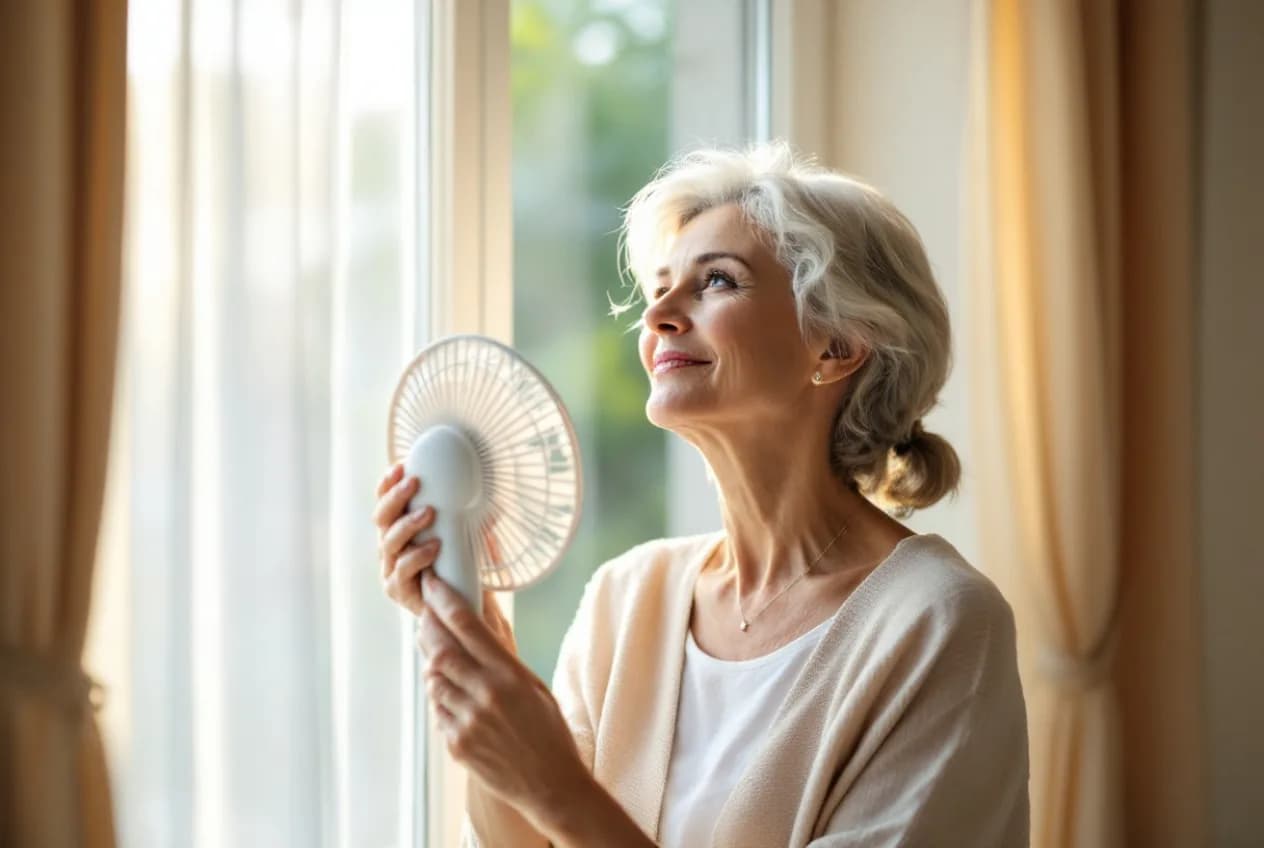
Moving air is one of the most reliable, lowest-cost ways to cool down, because a breeze speeds up evaporation from your skin.[1] A quiet bedside or tower fan aimed across the bed helps at night; a small rechargeable handheld or folding fan is genuinely useful for daytime flushes at a desk, on transport or in a meeting. This is one category where the simple, inexpensive option usually delivers the most real-world benefit.
When comparing fans, prioritise the features that affect real-world use rather than the marketing. For a bedside fan, a quiet motor and adjustable speed matter most, so a low setting can run all night without disturbing sleep. For a portable fan, look at battery life, weight and how easily it fits into a bag or pocket. Misting fans add a fine spray of water to boost the evaporative effect, which some people find pleasant, though the improvement over a plain breeze is modest.
Cooling towels, gel packs and quick-cool tricks
For the acute moment of a flush, cooling the right spots can take the edge off fast.
- Cooling towels that you wet and snap to activate can feel refreshing on the back of the neck or wrists.
- Gel packs or a cool compress at pulse points — or simply running cool water over your wrists — can help you ride out a flush.
- A chilled water bottle by the bed and a glass of cold water are free tools that work.
These are soothing and low-risk, but their effect is short-lived: helpful in the moment rather than a fix.
Dressing in easy-to-remove layers
By day, the most effective "product" is often just a smarter way of dressing.
- Build outfits from thin layers you can add or shed quickly, rather than one heavy piece.[5]
- Keep the layer against your skin breathable and moisture-wicking.
- Choose open necklines and fabrics that don't show damp, and carry a compact fan.
Setting up a cooler bedroom
Your environment is the backdrop to every night. A cooler, well-ventilated room reduces how often heat tips into a sweat and can ease the sleep disruption that so often travels with night sweats.
- Keep the room cool and the air moving; crack a window or run a fan.
- Keep water and a change of nightwear within reach so a night sweat doesn't fully wake you.
- Wind down away from screens and heat sources before bed.
Plausible benefit versus mostly gimmick
Marketing around "cooling" is uneven. This table sorts common cooling products for hot flashes by how much real-world benefit is plausible.
| Category | Plausible benefit | What to watch for |
|---|---|---|
| Breathable, moisture-wicking sleepwear | High — fabric against skin all night | Avoid heat-trapping standard synthetics |
| Bedside / handheld fans | High — moving air aids evaporation | Prioritise quiet motors; skip pricey extras |
| Breathable sheets and light layers | Moderate to high | Microfibre can trap heat |
| Cooling mattress toppers / pillows | Variable | Gel surfaces may cool only briefly |
| Cooling towels and gel packs | Short-term relief | Effect fades fast; comfort only |
| "Detox," magnetic or ionised gimmick items | None demonstrated | No credible mechanism — skip |
How to choose without overspending
- Start with the highest-impact, lowest-cost items: a fan and breathable sleepwear before any expensive gadget.
- Favour breathability over "cooling" claims; a fabric that lets heat out beats one merely marketed as cold.
- Be sceptical of anything promising to "balance hormones" — no towel, topper or fan does that.
- Check return policies so you can test comfort at home before committing.
When to check in with a clinician
Cooling products make daily life more comfortable, but they don't touch the cause and aren't a substitute for care. If flashes and sweats are frequent, disrupting your sleep or affecting your day, it's worth a conversation about treatment. Effective medical options exist — including non-hormonal prescription treatments and hormone therapy — and a menopause specialist can help you weigh what fits your health history.[6] These are clinician-decided choices.
See a healthcare professional promptly if you notice any red flags: symptoms that keep worsening despite these measures, new or severe pain, unexpected vaginal bleeding, unusual discharge, drenching sweats with fever or weight loss, or a racing heart.[4] These can point to causes beyond menopause and deserve a proper assessment.
This guide is general information from the VidaBeacon Editorial Team and is not medical advice.
Related: what may be behind your night sweats and when to get them checked — worth reading alongside cooling products so you know whether the sweats might also warrant a medical review.