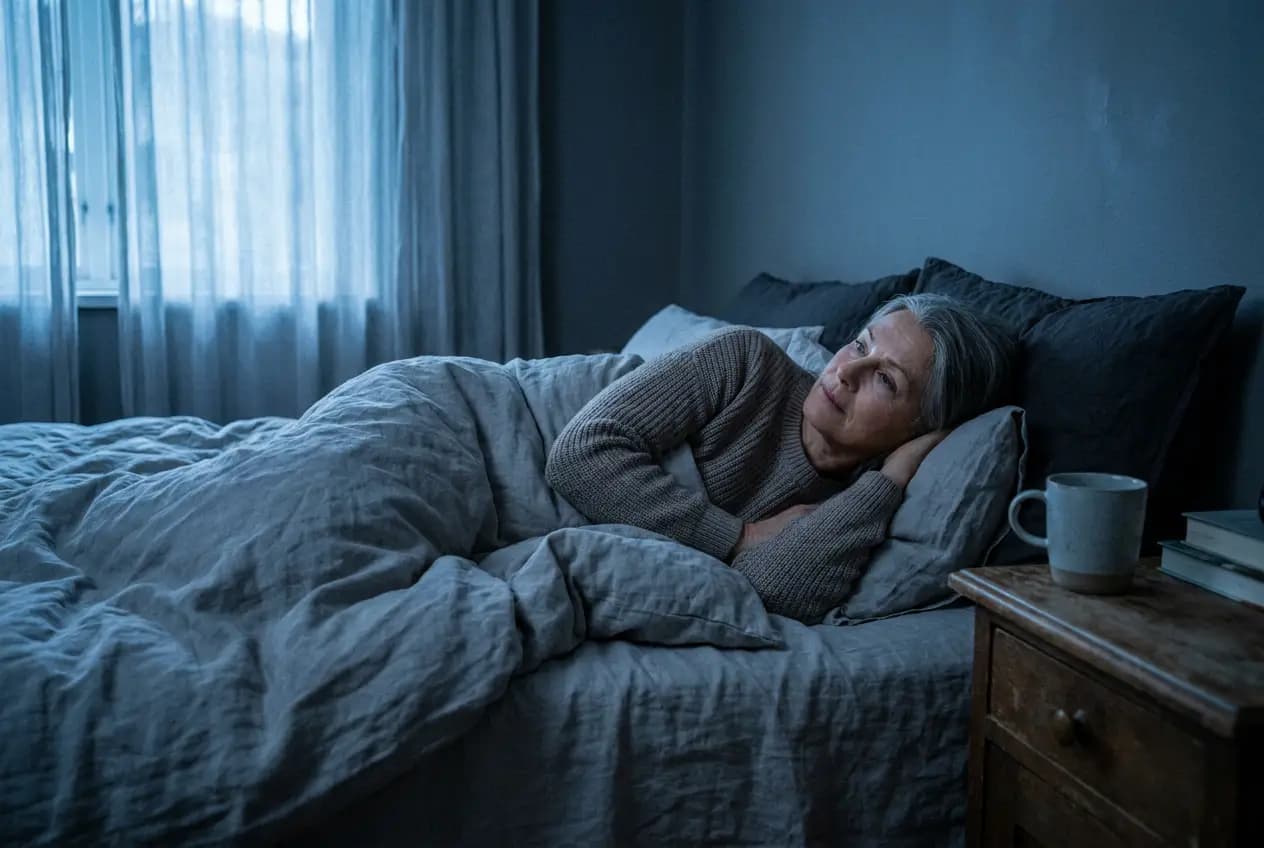
Waking up drenched, throwing off the covers, then shivering as you cool down — night sweats are one of the most disruptive parts of menopause. They're simply hot flashes that strike during sleep, and they're a leading reason the menopause transition wrecks rest. The good news: the same effective treatments that help daytime hot flashes work at night, too, and a few targeted steps can make a real difference.
What causes night sweats in menopause?
Night sweats and daytime hot flashes are grouped together as vasomotor symptoms (VMS). As estrogen falls in perimenopause, it affects the brain's thermostat — the hypothalamus — and narrows what scientists call the "thermoneutral zone," the comfortable range of body temperatures the brain tolerates without acting.
With that zone narrowed, even a slight rise in core temperature overnight — from blankets, a warm room, or your body's natural rhythms — is misread as overheating. The brain responds with rapid cooling: blood vessels near the skin widen (the flush of warmth) and sweat glands switch on. During the day this is a hot flash; at night it leaves you and the sheets damp, often jolting you awake. Recent research points to specific brain cells (KNDy neurons, which use a signal called neurokinin B) as a key part of this pathway — the basis for a new class of non-hormonal medication.
How long do menopause night sweats last?
Like daytime hot flashes, night sweats last a median of about 7 years, and longer for some women.[2] They're often worst in late perimenopause and the first year or two after the final period, then gradually ease. They're disruptive but not dangerous in themselves — though, as below, drenching sweats with other symptoms occasionally point to a different cause.
Why night sweats matter beyond the night
Night sweats don't just interrupt sleep in the moment — they fragment it night after night. That broken sleep feeds daytime fatigue, irritability, low mood, and difficulty concentrating, which many women find among the hardest parts of menopause. There's a vicious cycle, too: poor sleep can make hot flashes feel worse, and anxiety about waking up sweating can itself disrupt sleep. Treating night sweats often improves your whole day, which is why they're worth taking seriously rather than just enduring.
How to relieve night sweats
Cool your sleep environment
Small changes to your bedroom add up:
- Keep the room cool — lower the thermostat before bed, crack a window, or use a fan (the airflow helps as much as the temperature).
- Choose breathable, moisture-wicking nightwear and lightweight, layered cotton or bamboo bedding you can throw off and pull back easily.
- Keep a glass of cold water and a spare top within reach so a night sweat doesn't fully wake you.
- Consider cooling pillows or a mattress topper if night sweats are frequent.
Avoid evening triggers
Alcohol (especially in the few hours before bed), caffeine, spicy food, and a hot room, bath, or shower close to bedtime can all set off night sweats.[4] Cutting back in the evening often reduces them noticeably. Not smoking helps too, since smoking worsens vasomotor symptoms overall. Keeping a brief diary can reveal your personal triggers.
Prescription treatments
| Option | How it helps |
|---|---|
| Hormone therapy (HRT) | The most effective treatment for moderate to severe vasomotor symptoms, typically reducing them by around 75%; appropriate for many women and worth discussing with a clinician. |
| Fezolinetant (Veozah) | A newer non-hormonal drug that blocks the neurokinin B brain pathway behind hot flashes and night sweats. |
| Gabapentin | An anti-seizure medicine taken at night that may help night-time symptoms in particular. |
| SSRIs / SNRIs | Certain antidepressants (such as venlafaxine or paroxetine) modestly reduce vasomotor symptoms, and can be useful if mood or sleep is also affected. |
Hormone therapy is the most effective option, but it isn't right for everyone — for example, those with a history of certain cancers or blood clots.[1] A clinician can help you weigh the benefits and risks, or choose a non-hormonal alternative.
Mind-body approaches
Cognitive behavioral therapy (CBT) has good evidence for reducing how much hot flashes and night sweats bother you and for improving sleep — it works by changing the thoughts and responses that amplify the distress, not by stopping the flashes outright.[2] Because insomnia and night sweats feed each other, tackling both together — good sleep habits plus treatment for the sweats — usually works best.
Build a cooler bedtime routine
A few consistent habits can take the edge off night sweats and protect your sleep:
- Cool the bedroom first. Many people sleep best in a cool room (around 16–19°C / 60–67°F). Lower the thermostat before bed and let the room cool while you wind down.
- Layer light bedding. Use breathable cotton or bamboo sheets and several thin layers you can throw off and pull back, rather than one heavy duvet.
- Wear moisture-wicking nightwear that draws sweat away, so you don't wake up clammy.
- Keep a "night-sweat kit" by the bed: cold water, a small fan, and a spare top, so an episode doesn't fully wake you.
- Skip evening triggers: alcohol, caffeine, spicy food, and large hot meals close to bedtime.
- Time showers wisely. A warm — not hot — shower a little before bed lets your body cool afterward, which supports sleep.
- Wind down to lower stress, since anxiety can worsen both sleep and hot flashes; a consistent sleep schedule helps too.
Night sweats that aren't menopause
Menopause is the most common cause of night sweats in midlife, but it isn't the only one. Drenching night sweats can also be caused by an overactive thyroid, infections, low blood sugar (especially in people taking diabetes medication), certain medicines (including some antidepressants), anxiety, and — less commonly — other medical conditions.[1] See a clinician if your night sweats come with weight loss, fever, swollen glands, or feeling generally unwell, if they started suddenly and don't fit your menopause stage, or if they don't respond to the usual measures, so other causes can be ruled out.
When to see your doctor
See a doctor if night sweats are frequent, severe, or ruining your sleep, or simply to discuss treatment — you don't have to put up with them. Also get checked if night sweats come with unexplained weight loss, fever, or feeling generally unwell: drenching night sweats can occasionally signal infections, thyroid problems, certain medications, or other conditions unrelated to menopause that need evaluation.
Related: If nighttime sweating keeps disrupting your sleep, cooling bedding and sleepwear can make a real difference — see our roundup of the Best Cooling Products for Hot Flashes and Night Sweats.
Related: what else can cause night sweats, and the red flags to watch for — a broader look at non-menopausal explanations and when soaking sweats may be worth a doctor's visit.