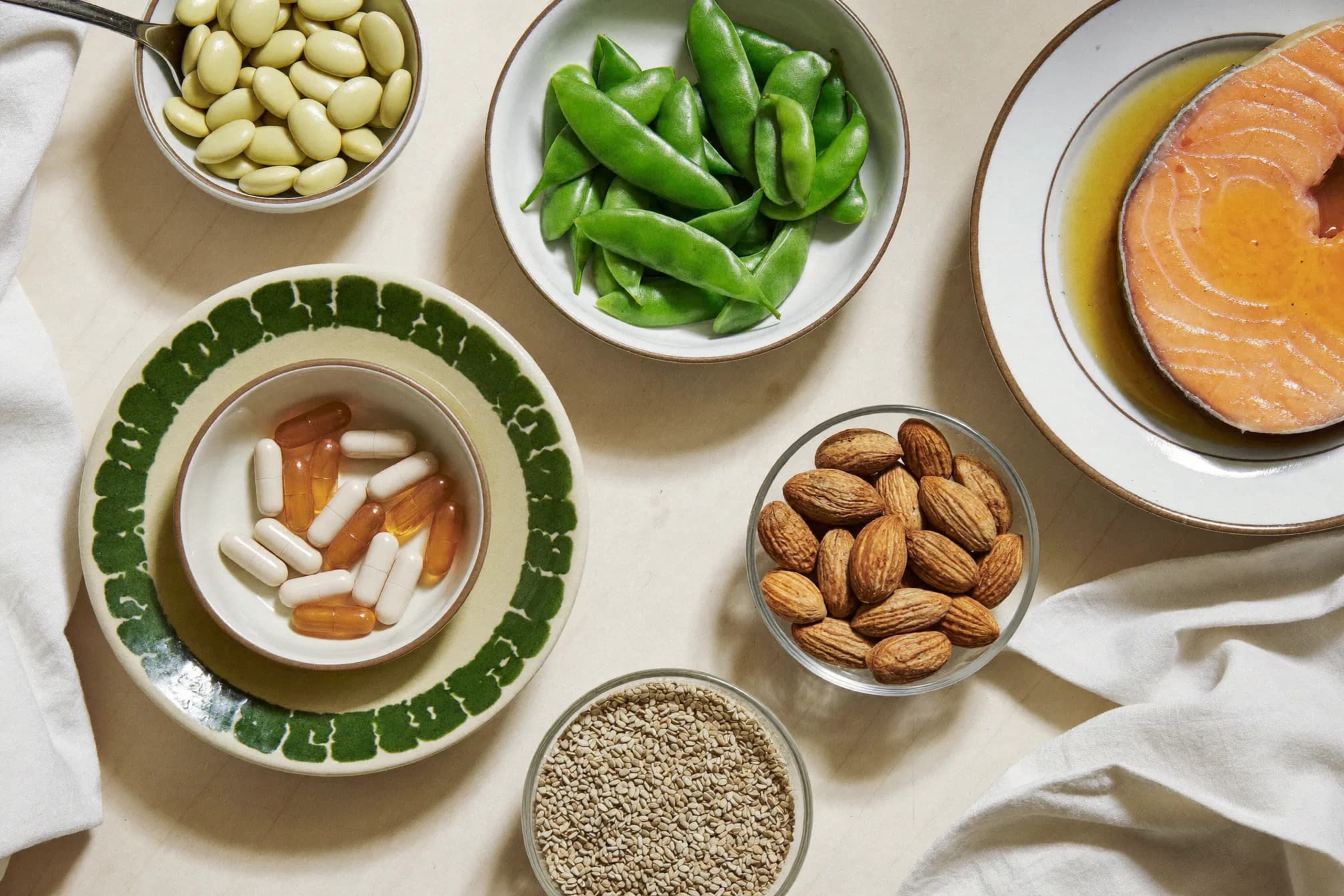
Supplements are a huge part of the menopause market, and it's easy to feel overwhelmed by the promises on the label. The honest picture: no supplement works as well as hormone therapy for menopause symptoms, and the evidence for most is weak or mixed. But a few have modest support, some help with related issues like sleep and bone health, and knowing which is which can save you money and disappointment. Here's an evidence-based rundown.
Supplements with the most evidence for hot flashes
| Supplement | What the evidence shows |
|---|---|
| Black cohosh | The most-studied herb for hot flashes; results are mixed, with some trials showing modest benefit and others none. Rare reports of liver problems mean it's worth caution. |
| Soy isoflavones / phytoestrogens | Plant compounds that act weakly like estrogen; may offer modest benefit for hot flashes over several weeks, but results are inconsistent. |
| Red clover | Another phytoestrogen; evidence is weak and inconsistent. |
| Evening primrose oil | Popular for hot flashes, but trials generally show it's no better than placebo. |
| Vitamin E | May have a small effect on hot flashes at most. |
Black cohosh is the herb most women reach for, and it's the most researched. Some studies suggest a modest reduction in hot flashes; others find it no better than placebo. It's generally well tolerated, but there have been rare reports of liver problems, so it's sensible to stop if you notice yellowing skin, dark urine, or unusual fatigue, and to avoid it if you have liver disease.[1]
Soy isoflavones and other phytoestrogens (including red clover) are plant compounds that bind weakly to estrogen receptors. The idea is appealing, and some women do report fewer hot flashes after several weeks of consistent use — but the trial results are genuinely mixed, and any effect is modest and slow to appear. Importantly, because phytoestrogens act weakly like estrogen, anyone who has had a hormone-sensitive cancer such as breast cancer should talk to their doctor before using them.[1] Evening primrose oil and vitamin E, despite their popularity, perform at most marginally better than placebo in studies.
Supplements for sleep, mood, and bone health
Some of the most worthwhile supplements in menopause aren't aimed at hot flashes at all — they target related issues:
- Magnesium is involved in sleep, muscle function, and mood, and many midlife women fall short of the recommended intake. It's low-risk and reasonable to try for sleep or constipation, with magnesium glycinate often used at night. See magnesium for menopause.
- Vitamin D and calcium support bone health, which becomes a real priority after menopause as estrogen-related bone loss accelerates.[4] They don't treat hot flashes, but getting them right is among the most valuable things you can do for long-term health. Aim for calcium from food first (dairy, fortified plant milks, leafy greens, tinned fish with bones), adding a supplement only to fill gaps, and ask your clinician about vitamin D, since many people are low.
- Omega-3 fatty acids support heart health and may modestly help mood, though the evidence for hot flashes is limited.
- Probiotics may support digestive and vaginal health, where the microbiome shifts as estrogen falls; evidence for menopause symptoms specifically is limited. See probiotics for menopause.
Supplements to approach with extra caution
- St John's wort is sometimes used for low mood, but it interacts with a long list of medications — including some antidepressants, blood thinners, and the contraceptive pill (which it can make less effective). Only use it with medical advice.
- Maca and ashwagandha are heavily marketed for energy, mood, and libido, but the evidence for menopause symptoms is limited and the studies are mostly small and low-quality.
- "Menopause blends" combine several ingredients in proprietary mixes that hide the actual doses, so you can't tell whether you're getting an effective amount of anything — or doubling up on something elsewhere.
How to choose a supplement safely
- Look for third-party testing — a USP or NSF mark means an independent lab verified that the product actually contains what the label claims, which matters in a loosely regulated market.
- Avoid proprietary blends that don't list the dose of each ingredient.
- Be skeptical of cure-all claims — "balances your hormones" and "guaranteed relief" are marketing, not evidence.
- Check for interactions — tell your doctor and pharmacist everything you take, especially alongside prescription medicines or after a hormone-sensitive cancer.
- Give it a fair trial, then reassess — if a supplement hasn't clearly helped after 8–12 weeks, it probably won't, and the money is better spent elsewhere.
What works better than supplements
For bothersome hot flashes and night sweats, hormone therapy is far more effective than any supplement, typically cutting symptoms by around 75%.[1] Non-hormonal prescription options — including the newer drug fezolinetant, certain antidepressants, and gabapentin — also outperform supplements.[3] See menopause hot flashes. The honest way to think about supplements is as a low-risk add-on for mild symptoms, or for related goals like sleep and bone health — not a substitute for proven treatment.
Food first: getting these nutrients from your diet
For most of the nutrients that matter in menopause, food is a better starting point than a pill — it comes with fiber, protein, and other benefits a supplement can't replicate. Useful sources include:
- Calcium (for bone health): dairy, fortified plant milks, leafy greens, and tinned fish with soft bones such as sardines.
- Vitamin D: oily fish, eggs, and fortified foods, plus sensible sun exposure — though many people still need a supplement, so ask your clinician.
- Magnesium: nuts, seeds, whole grains, beans, and leafy greens.
- Phytoestrogens: soy foods (edamame, tofu, tempeh, soy milk) and ground flaxseed — a gentler, food-based way to get the plant compounds sold as supplements.
- Protein and fiber: support muscle, weight, and heart health, which all become more important after menopause.
A few more supplements you'll see marketed
Flaxseed contains plant compounds called lignans; the evidence for hot flashes is weak, but ground flaxseed is a healthy food worth eating regardless. Ginseng may modestly help mood and overall wellbeing for some women, but doesn't appear to reduce hot flashes. DHEA is a hormone precursor that should only be used under medical supervision; a prescription vaginal form is used for dryness, but oral DHEA supplements are not recommended for general menopause symptoms. Wild yam creams, often marketed as "natural progesterone," have no good evidence behind them. As always, more marketing does not mean more evidence.
When professional care makes sense
Talk to a clinician before starting supplements if you take other medicines, have a chronic condition, or have had a hormone-sensitive cancer. And see a doctor if your symptoms are disrupting your life — there are more effective options than the supplement aisle.
Related: Wondering about the most-searched menopause herb? Black Cohosh for Menopause weighs the hot-flash evidence and an important liver-safety caveat.
Related: Does black cohosh actually work for menopause? — a closer look at what the Cochrane review and clinical trials suggest about one of the most popular herbal options.
Related: Is evening primrose oil worth it for menopause? — We weigh the mostly weak evidence behind this popular supplement so you can decide whether it earns a place on your list.