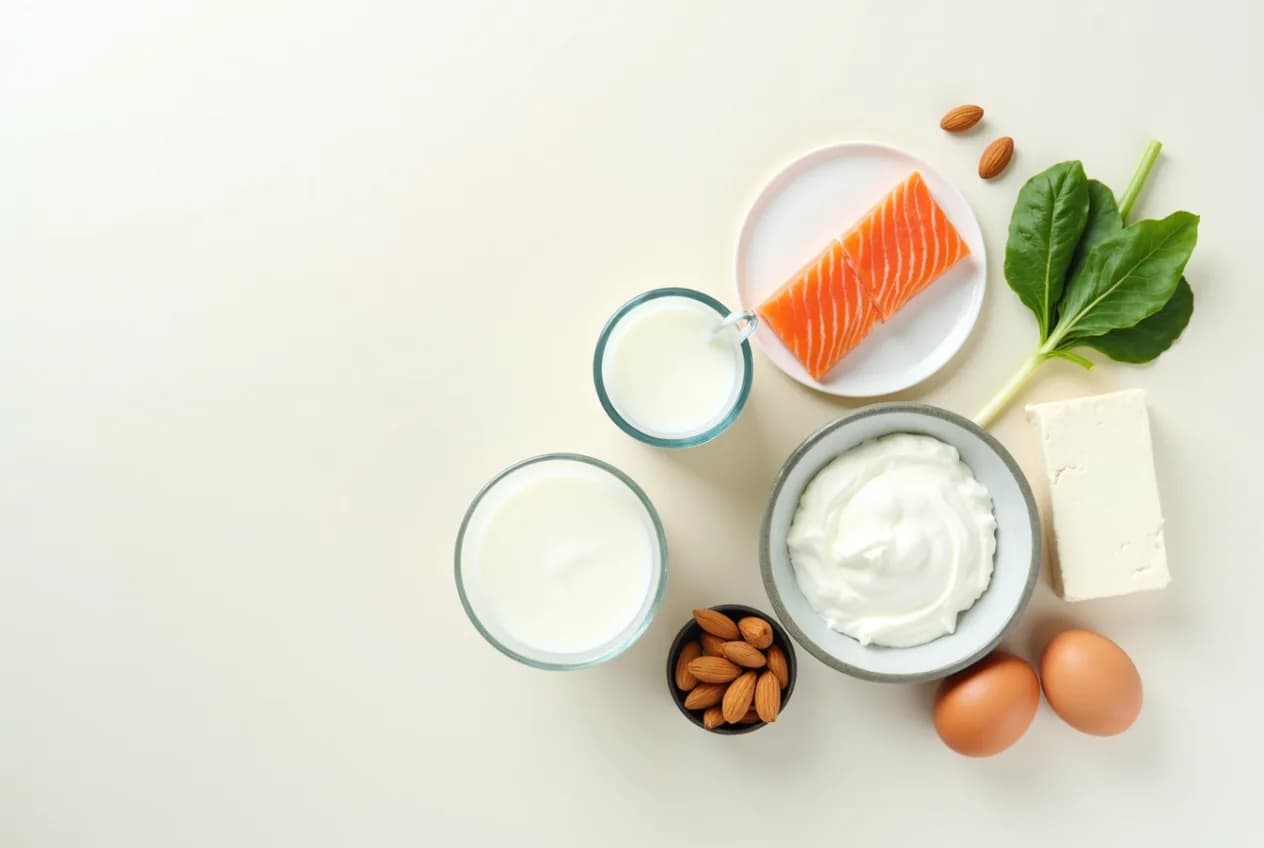
If you want stronger bones, calcium and vitamin D work as a team: calcium is the main building block of bone, and vitamin D helps your gut absorb it. The good news is that food can do most of the heavy lifting, and you almost certainly need less from a supplement bottle than the supplement aisle implies.
Why both calcium and vitamin D matter for bones
Your skeleton is living tissue that is constantly broken down and rebuilt. Calcium is the mineral that gives bone its hardness and strength, and it is also needed for your heart, muscles, and nerves. When you do not get enough from food, your body quietly pulls calcium out of your bones to keep the rest of you running.
That is where the second half of the team comes in. Vitamin D helps your intestines absorb the calcium you eat. Without enough of it, even a calcium-rich plate delivers less to your bones than it should. Think of calcium as the bricks and vitamin D as the crew that actually carries them inside.
Food first: the best calcium for bones
Aim to get calcium for bones from food where you can. Whole foods bring calcium alongside protein, potassium, and other nutrients, and food sources have not raised the same questions that high-dose supplements have. Good options include:
- Dairy such as milk, yogurt, and cheese
- Fortified plant milks like soy, oat, or almond (shake the carton, as calcium settles)
- Tofu set with calcium (check the label for calcium sulfate)
- Leafy greens such as kale, bok choy, and collards
- Canned fish with soft, edible bones like sardines and salmon
Spinach contains calcium too, but its oxalates block much of it, so treat it as a bonus rather than a main source. Spreading calcium across the day, rather than loading it all at one meal, helps your body use it. For a wider eating plan, see our guides to the best diet for menopause and the Mediterranean diet for beginners.
Where vitamin D for bones comes from
Most of your vitamin D for bones comes from sunlight: your skin makes it when exposed to UVB rays. How much you make depends on your latitude, the season, your skin tone, sunscreen use, and how much time you spend indoors, which is why so many people run low. Food provides smaller amounts, mainly from:
- Oily fish such as salmon, sardines, and mackerel
- Egg yolks
- Fortified foods like some milks, plant milks, and breakfast cereals
Because diet and sun are unpredictable, vitamin D is the nutrient most people are likeliest to need a modest supplement for, especially in winter or if you cover up or stay indoors.
How much calcium do I need?
A common question is, how much calcium do I need each day? Treat the numbers below as approximate guidance, not a prescription, because your needs depend on your age, diet, and health.
| Group | Approximate daily calcium | Common vitamin D range |
|---|---|---|
| Women up to ~50 | ~1,000 mg | ~600 IU (15 mcg) |
| Women 51 and older | ~1,200 mg | ~600–800 IU (15–20 mcg) |
| Adults 71+ | ~1,200 mg | ~800 IU (20 mcg) |
Many guidelines suggest roughly 1,000 to 1,200 mg of calcium a day for midlife and older women, with a common vitamin D range in the hundreds of international units. Exact needs vary, so ask a clinician what is right for you, especially before adding supplements.
The honest truth about calcium and vitamin D supplements
Here is the nuance that most labels skip: with calcium and vitamin D, more is not better. If you already get enough from food, piling on supplements does not build extra bone, and it may cause problems.
Calcium supplements for osteoporosis
People often reach for calcium supplements for osteoporosis, but the strongest move is to cover your needs through food first and use a supplement only to fill a genuine gap. There is honest, ongoing scientific debate about whether high-dose calcium supplements modestly affect cardiovascular risk. The debate is not settled, but it is a fair reason to favor food and to avoid taking far more than you need. Consider Maria, 58, who counted her usual yogurt, fortified soy milk, and canned salmon and realized she was already near her target, so a 500 mg "just in case" tablet on top was not helping.
It is also worth being clear about what calcium and vitamin D can and cannot do. They are essential building blocks, but if a scan confirms osteoporosis, they are an adjunct to—not a replacement for—clinician-directed care. Effective prescription treatments exist, including bisphosphonates, denosumab, and bone-building (anabolic) medicines. Whether you need one is an individual decision your clinician makes after weighing your fracture risk; you can read more in our guide to osteoporosis treatment. When those medicines are needed, their benefits usually outweigh their risks, though rare side effects (such as jaw osteonecrosis or atypical thigh-bone fractures) are part of that conversation.
Vitamin D supplements
Vitamin D supplements genuinely help people who are deficient or get little sun. But mega-doses do not build extra bone, and very high intakes can be harmful, raising blood calcium and stressing the kidneys. A modest daily dose that corrects a shortfall is the goal, not the biggest number on the shelf.
The menopause window and your wider bone plan
This matters most around menopause. Estrogen helps protect bone, so when it declines, bone loss speeds up, which is why osteoporosis is far more common in women. You can read the full story in menopause and bone loss and on our osteoporosis condition page. For some women, hormone therapy can help protect bone during this window, but it is an individualized decision that balances benefits and risks with your clinician.
Diagnosis comes from a bone density test, not from symptoms, and that scan reports a T-score that defines where you stand:
| T-score | What it means |
|---|---|
| −1.0 or above | Normal bone density |
| Between −1.0 and −2.5 | Osteopenia (lower than normal, not a disease) |
| −2.5 or below | Osteoporosis |
If a scan shows lower-than-normal density, learn what that means in osteopenia. It is not a disease and most people with it do not need medication; whether anyone does is decided by a broader fracture-risk assessment (tools like FRAX, plus any prior fragility fracture), not by the number alone. Someone with osteopenia and high fracture risk may still be treated, while many people are simply guided toward food, activity, and a repeat scan.
Where exercise fits (and its limits)
Nutrition is only one pillar. Weight-bearing and resistance work helps maintain bone and, just as importantly, builds strength and balance that prevent falls and fractures, so pair good intake with exercises for bone density. Be honest about its limits, though: exercise supports your skeleton but will not, on its own, reverse established osteoporosis, which is a clinician-managed condition.
One safety note matters if your bones are already fragile. If you have osteoporosis or a known vertebral (spine) fracture, some moves can do more harm than good. It is generally wise to avoid high-impact loading (such as jumping) and end-range forward bending or twisting of the spine (deep crunches, toe-touches, loaded rotation), which can stress a weak vertebra. Get an exercise plan tailored to your bone density rather than following a generic routine.
Food sources at a glance
| Food | Nutrient | Why it helps |
|---|---|---|
| Yogurt, milk, cheese | Calcium | Rich, well-absorbed everyday sources |
| Fortified plant milk | Calcium (+ often D) | Dairy-free option; shake before pouring |
| Calcium-set tofu | Calcium | Plant protein plus calcium in one |
| Sardines, canned salmon | Calcium + vitamin D | Soft bones add calcium; oily fish adds D |
| Kale, bok choy, collards | Calcium | Low-oxalate greens with usable calcium |
| Egg yolks, oily fish, sunlight | Vitamin D | Main everyday sources of D |
When to see a clinician
Supplements seem harmless, but the right amount is individual, so it is worth a conversation. Talk with a clinician if you:
- Are around or past menopause and want a personalized bone plan
- Are thinking about calcium or vitamin D supplements, so they can check your vitamin D level and the right amounts for you
- Have a history of kidney stones or kidney disease, since calcium and vitamin D need extra care
- Take medicines or have conditions that affect how you absorb these nutrients
- Have had a fracture from a minor fall or a noticeable loss of height, which can be red flags for fragile bones
Do not megadose on your own. The aim is to fill real gaps, mostly through food, and let a professional confirm the right numbers—and, if a scan shows osteoporosis, the right treatment—for your body.
This article is for general education and is not a substitute for personalized medical advice.
Related: Vitamin D does more than build bone. Vitamin D for Women: Benefits, Dosage, and Deficiency Signs covers testing, safe intake, and where the evidence is strongest.