Bones respond to the demands you place on them. Move and load them regularly, and the body gets a clear signal to maintain — and sometimes modestly build — bone strength. This guide covers the best exercises for bone density, how to start safely, and what exercise realistically can and cannot do.
How exercise actually helps your bones
Bone is living tissue that constantly remodels itself. When you walk, lift, jump, or pull against resistance, muscles and gravity tug on the skeleton. That mechanical loading triggers bone-building cells to reinforce the areas under stress, helping to preserve bone mineral density. The effect is real but measured: regular activity helps you hold onto bone and can produce small gains, especially when training is challenging and progressive. Beyond density itself, exercise builds the muscle strength, coordination, and balance that prevent falls — and most fragility fractures happen when someone falls. You can read more in our overview of the science-backed benefits of exercise.
The three types of exercise for bone density
A complete bone-friendly routine blends three categories, because each does a different job. Weight-bearing work loads the skeleton against gravity, resistance work makes muscles pull hard on bone, and balance work keeps you upright so you don't fall in the first place. The goal is variety across the week rather than picking just one. A reasonable weekly target for most healthy midlife adults is weight-bearing activity on most days, two to three strength sessions, and a little balance practice woven into everyday routines.
| Type | What it does for bone | Examples |
|---|---|---|
| Weight-bearing aerobic | Loads bone against gravity; supports hip and spine density | Brisk walking, jogging, dancing, stair climbing, hiking, racket sports |
| Resistance / strength | Muscle pull stimulates bone; builds strength to protect joints | Free weights, resistance bands, weight machines, bodyweight moves (squats, push-ups) |
| Balance & posture | Reduces fall risk; protects the spine and improves stability | Tai chi, single-leg stands, heel-to-toe walking, gentle yoga, core work |
Note that swimming and cycling are excellent for the heart but are not weight-bearing, so they do less for bone density. They're a fine complement, not a substitute.
Best weight-bearing exercises for osteoporosis prevention
Weight-bearing simply means your bones support your body weight while you move. The bone-building signal roughly tracks with impact, so it helps to think in tiers and start where your current fitness and bone health sit:
- Lower impact (gentle start): brisk walking, stair climbing, hiking on gentle hills, the elliptical, and low-impact dance. These suit beginners and anyone with diagnosed bone loss.
- Moderate impact: jogging, faster dancing, racket sports, and step aerobics — sensible once you have a base of fitness and no fracture concerns.
- Higher impact (only if cleared): jumping, skipping, and hopping load the hip and spine strongly, but they are appropriate only for people with healthy bones, not for fragile spines or after a fragility fracture.
Most days of the week is a realistic aim, building toward roughly 150 minutes of moderate activity across the week — a general public-health target rather than a bone prescription. The right tier depends on your bone health and fitness, which is exactly why personalized advice matters for anyone with diagnosed bone loss.
Strength training and resistance moves
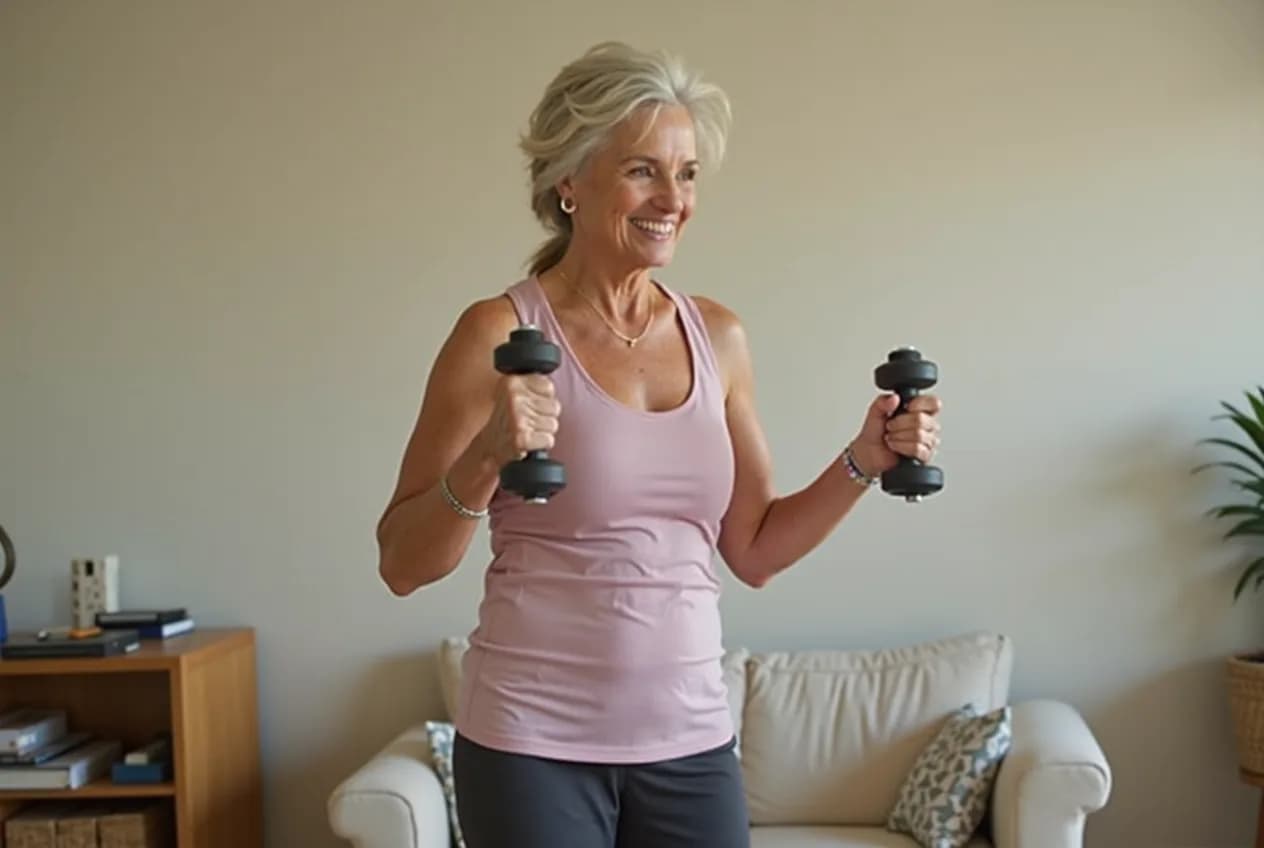
Resistance training is one of the most effective exercises to increase bone density because muscle contractions pull directly on bone. Aim for two to three sessions a week on non-consecutive days, working the major muscle groups — legs, hips, back, chest, shoulders, and arms. Practical entry points:
- Beginner: bodyweight squats, wall push-ups, sit-to-stand from a chair, light resistance bands
- Intermediate: dumbbell or kettlebell work, lunges, rows, step-ups
- Advanced: barbell squats and deadlifts with proper coaching, progressive overload
The two principles that matter most are consistency (every week, for the long term) and progressive challenge (gradually asking the muscles to do a little more). In practice, progressive overload is modest and gradual: pick a weight you can lift with good form for about eight to twelve repetitions, do one to three sets, and once the last rep feels manageable, nudge the weight, reps, or sets up slightly the following week. Bone responds to being asked to do a little more than it's used to — but rushing the load is how people get hurt, so the increments should be small.
Balance and posture: the fall-prevention piece
Strong bones don't help much if a fall fractures them, and balance training measurably lowers fall risk. The good news is that it slots into daily life and needs no equipment. Useful drills include:
- Single-leg stands — balance on one leg while you brush your teeth, holding a counter at first, then progressing to no hands.
- Heel-to-toe (tandem) walking — walk a straight line placing the heel of one foot directly in front of the toes of the other.
- Sit-to-stand — rise from a chair without using your hands, which builds leg strength and steadiness together.
- Tai chi or gentle yoga — both are well studied for improving balance and confidence on your feet.
Posture and core work also help protect the spine and counter the rounding that can accompany age-related bone loss. Aim for a few minutes of balance practice on most days; it adds up quickly and is especially worthwhile if you've noticed any unsteadiness.
The honest nuance: what exercise can and can't do
Here's the part many headlines get wrong. Exercise reliably helps you maintain bone, can produce modest improvements, and — crucially — reduces falls and fractures. What it will not do is "reverse" established osteoporosis on its own. If you have significant bone loss, exercise is an essential part of management, but it works alongside other measures — enough calcium and vitamin D (food first, with supplements only to fill a gap, since more is not better), and for some people medication or hormone therapy, which are individual clinical decisions weighing benefits and risks. See our guides to bone-density testing and osteoporosis treatment for the full picture.
Safety with osteopenia or osteoporosis
If you have osteopenia (lower-than-normal density that is not a disease and not a guarantee of osteoporosis), most movement is encouraged. But with a fragile spine, some moves carry real risk:
- Repeated forward spinal flexion — sit-ups, crunches, deep toe-touches — can stress vulnerable vertebrae.
- End-range twisting of the spine under load, such as loaded rotational machines or aggressive golf-style swings.
- High-impact jumping if your bones are already significantly weakened or you've had a fracture.
This doesn't mean "do nothing" — it means get individualized guidance so your program is matched to your bone health. A physiotherapist can screen your strength, balance, and posture, check how you move, and adapt almost any goal safely — swapping a risky exercise for one that achieves the same thing without loading the spine the wrong way. Many bone clinics can refer you to one.
The menopause connection
Bone loss is one of the most important long-term consequences of menopause. Estrogen helps protect bone, so as levels decline during the transition, bone loss speeds up — which is why osteoporosis is far more common in women. The years around the final period are when loss is fastest, so building strong exercise habits during perimenopause and beyond is one of the most valuable things you can do. Learn more in our piece on menopause and bone loss.
When to seek medical care
Exercise is generally safe and beneficial, but check with a clinician or physiotherapist before starting a new program if you have diagnosed osteoporosis or osteopenia, a previous fragility fracture, balance problems or recent falls, or significant back pain. Seek prompt advice for sudden severe back pain, a noticeable loss of height, or new curvature of the upper back, which can signal a vertebral fracture. Remember that bone health is diagnosed by a bone-density scan, not by symptoms — so a professional assessment is the right starting point for a program tailored to you.
Related: how your body changes in your 70s — a practical look at keeping bones strong and lowering fall risk in this decade, where weight-bearing and balance work matter most.