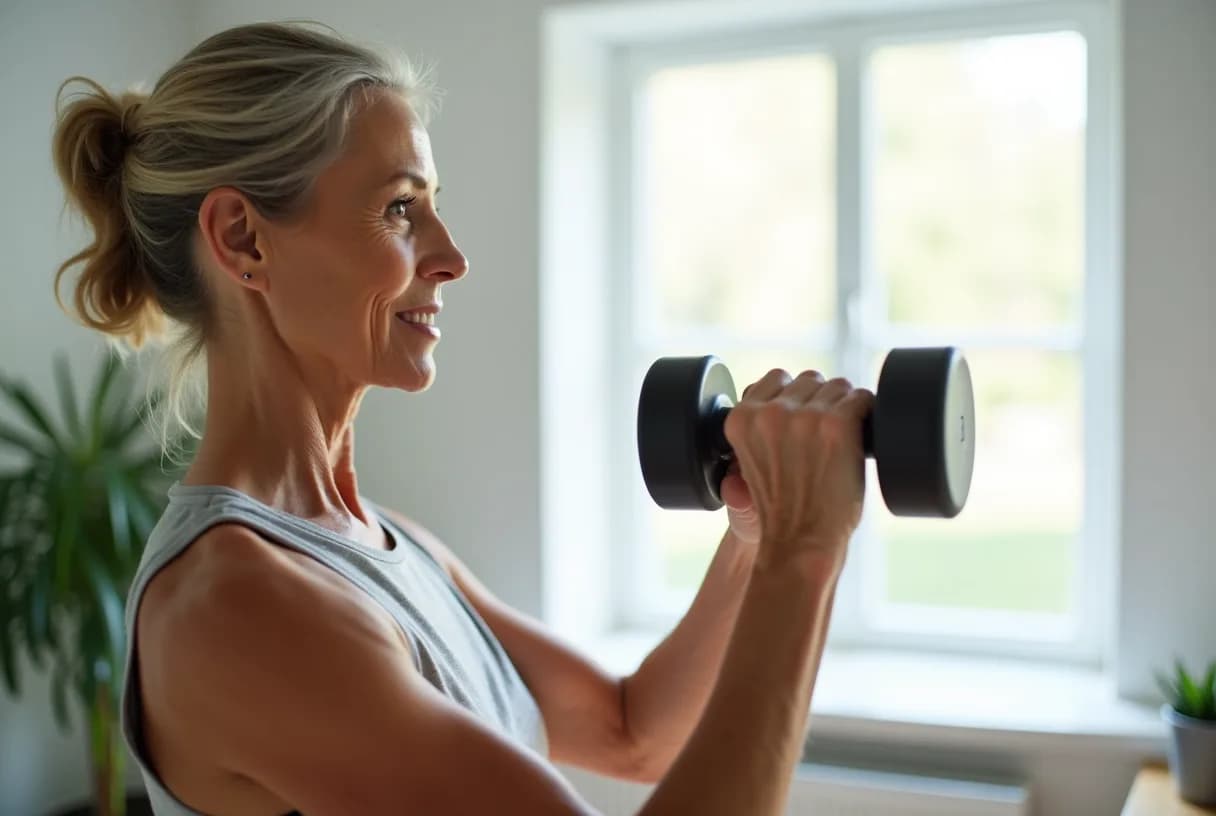
If you are considering or already taking a GLP-1 medicine for weight — semaglutide (Wegovy or Ozempic) or tirzepatide (Zepbound or Mounjaro) — the honest picture on bone is reassuring but not settled. Any rapid weight loss, whether from dieting, surgery, or medication, is linked to a small drop in bone mineral density, and midlife women are already losing bone as estrogen falls. Yet the clinical trials and meta-analyses published so far have not shown that GLP-1s increase fractures, and some analyses suggest a neutral-to-lower risk than expected. The catch: follow-up is short and postmenopausal women were rarely the main group studied — so the more certain, more actionable concern is muscle loss, and the same habits that protect muscle protect bone.
Why does rapid weight loss worry bone doctors?
Bone is living tissue that remodels in response to two things: how hard it is loaded, and how well it is fed. Lose a lot of weight quickly and both signals weaken. There is less mechanical load pressing on the skeleton, intake of bone nutrients like calcium and protein often drops, and hormones shift in unhelpful ways — lower estrogen, lower IGF-1, and a nudge upward in parathyroid hormone that pulls calcium out of bone. Reviews of weight-loss studies estimate a loss of roughly 1–2% of bone mineral density for every 10% of body weight lost, and severe calorie restriction can strip about two-and-a-half times more bone from the hip than a moderate approach.[2]
At midlife the worry compounds. The menopause transition is already the fastest period of bone loss in a woman's life, as falling estrogen tips the balance toward bone breakdown in the years around the final period.[3] (Our guide to menopause and bone loss covers that curve.) So the theoretical concern is straightforward: GLP-1-driven weight loss could stack on top of estrogen-related loss. The question is whether that theory shows up as real harm.
What does the evidence actually show on GLP-1s and bone?
Split this into two separate questions — a number on a scan (bone density) and the thing that actually matters (fractures) — because they do not point the same direction.
Bone density. The cleanest data to date come from a 52-week randomized, placebo-controlled trial in 64 adults at increased fracture risk — notably, 55 of them postmenopausal women, none with diabetes. Once-weekly semaglutide (a 1.0 mg diabetes-range dose) lowered bone mineral density at the total hip by about 2.6% and at the lumbar spine by about 2.1% versus placebo, driven by more bone breakdown without a matching rise in bone building; the femoral neck showed no significant difference.[1] That is a real signal, and it matters precisely because the study population was mostly postmenopausal women. Early clinic data presented at 2025 meetings echo modest hip and spine declines over roughly three years, but those are preliminary. Graded plainly: measurable but modest — on the order of what any comparable amount of weight loss produces, not a collapse.
Fractures. Here the news is better. Meta-analyses of GLP-1 trials in type 2 diabetes have not found more fractures, and some pooled analyses point to a neutral-to-lower risk than expected.[5] One comparison even found a lower fracture risk with semaglutide than with sleeve-gastrectomy surgery producing similar weight loss.[5] Why the disconnect from the density numbers? Obesity, diabetes, and their treatment affect the skeleton in complicated ways, and small density changes do not always translate into broken bones over a year or two. But — and this is the honest caveat for you — most participants were not postmenopausal women, follow-up rarely exceeds two years, and no large trial was designed to catch fractures as its main outcome. So the evidence is reassuring, not final. This is emerging science.
Approved versus off-label. Be clear on what these drugs are for. Wegovy and Zepbound are FDA-approved for chronic weight management (Wegovy also to reduce cardiovascular events, Zepbound also for obstructive sleep apnea); Ozempic and Mounjaro are approved for type 2 diabetes.[6][7] None is approved or prescribed to protect bone. Taking a GLP-1 "for bone density" or "for longevity" is not a recognized use.
| Concern | What the evidence shows | What to do |
|---|---|---|
| Bone mineral density (DEXA) | Small declines with major weight loss of any kind, including GLP-1s — roughly 1–2% per 10% of weight lost, and about 2–3% at the hip over a year in a trial of mostly postmenopausal women. | Do not skip needed treatment over this; protect bone with protein, strength training, calcium and vitamin D. Ask about a baseline scan if you are higher-risk. |
| Fracture risk | Trials and meta-analyses so far show no increase, and some suggest a neutral-to-lower risk than expected. Follow-up is short; postmenopausal women are underrepresented. | Reassuring but not the last word. Keep protecting bone and report any fall-related break promptly. |
| Muscle (lean mass) | The clearer signal: close to 40% of weight lost can be lean tissue. Muscle loads and supports bone. | Prioritize protein and resistance training from day one. |
| Higher-risk women | Existing osteopenia or osteoporosis, prior fragility fracture, low body weight, early or surgical menopause raise the stakes. | Have a DEXA and bone-protection conversation with your clinician before or during treatment. |
| Pregnancy | GLP-1s are not for use in pregnancy; the label advises stopping before a planned pregnancy because the drug clears slowly. | If pregnancy is possible, discuss timing and contraception with your prescriber. This is prescriber-led. |
The bigger, more certain issue: muscle
Where the evidence is clearer — and where midlife women have the most to gain — is lean mass. In the STEP 1 semaglutide trial, participants lost about 15% of body weight over 68 weeks, and close to 40% of the weight lost was lean tissue rather than fat (some analyses put it near half).[4] Tirzepatide substudies show similar lean-mass reductions.[4] Muscle is not just about strength: muscle pulls on bone with every step and lift, and that tension is part of what keeps bone dense. Losing muscle at midlife — on top of menopausal sarcopenia — is its own risk for falls and frailty, and falls, not density readings, are what break hips. Our full explainer on GLP-1s and muscle loss goes deeper. The encouraging part: muscle and bone respond to the same protective inputs, so you rarely have to choose between them.
The plan that guards muscle guards bone
Four levers, all clinician-friendly, all worth starting on day one rather than after the scale has moved:
- Enough protein. Adequate protein during weight loss protects lean mass; an Endocrine Society study presented in 2025 found that higher protein intake was linked to less muscle loss in people on semaglutide.[8] See high-protein eating for women.
- Resistance and weight-bearing exercise. Loading the skeleton is the single strongest signal to keep both muscle and bone. Combine strength training with weight-bearing moves.
- Calcium and vitamin D. Adequate calcium — about 1,200 mg a day for most women over 50, ideally from food — plus vitamin D reduces bone loss during weight loss.[2] See calcium and vitamin D for bones and calcium-rich foods.
- Lose weight steadily, not crash-fast. Moderate, gradual weight loss spares more bone than aggressive restriction.[2]
Notice that not one of these asks you to give up a needed treatment. The same plan protects both, which is exactly why bone worry should shape how you use a GLP-1, not whether obesity gets treated.
Who should be extra thoughtful?
Some women have more bone to lose and should build the conversation in from the start: existing osteopenia or osteoporosis, a prior fragility fracture (a break from a minor fall), low body weight, early or surgical menopause, long-term steroid use, or a strong family history of hip fracture. If that describes you, ask your clinician whether a baseline DEXA scan — and a repeat later — makes sense, and whether your bones need active treatment alongside weight management. A DEXA conversation is reasonable; it is a clinician decision, not something to self-order and interpret. If you are weighing GLP-1 access and cost while you plan, our cost and coverage estimator can help you prepare questions.
What about "microdosing" GLP-1s for bones or longevity?
You will see claims that tiny "microdoses" protect bone, preserve muscle, or extend lifespan. There is no trial evidence for microdosing for bone health or longevity — these are marketing narratives, not approved uses, and they are often attached to grey-market vials of unknown contents. If you want a GLP-1, the safe path is a proper prescription with monitoring, not sourcing it yourself; here is how to get a GLP-1 online safely.
When to see a doctor
This article is a reference, not a diagnosis, and we never suggest a dose. Contact a clinician if you:
- break a bone from a minor fall or bump, or notice new height loss or persistent mid-back pain (a possible spine fracture) — these warrant prompt evaluation and possibly a DEXA;
- have osteoporosis, osteopenia, or a prior fracture and are starting or already on a GLP-1, so bone protection can be planned deliberately;
- could be pregnant or are planning pregnancy — GLP-1s are not for use in pregnancy, and the label advises stopping before conception because the drug clears slowly;[6] any timing or contraception change is prescriber-led. (One accurate distinction: tirzepatide's label warns that oral birth control may work less well and advises a non-oral or barrier method for a few weeks after starting and after each dose increase; semaglutide carries no such warning.[7])
- develop severe, persistent abdominal pain, especially with vomiting — a possible sign of pancreatitis that needs urgent care.
Never start, stop, switch, or change the dose of a GLP-1 or a contraceptive on your own. Every one of those is your prescriber's decision — obesity and bone loss are both chronic conditions best managed with a clinician over time, not fixed once and forgotten.