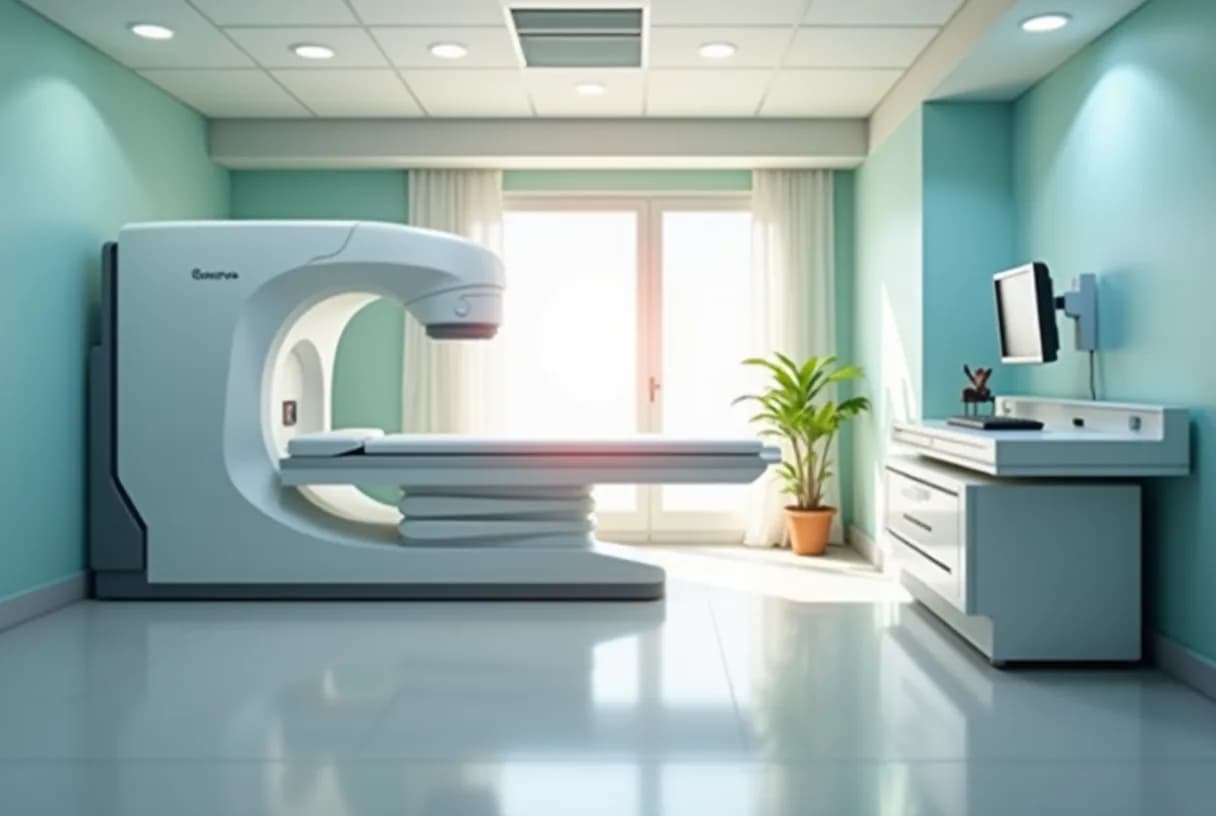
A DEXA (also written DXA) bone-density scan is the standard test for measuring bone strength and diagnosing osteoporosis. As of 2026, the cash price for a diagnostic scan in the United States usually runs about $75 to $400, with hospital settings sometimes exceeding $500. But most people who genuinely need one pay far less: if you qualify under the screening rules, Medicare and most private insurance cover a bone-density scan at little or no cost — often $0. Prices vary widely by facility, region, and how the scan is coded, so always verify locally before you book.
Quick verdict: what a DEXA scan should cost you
- Best case $0 if you qualify. Covered as preventive screening through Medicare Part B or an ACA-compliant private plan when you meet the eligibility criteria — for many women, this is the real price.
- Cheapest cash ~$75–$150 at a freestanding imaging or direct-pay center. Ask for the self-pay rate by CPT code (77080 for a hip-and-spine scan).
- Typical cash ~$150–$400 at a clinic or radiology office if you're uninsured or haven't met your deductible.
- Watch out Hospital facility fees can push the price 3–5× higher, and a scan coded "diagnostic" instead of "screening" may trigger your deductible.
- Not the same A fitness "body-composition" DEXA ($40–$150 cash) measures fat and muscle — it does not diagnose osteoporosis.
How much does a DEXA scan cost without insurance?
For a diagnostic bone-density scan, self-pay prices in 2026 cluster in a wide band because the single biggest driver of cost is where you get it — not the scan itself, which takes 10–20 minutes and uses a very low dose of radiation. Freestanding imaging centers and direct-pay services advertise the lowest rates; hospital outpatient departments add a facility fee that can triple or quadruple the bill. National cash medians reported by price-transparency trackers sit near $300–$340, but that number hides real regional spread.
| Where you get it | Typical 2026 cash price | Notes |
|---|---|---|
| Direct-pay / freestanding imaging center | $75–$150 | Lowest cash prices. Ask for the self-pay quote by CPT code 77080. |
| Independent radiology or clinic | $150–$300 | Most common range; varies by region and provider. |
| Hospital outpatient (with facility fee) | $300–$500+ | Facility fees drive hospital prices 3–5× higher than freestanding centers. |
| Fitness "body-composition" DEXA | $40–$150 | Measures body fat and muscle — not a diagnostic bone-density test. |
These are ballpark ranges compiled from public price-transparency data as of 2026; they are not a quote. Call two or three facilities, ask specifically for the self-pay bone-density DEXA rate, and compare — the difference between a freestanding center and a hospital can be several hundred dollars for the identical scan.
Is a bone density scan covered by insurance?
Usually yes — if you qualify. Under the Affordable Care Act, non-grandfathered private plans must cover services the U.S. Preventive Services Task Force (USPSTF) grades A or B with no cost-sharing when you use an in-network provider and meet the criteria. Osteoporosis screening carries a grade B recommendation, so for eligible women a screening DEXA is typically fully covered — no copay, no deductible.
The catch is coding. A scan billed as preventive screening for someone who meets the criteria is generally $0. A scan billed as diagnostic or monitoring — for example, tracking bone loss in someone already diagnosed, or a second scan sooner than the standard interval — may fall under your normal deductible and coinsurance. Before you book, it's worth asking your clinician's office how the scan will be coded and confirming your plan's coverage.
Does Medicare cover a DEXA scan?
Yes. Medicare Part B covers a bone mass measurement once every 24 months (and more often if medically necessary) for beneficiaries who meet at least one qualifying condition. Per Medicare, you pay nothing for the test if your doctor or provider accepts assignment, because it is a covered preventive service. Confirm the provider accepts Medicare assignment first — a provider who has opted out can bill you the excess.
Medicare's qualifying conditions (from federal coverage rules, 42 CFR 410.31) include being an estrogen-deficient woman at clinical risk for osteoporosis, having X-ray findings suggesting osteoporosis or a vertebral fracture, taking long-term steroids (roughly the equivalent of 5 mg of prednisone a day for more than three months), having primary hyperparathyroidism, or being monitored on an FDA-approved osteoporosis drug.
| Payer | Out-of-pocket if you qualify | Frequency covered |
|---|---|---|
| Medicare Part B | $0 if provider accepts assignment | Once every 24 months (more if medically necessary) |
| Private / ACA plan, screening (meet USPSTF criteria) | Often $0 as preventive care | Commonly every ~2 years |
| Private plan, diagnostic / monitoring | Deductible + coinsurance may apply | As ordered by your clinician |
| No insurance | Full cash price ($75–$500+) | N/A — self-pay |
Who qualifies for a covered scan?
The two most-cited authorities largely agree on who should be screened. The USPSTF (2025 final recommendation) recommends screening for all women 65 and older, and postmenopausal women younger than 65 who are at increased risk — identified using risk factors and a tool such as FRAX. (For men, the USPSTF found the evidence insufficient to make a recommendation either way.)
The Bone Health & Osteoporosis Foundation recommends a bone-density test for women 65+ and men 70+, and as early as age 50 for anyone with risk factors — a fracture after age 50, long-term steroid or certain cancer/epilepsy medications, a family history of osteoporosis, smoking, heavy alcohol use, or conditions like rheumatoid arthritis or diabetes. If you went through menopause early or have low body weight, that counts too. Our guide to the bone density test and T-scores explains what the numbers mean, and menopause and bone loss covers why the years after menopause matter most for bone.
What makes one DEXA scan cost more than another?
- Facility type — the biggest factor. Hospital outpatient departments add facility fees that freestanding and direct-pay centers don't.
- How it's coded — a preventive screening you qualify for is usually $0 through insurance; a diagnostic scan may apply your deductible.
- Geography — cash prices differ substantially by state and metro area.
- Add-ons — extras like a vertebral fracture assessment (VFA) or trabecular bone score (TBS) can raise the bill. A fitness body-composition read-out is a separate, cash-only service.
- Whether the provider accepts assignment (Medicare) or is in-network (private plans).
You can sanity-check your likely out-of-pocket cost with our cost & coverage estimator before you call around.
How often do you actually need a DEXA scan?
This is where many people overpay. The standard covered interval is every two years, and that's appropriate for monitoring someone on treatment or at meaningful risk. But repeating a scan too soon rarely changes anything — and if it's coded diagnostic, you may pay for it out of pocket.
A large study in the New England Journal of Medicine (Gourlay et al., 2012) followed women 67 and older and estimated how long it takes 10% of women to progress to osteoporosis. For women whose first scan showed normal bone density or mild osteopenia, that interval was roughly 15 years. For moderate osteopenia it was about 5 years, and for advanced osteopenia about 1 year. The honest takeaway: if your baseline scan is reassuring, you likely do not need to repeat it every two years — ask your clinician what interval fits your result before paying for another. If you've been diagnosed, see osteopenia and osteoporosis treatment for what comes next.
Is a cheaper at-home bone test worth it instead?
Short answer: it's not a substitute. At-home "bone health" kits typically measure urinary markers of bone turnover or use heel ultrasound — they can flag turnover but cannot diagnose osteoporosis or give you the T-score that guides treatment decisions. A central DEXA of the hip and spine remains the reference standard. We compare them honestly in DEXA scan vs. at-home bone test. If cost is the barrier to a real DEXA, a self-pay freestanding scan or a covered screening is usually the better spend than a kit that answers a different question.
How to pay less for a DEXA scan
- Check if you qualify for covered screening first. For many women 65+ (and younger women at risk), the correctly coded scan is $0.
- Confirm your provider accepts Medicare assignment or is in-network before booking.
- Choose a freestanding imaging or direct-pay center over a hospital when paying cash — same scan, often hundreds less.
- Ask for the self-pay price by CPT code (77080 for a hip-and-spine DEXA) and compare 2–3 facilities.
- Use HSA/FSA funds — a bone-density scan is an eligible medical expense, which lowers the effective cost.
- Don't pay for repeats you don't need — match the interval to your baseline result.
When to talk to a doctor
Cost aside, a bone-density scan is a screening and monitoring tool — not a diagnosis you make yourself. Talk with a clinician about getting one if you're a woman 65 or older, are postmenopausal with risk factors, have broken a bone after age 50, take long-term steroids, or have a condition or medication that weakens bone. If you've lost height, developed a stooped posture, or have unexplained back pain, mention it — those can signal a spine fracture that changes what testing you need. To build bone alongside testing, see exercises for bone density and the bone health hub, and use find care to locate a provider.