If you have searched for supplements to lower cortisol, you have probably been promised a lot: calmer days, a flatter stomach, better sleep, all from a single capsule. Here is the honest version up front — no supplement "melts away" cortisol or stress, and the evidence for most cortisol supplements is limited, mixed, or low quality. This guide grades the popular options fairly, flags the real cautions, and points you toward the things that actually move the needle.
First, set expectations honestly
Cortisol is a normal, essential hormone made by your adrenal glands. It rises and falls in a daily rhythm and helps you respond to stress — you are not supposed to have "zero" cortisol, and you cannot "detox" or flush a hormone out of your body. Your body regulates cortisol itself. So-called cortisol detox routines help only insofar as they are ordinary stress reduction.
It is also worth saying plainly: most everyday symptoms blamed on "high cortisol" — tiredness, belly weight, poor sleep, low mood — are nonspecific. They overlap with ordinary stress, perimenopause, thyroid problems, and many other things, and they are not proof of a cortisol disorder. "Adrenal fatigue" is not a recognized medical diagnosis. If you want the bigger picture, start with how to lower cortisol and high cortisol symptoms.
The foundations matter far more than any pill
Before spending money on the best supplements for cortisol, it helps to know that lifestyle basics have far stronger and more consistent evidence than any capsule. These are not glamorous, but they are what genuinely calm a chronically revved-up stress response over weeks and months:
- Sleep — protecting it is one of the highest-value moves you can make (the science of rest; if menopause is disrupting yours, see menopause insomnia).
- Movement — regular activity blunts stress reactivity over time, and you do not need a punishing routine; a brisk daily walk counts (benefits of exercise).
- Stress management — slow breathing, time outdoors, realistic boundaries, and support for anxiety symptoms when they are part of the picture.
- Food-first — a balanced pattern such as the Mediterranean diet, with steady meals and less alcohol and late caffeine, beats chasing single nutrients in pill form.
If you only do one thing from this article, make it one of these. A supplement is, at best, a small add-on to this base — never a substitute for it.
Cortisol-lowering supplements, graded honestly
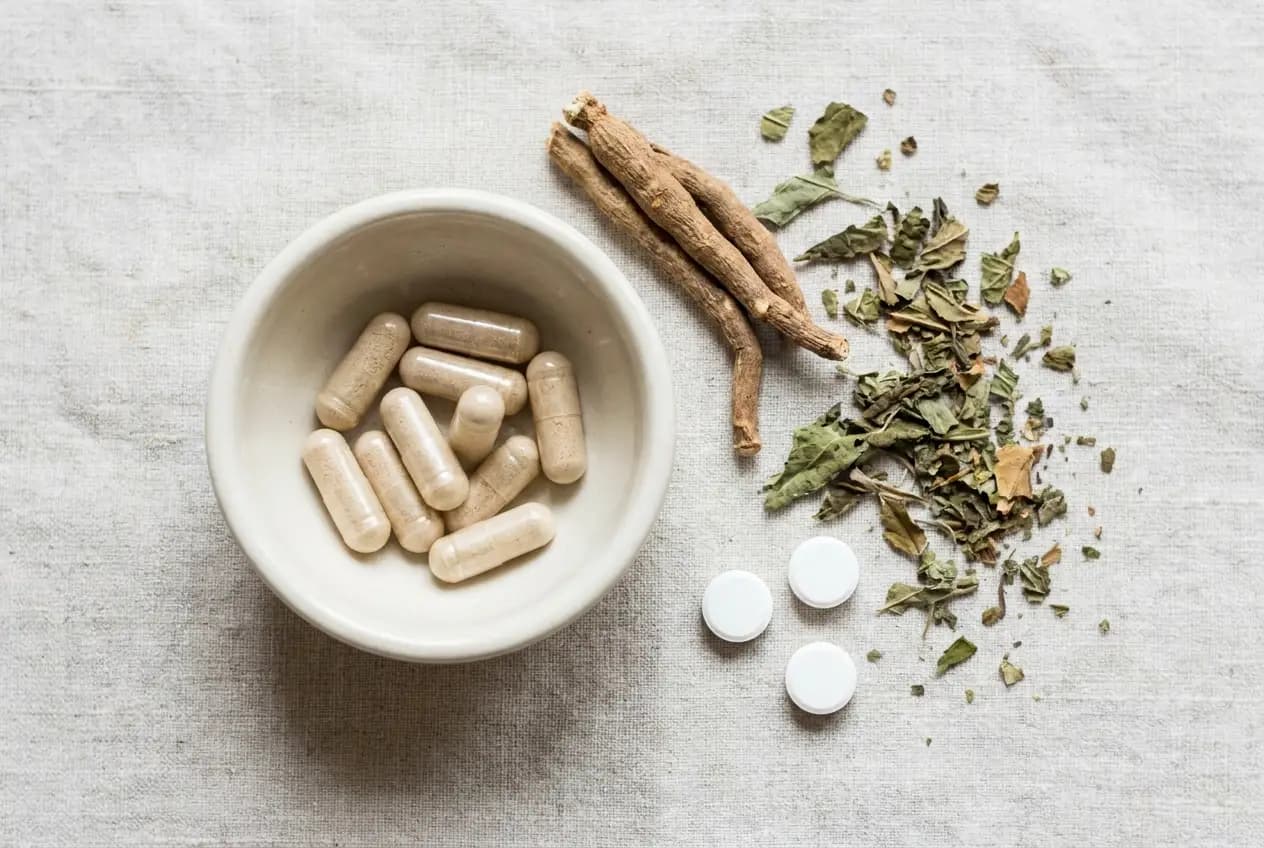
Here is a fair, evidence-graded run-through of the most-discussed cortisol lowering supplements. "Evidence" here means the quality and consistency of human research on stress, perceived stress, or measured cortisol — not marketing claims. A useful reality check: most of these trials are small, short (often 8 weeks or less), and many are funded by supplement makers, which tends to flatter the results.
| Supplement | Evidence grade | What the research actually suggests |
|---|---|---|
| Ashwagandha | Modest / short-term | The most-studied option. Several small, short randomized trials report lower scores on perceived-stress questionnaires and modestly lower cortisol — but the trials are brief, varied in dose and extract, often industry-funded, and long-term safety and benefit are not established. |
| Magnesium | Limited / indirect | Important if you are genuinely deficient, and tied to sleep and relaxation, but direct evidence that it lowers cortisol is weak. See magnesium for menopause. |
| Omega-3s | Mixed | Some studies suggest a dampened stress response and lower inflammation; results are inconsistent and doses vary widely. |
| L-theanine | Limited | An amino acid in tea linked to short-term calm and focus in small studies; cortisol-specific evidence is thin. |
| Rhodiola | Low-quality | Marketed as an "adaptogen" for fatigue and stress, but trials are small, varied, and generally low quality. |
| "Adaptogen" blends | Very low | Multi-herb stress formulas are rarely tested as sold; you often cannot tell what is doing what, or at what dose. |
The honest summary: across these cortisol supplements, ashwagandha has the strongest short-term signal, and everything else ranges from limited to very low quality. It is worth being clear about what "lower perceived stress" meant in those ashwagandha studies — people reported feeling somewhat less stressed on standard questionnaires, which is a real but soft outcome, not proof that the herb fixed a hormone problem. None of these is a cure, and none replaces sleep, movement, and stress habits.
The cautions worth taking seriously
Supplements are not regulated as tightly as prescription medicines, so quality, purity, and the actual dose in the bottle can vary between brands and even between batches. "Natural" does not mean risk-free, and some products interact with medication or are not safe for everyone.
Ashwagandha specifically
- May affect thyroid hormone levels and thyroid medication — a real concern if you have a thyroid condition (and high cortisol can look similar to an overactive thyroid; see thyroid or menopause).
- Is not advised in pregnancy, and there is little safety data for breastfeeding.
- Has rare reports of liver injury — stop and seek care if you notice yellowing skin or eyes, dark urine, or persistent nausea.
This is why supplements to reduce cortisol are not a good place to self-prescribe, especially alongside other medicines or an existing health condition.
Food-first, and a clinician, beat self-prescribing
If your stress response feels stuck "on," the most defensible plan is to build the foundations first, eat a varied whole-food diet (see the best diet for menopause), and treat any supplement as a possible, modest add-on rather than the main event. If you are considering a cortisol-related product, the safer route is a short conversation with a clinician or pharmacist who knows your full medication list — and our broader guide to supplements for menopause takes the same cautious, food-first stance. For more on the specific products and brands, see our companion piece on cortisol supplements.
How menopause and stress overlap
Many women land on cortisol content during menopause, when stress, falling estrogen, and broken sleep collide. Stress can genuinely worsen menopause symptoms — hot flashes, night sweats, mood swings, and fatigue. But that is a reason to treat the stress and protect the sleep, not to assume a cortisol "imbalance" you can pill away. Weight changes are similarly nuanced (see cortisol and weight gain and menopause belly fat); they rarely come down to one hormone.
When to check in with a clinician
Cortisol-lowering supplements should never replace medical assessment. Genuinely pathological high cortisol is Cushing's syndrome — uncommon and diagnosed by a clinician with proper tests, never from a selfie or a home kit. Book a visit before or instead of self-treating if you have:
- Wide purple or pink stretch marks, a rounded "moon" face, easy bruising, or unexplained muscle weakness.
- A thyroid or liver condition, or you are pregnant or breastfeeding.
- Any prescription medication — always check for interactions before starting a supplement.
- Severe or persistent low mood, anxiety, or insomnia that is not improving.
A clinician or pharmacist can tell you whether a supplement is reasonable for you, what to avoid, and whether your symptoms point to something — like a thyroid issue or a metabolic condition such as type 2 diabetes — that deserves proper testing rather than a trending capsule.
Related: Herbs marketed for stress get their own review — Adaptogens for Women weighs the evidence and safety.