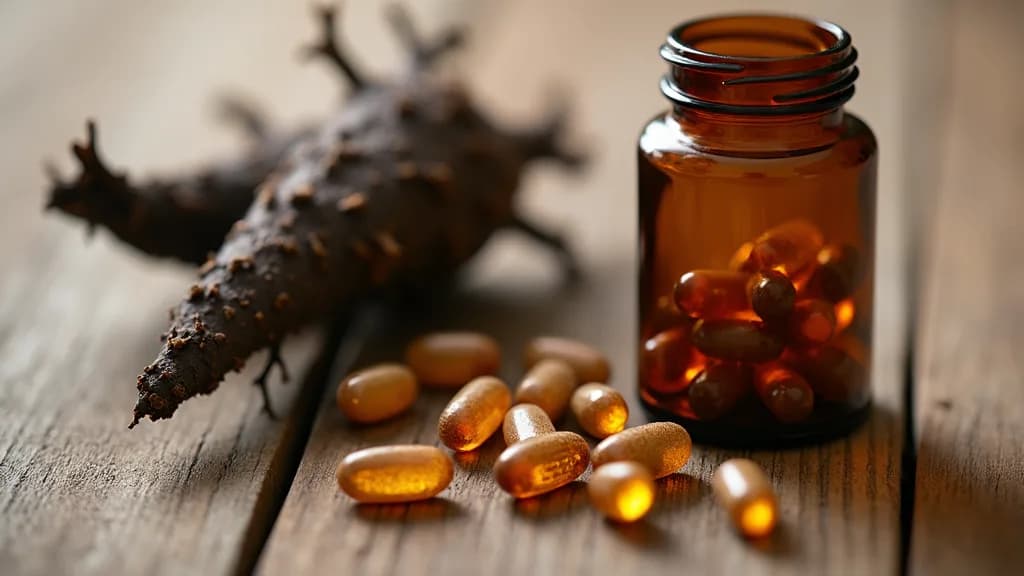
Black cohosh (Actaea racemosa, formerly Cimicifuga racemosa) is one of the most widely used herbal remedies for menopausal hot flashes and night sweats. The honest bottom line: research results are mixed, and where a benefit shows up it tends to be modest. It is popular and easy to find, but it is not a proven substitute for evaluating symptoms that genuinely disrupt your sleep, mood, or daily life.
If your hot flashes or night sweats are bothersome, the most useful first step is a conversation with a clinician about the full range of options — not reaching straight for a bottle on the shelf. This guide explains what black cohosh is, what the evidence does and doesn't support, how it's typically used, the safety issues that matter, and how it compares with other choices.
What is black cohosh?
Black cohosh is a flowering plant native to eastern North America. Its root and underground stem (rhizome) have a long history of traditional use, and today they are sold as capsules, tablets, and liquid extracts marketed for menopause symptoms. It is among the top-selling botanical supplements in menopause products.
Despite decades of study, exactly how black cohosh might work is still unclear. It was once assumed to act like estrogen, but the current understanding is that it probably does not behave as a plant estrogen in the body. Other proposed mechanisms — effects on serotonin pathways or on the brain's temperature-regulation system — remain unproven. In plain terms: nobody has pinned down a convincing biological explanation for how it would ease hot flashes.
Does black cohosh help hot flashes and night sweats?
This is where honesty matters. Studies of black cohosh have produced inconsistent results. Some trials report modest reductions in hot flashes; others find it works no better than a placebo. The U.S. National Institutes of Health's Office of Dietary Supplements summarizes the research as mixed and not strong enough to draw firm conclusions.
Two things make the evidence hard to interpret. First, placebo response in menopause trials is large — many women feel better on a dummy pill, which makes a real drug effect harder to detect. Second, products differ widely in what they actually contain, so results from one branded extract may not carry over to another. The National Center for Complementary and Integrative Health points to a 2023 review of 22 studies suggesting black cohosh products may be potentially beneficial for overall menopause symptoms, with some improvement in hot flashes — but it also cautions that the studies vary in quality and design, so the evidence remains limited rather than definitive. Reviews by professional bodies have generally not endorsed it as an established, first-line treatment for hot flashes.
Realistic expectation: if black cohosh helps you, the effect is likely to be small, may take several weeks, and may be hard to distinguish from what you'd feel on a placebo. That doesn't mean it's worthless for everyone — it means the evidence is genuinely uncertain.
How is black cohosh typically used?
Black cohosh is taken by mouth, usually as a standardized root extract in capsule or tablet form. Products commonly reference standardized preparations studied for menopause, and effects — if they appear — generally take a few weeks rather than working overnight. Most research has looked at relatively short-term use over a few months, and there is limited information on long-term safety.
Because the supplement industry is not tightly regulated the way prescription medicines are, the amount of active plant material — and the purity — can vary from one bottle to the next. Some products marketed as black cohosh have, in the past, been found to contain the wrong plant species altogether. Choosing a reputable brand and, ideally, a product independently tested for identity and contaminants reduces (but does not eliminate) that uncertainty. This is worth raising with a pharmacist or clinician.
Safety: what you need to know
Black cohosh is often described as generally well tolerated in the short term, with the most common complaints being mild stomach upset, headache, or rash. But there are specific safety points that deserve real attention.
Rare reports of liver injury
There have been rare reports of liver damage in people taking black cohosh products. A direct cause-and-effect link has not been firmly established in every case, but regulators and medical bodies take it seriously enough to warn about it. Stop taking black cohosh and seek medical care promptly if you develop signs of a liver problem, such as yellowing of the skin or eyes (jaundice), unusually dark urine, pale stools, persistent nausea, unusual tiredness, or pain in the upper-right side of your abdomen.
People with existing liver disease should avoid black cohosh. If you drink alcohol heavily or take other medicines or supplements that can affect the liver, this is especially important to discuss with a clinician first.
Quality and purity are not guaranteed
As above, supplements are not held to the same manufacturing and testing standards as prescription drugs in many countries. Contamination, mislabeling, and inconsistent potency are real possibilities. This is one reason a "natural" label does not automatically mean "safe" or "predictable."
Interactions and specific conditions
Talk with a clinician or pharmacist before starting black cohosh if you take other medications, have a hormone-sensitive condition (such as certain breast or uterine concerns), have liver problems, or are pregnant or breastfeeding. Because black cohosh's effects on hormone-sensitive tissue aren't fully understood, caution is sensible if you have a history of hormone-sensitive cancer. Your own medical history changes the risk-benefit calculation, which is exactly why individualized advice beats a generic recommendation.
| Option | Evidence for hot flashes | Key considerations |
|---|---|---|
| Black cohosh | Mixed; modest at best, often no better than placebo | Rare liver-injury reports; variable product quality; unclear mechanism |
| Menopausal hormone therapy | Most effective option for hot flashes and night sweats | Prescription; benefits and risks depend on age, timing, and health history — a clinician decision |
| Certain non-hormonal prescription medicines | Can meaningfully reduce hot flashes for some women | Prescription only; side effects vary; useful when hormones aren't suitable |
| Lifestyle and behavioral steps | Modest but low-risk; helps some triggers | Layered clothing, cooling strategies, limiting triggers, cognitive behavioral therapy for symptoms |
How black cohosh compares to other options
Menopausal hormone therapy remains the most effective treatment for hot flashes and night sweats, according to major medical organizations, though whether it's right for you depends on your age, how far you are past menopause, and your personal health history. For women who can't or prefer not to use hormones, several non-hormonal prescription medicines have evidence behind them. Non-drug steps — keeping cool, dressing in layers, identifying triggers, and structured approaches such as cognitive behavioral therapy — are low-risk and can help alongside anything else.
Against that backdrop, black cohosh sits in the "uncertain, possibly modest" tier. Some women feel it helps and tolerate it well; the evidence simply doesn't let anyone promise it will work. If you try it, treat it as a trial: give it a defined window (for example, a few weeks to a couple of months), watch how you actually feel, stay alert to the liver-safety signs above, and don't let it delay proper evaluation of symptoms that are wearing you down.
When to see a doctor
Book a visit if hot flashes or night sweats disrupt your sleep or daily life, if symptoms are severe or unusual, if you have any vaginal bleeding after menopause, or before starting any supplement when you already take medications or have a chronic condition. And seek care promptly for the liver-warning signs described above. A clinician can help you weigh black cohosh against options that have stronger evidence and match them to your personal risk profile.
This article is educational and general in nature. It isn't a substitute for individualized medical advice, diagnosis, or treatment from a qualified healthcare professional who knows your history.
Related: If you're weighing non-hormonal supplements for midlife symptoms, another option worth understanding is Myo-Inositol: Benefits and What the Evidence Says.
Related: Curious how other botanicals stack up for midlife symptoms? We weigh the evidence on stress-buffering herbs in Adaptogens for Women: Do They Really Help With Stress?