Spermidine has become one of the internet's favorite "longevity" molecules — sold in capsules that promise slower aging, sharper memory and a longer, healthier life. The biology behind the hype is real and genuinely interesting. The human proof is not there yet. Here is what the evidence actually shows, graded plainly, with a look at what it means for women navigating midlife.
What spermidine is
Spermidine is a polyamine — a small molecule your body makes on its own, that your gut bacteria also produce, and that you eat every day in food. It was first identified in semen (hence the name), but it lives inside virtually every cell, plant and animal. Your natural levels tend to fall with age, which is part of why researchers started asking whether topping them back up might matter.
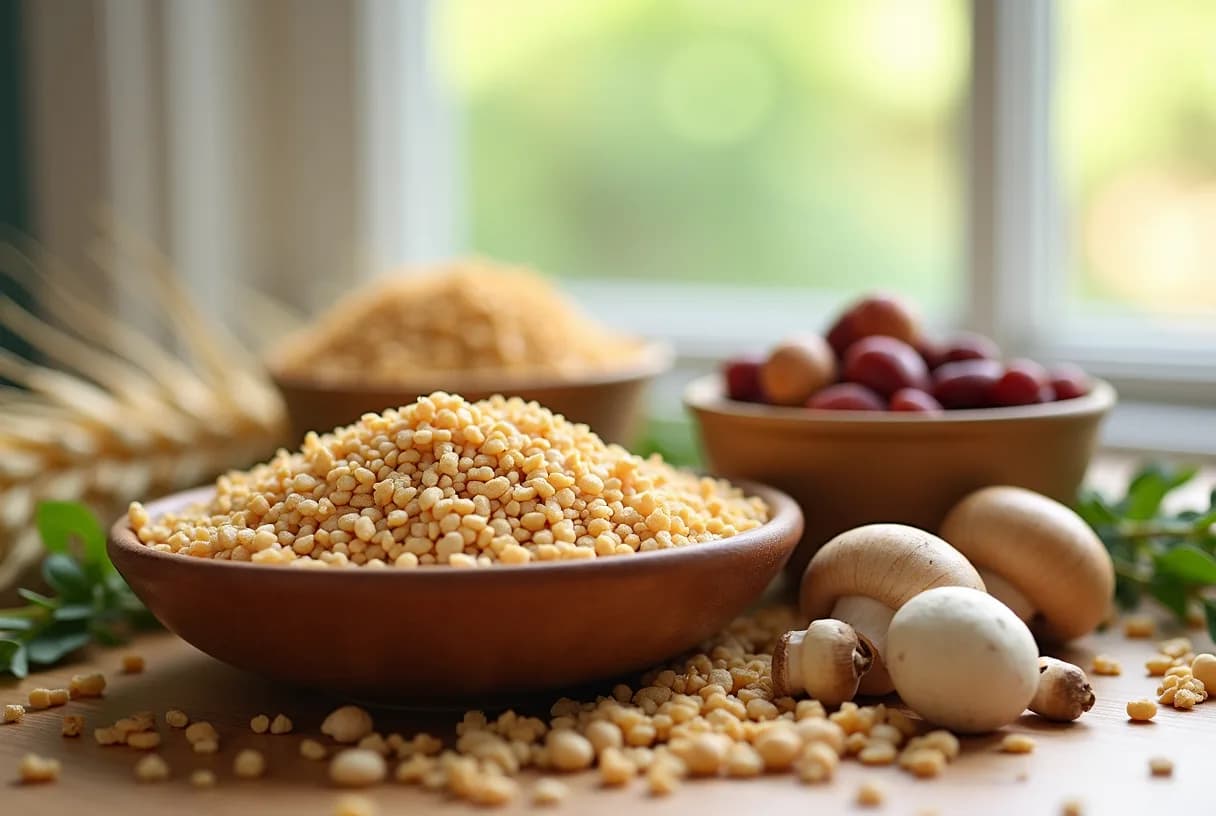
You do not need a pill to get it. Spermidine is concentrated in wheat germ, aged cheeses, mushrooms, soybeans and other legumes, whole grains, and fermented foods like natto. A varied, plant-forward diet already delivers several milligrams a day. This makes spermidine one of the few "anti-aging supplements" you can genuinely eat rather than buy.
The mechanism getting all the attention: autophagy
The reason spermidine is in longevity headlines is a cellular process called autophagy — literally "self-eating," the housekeeping system cells use to break down and recycle damaged proteins and worn-out components. Autophagy tends to slow as we age, and sluggish autophagy is tied in the lab to many age-related problems. In cells and animals, spermidine can switch autophagy back on.
This is not fringe science. Fasting and the drug rapamycin — two of the most reliable ways to extend lifespan in animals — appear to work partly by raising the body's own spermidine, which is then required for the autophagy and lifespan benefits to appear. In yeast, worms, flies and mice, feeding extra spermidine reproducibly extends lifespan, often by 10–30%. That mechanistic story is strong. The open question is whether it carries over to people.
What the human evidence actually shows
Here is where honest grading matters. The exciting spermidine data fall into three tiers, and they are not equal.
Tier 1 — cells and animals (strong, but not human). This is where nearly all the dramatic lifespan and autophagy results live. Impressive and reproducible, but a longer-lived worm is not proof of a longer-lived woman.
Tier 2 — observational human studies (suggestive, not proof). The most-cited human finding comes from the Bruneck Study, an Italian cohort of 829 adults followed for two decades. People in the top third of dietary spermidine intake had markedly lower all-cause mortality than those in the bottom third — a hazard ratio of about 0.76. The authors framed the gap as roughly equivalent to being 5.7 years younger. Other cohorts link higher intake to better cognition and lower cardiovascular death. But these are associations. People who eat lots of wheat germ, legumes, mushrooms and vegetables tend to eat and live differently in dozens of ways, and no statistical adjustment fully removes that. Observational data can raise a hypothesis; it cannot prove cause.
Tier 3 — randomized controlled trials (few, small, mostly preliminary). This is the tier that would actually prove a benefit, and it is thin. The best-designed trial to date — the 12-month SmartAge study of 100 older adults with subjective memory complaints — gave about 0.9 mg/day of spermidine from wheat-germ extract and found no significant benefit on memory versus placebo. A handful of smaller, shorter trials have hinted at benefits, but a 2025 review of the four main cognition trials concluded the results are inconsistent and that longer, standardized studies are needed before any claim can be made.
| Claim you'll see marketed | What the evidence really shows | Honest grade |
|---|---|---|
| "Triggers autophagy to clean out aging cells" | Well demonstrated in cells and animals; human autophagy is hard to measure directly and remains largely unconfirmed at supplement doses. | Strong in the lab, unproven in people |
| "Extends lifespan" | Reproducible in yeast, worms, flies and mice; no human lifespan trial exists (and none is feasible in the short term). | Animal only |
| "Helps you live longer" (human data) | Observational cohorts link higher dietary intake to lower mortality (hazard ratio ~0.76 in the Bruneck Study) — association, not cause. | Observational only |
| "Improves memory / prevents cognitive decline" | The best 12-month randomized trial found no benefit; smaller trials are mixed. Not established. | Not proven |
| "Boosts heart health, hair, immunity, skin" | Mostly preclinical or marketing extrapolation; no adequate human trials. | Marketing |
Food sources: you can get spermidine from your plate
Because the human signal is strongest for dietary spermidine, the lowest-risk way to raise your intake is food. Content varies a lot between databases and even between samples of the same food, so treat these numbers as approximate:
- Wheat germ — the richest common source, roughly 20–40 mg per 100 g. A tablespoon or two stirred into yogurt or oatmeal is the easiest big hit.
- Aged, hard cheeses (mature cheddar, parmesan) — spermidine accumulates during fermentation and aging; up to about 20 mg per 100 g in well-aged cheese.
- Soybeans and fermented soy (natto, tempeh, edamame) — roughly 6–12 mg per 100 g.
- Mushrooms — about 8–12 mg per 100 g.
- Legumes, peas, whole grains and leafy greens — moderate amounts that add up across a day.
This is the same pattern behind Mediterranean-style eating, and it comes with fiber, protein and micronutrients no capsule provides. If you're rethinking your nutrition in midlife, spermidine-rich foods are an easy, evidence-friendly add.
Supplements: doses, quality and what's unknown
Spermidine supplements come in two forms: wheat-germ extracts standardized to a spermidine amount, and synthetic spermidine (often spermidine trihydrochloride). Doses are all over the map. The human trials mostly used around 1 mg/day; many products on the shelf now sell 5–10 mg per capsule. Here is the honest part: the observational mortality signal came from food, the doses tested in trials were small, and the long-term safety of higher supplement doses has not been established. More is not known to be better — and could carry risks no one has studied.
Two quality issues matter. First, supplements are not reviewed by the FDA for safety or effectiveness before they are sold — the manufacturer, not a regulator, vouches for what is in the bottle. Second, real-world quality varies: in one case the FDA posted a recall of a spermidine product for an undeclared wheat allergen, exactly the kind of hidden risk that matters if you have celiac disease or a wheat allergy. Look for third-party testing (NSF, USP or an independent lab), and be skeptical of mega-doses sold with anti-aging promises the science doesn't support. Our supplement scorecard and interaction checker can help you vet a product, and this guide on how to spot a supplement recall is worth a read before you buy.
Who should be cautious — and when to see a doctor
Spermidine has looked well tolerated at the low doses studied, with no major safety signal reported over 3–12 months. But "well tolerated in a small, short trial" is not the same as "proven safe for everyone, long term." Talk to a clinician before starting if you:
- are pregnant or breastfeeding — polyamines are central to fetal growth and there is essentially no safety data in these groups;
- have active cancer or are in treatment — tumor cells rely heavily on polyamines, so oncologists generally advise against self-supplementing;
- have a wheat allergy, celiac disease or gluten sensitivity — wheat-germ products are a problem, and a "wheat-free" source should only be used with guidance;
- take prescription medicines — run any new supplement past your pharmacist first.
And a broader midlife point: don't use a longevity supplement to paper over a symptom that deserves a diagnosis. New or worsening memory trouble is worth a medical work-up, and any bleeding after menopause is a red flag that needs prompt evaluation — never a capsule. Autophagy won't fix a thyroid problem, iron deficiency or perimenopausal brain fog, all common and treatable causes of "feeling older" in your 40s and 50s.
The honest verdict
Spermidine is one of the more scientifically credible names in the longevity aisle, alongside molecules like NMN and NAD+. The autophagy mechanism is real, and the animal lifespan data are genuinely impressive. But the leap from "extends lifespan in a worm" to "extends yours" has not been made — the human evidence is observational, and the one rigorous memory trial came up empty. That's not a reason to sneer; it's a reason to keep your expectations (and your wallet) in check. Food-first is the reasonable move: wheat germ, legumes, mushrooms, aged cheese and a plant-forward diet raise your spermidine while delivering benefits no capsule can. If you still want to try a supplement, choose a third-party-tested product, keep the dose modest and treat it as an experiment — not a proven anti-aging drug.