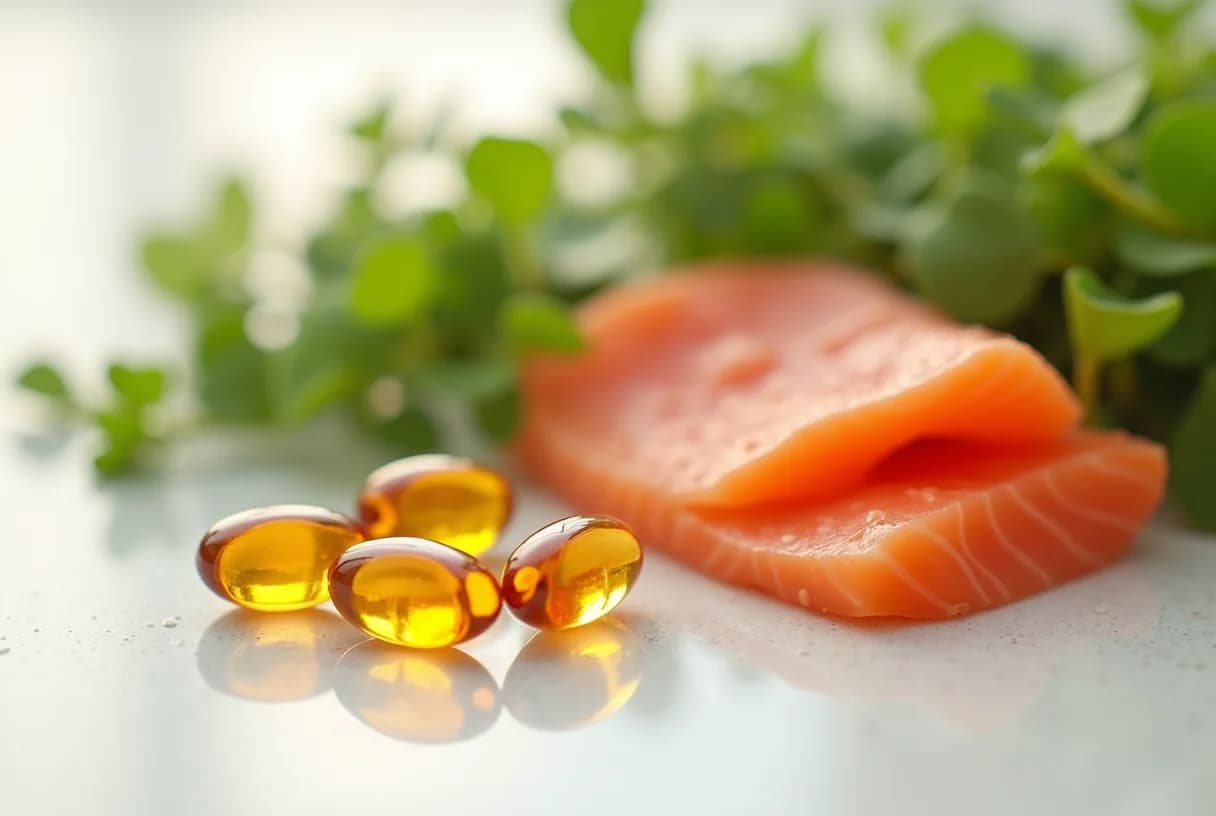
The best fish oil supplement isn't the one with the biggest "1,000 mg" on the front. It's the one that tells you exactly how much EPA and DHA — the two active omega-3s — are in each serving, carries a third-party seal you can verify (USP Verified, NSF Certified, or IFOS 5-star), proves the oil isn't rancid, and comes in a triglyceride form from a clean source. For general health, aim for roughly 250–500 mg of combined EPA+DHA per day; higher doses (about 1–4 g) are mostly for lowering high triglycerides and belong under a clinician's supervision.
Quick verdict
- Best overall A third-party certified fish oil (USP Verified, NSF Certified, or IFOS 5-star) in triglyceride form that lists EPA and DHA per serving on the label.
- Best for high EPA/DHA A concentrated fish oil, which packs more combined EPA plus DHA into fewer, smaller softgels.
- Best value Compare products on cost per unit of combined EPA plus DHA, not the big "1,000 mg" number on the front, since two bottles labeled the same can deliver very different doses.
- Best for high triglycerides Higher-dose EPA plus DHA products are meant for lowering high triglycerides and belong under a clinician's supervision, not for routine general use.
- What to look for A verifiable third-party seal (USP Verified, NSF Certified, or IFOS 5-star) plus evidence the oil is fresh and not rancid.
This is the product guide. If you want the "why" — how omega-3s work in the body, and how to get them from food — see omega-3s for women, foods high in omega-3, and salmon and omega-3. Here we focus on how to read a label and separate a genuinely good supplement from thin, over-hyped ones.
The number that actually matters: EPA + DHA per serving
"Fish oil 1,000 mg" describes the weight of the oil in the capsule — not the amount of omega-3 you absorb. According to the NIH Office of Dietary Supplements, a typical 1,000 mg fish oil softgel supplies only about 180 mg EPA and 120 mg DHA — roughly 300 mg of combined omega-3. To reach 500 mg EPA+DHA from that product you'd take about two softgels; to reach 1,000 mg, about three.
So ignore the big front number and turn the bottle over. On the Supplement Facts panel, find the EPA line and the DHA line and add them together. That combined figure — per serving, and noting how many capsules a "serving" is — is the honest basis for comparing products and cost-per-dose. Concentrated fish oils pack more EPA+DHA into fewer, smaller pills, which is why two bottles labeled "1,000 mg" can deliver very different doses.
What to look for (and what to ignore)
| Criterion | What to look for | Why it matters |
|---|---|---|
| EPA + DHA per serving | A specific combined number on the panel, not just "fish oil 1,000 mg" | This is the actual active dose; total oil weight is misleading |
| Third-party seal | USP Verified, NSF Certified, or IFOS 5-star — verified on the certifier's own database | Confirms the label is accurate and the product was tested for contaminants and freshness |
| Freshness / oxidation | Low TOTOX (≤26), a peroxide value under 5, added antioxidant (vitamin E/rosemary) | Rancid oil can cause fishy burps and may blunt any benefit |
| Form | "Triglyceride" or "re-esterified triglyceride" preferred over ethyl ester | Triglyceride forms are absorbed somewhat better |
| Source & purity | Named fish (sardine, anchovy, salmon) or algae; tested for mercury, PCBs, dioxins | Small, short-lived fish and purified oils carry less contaminant load |
| Clean label | No "proprietary blends" hiding the EPA/DHA split; no mega-dosing beyond your goal | You should know exactly what — and how much — you're taking |
Freshness is the under-known problem
Fish oil goes rancid. Because it's a delicate polyunsaturated fat, it oxidizes with exposure to heat, light, and air — and oxidation is measured by values like peroxide value (PV) and total oxidation, or TOTOX. This isn't a fringe concern: a 2020 peer-reviewed market survey in PLOS One found that roughly a quarter or more of tested fish oil products exceeded recommended oxidation limits (about 41% over the peroxide-value limit and 27% over the TOTOX limit). Rancid oil is the usual culprit behind fishy burps and aftertaste, and oxidized oil may deliver less of the benefit you paid for.
Quality programs set a ceiling of PV ≤ 5 and TOTOX ≤ 26; an IFOS 5-star rating also requires an anisidine value ≤ 20. Practically: favor products that publish or certify freshness, that include a small amount of antioxidant, that smell clean (not sharply fishy) when opened, and that you buy from a store with good turnover rather than a dusty bargain bin. Store the bottle somewhere cool and dark, or refrigerate liquids.
Triglyceride vs. ethyl ester form
Omega-3 in supplements comes in several molecular forms. The NIH notes that natural triglyceride, re-esterified triglyceride, and free-fatty-acid forms have somewhat higher bioavailability than ethyl esters. Ethyl-ester concentrates (made by swapping the glycerol backbone for ethanol) are cheaper to produce and still work — this isn't a dealbreaker — but if a label specifies "triglyceride form," that's a mark of a more premium, better-absorbed oil.
Third-party testing: the seals that actually mean something
Supplements aren't pre-approved by the FDA, so independent verification is how you know the label is honest. Four programs matter for omega-3:
- USP Verified — the U.S. Pharmacopeia confirms identity, potency, and freedom from contaminants; searchable at Quality-Supplements.org.
- NSF Certified — tested to the NSF/ANSI 173 standard with facility audits and periodic retesting; NSF Certified for Sport additionally screens for banned substances.
- IFOS 5-star — the International Fish Oil Standards program (run by Nutrasource) tests each lot for potency, purity, and oxidation, and posts results online.
- ConsumerLab — an independent lab that buys and tests products, publishing pass/fail results and top picks (subscription).
Examples that currently hold certification. On USP's own database, fish oil products carrying the USP Verified Mark include Nature Made Fish Oil (1,000 mg and 1,200 mg), Nature's Bounty Fish Oil 1,400 mg, Pure Alaska Omega Wild Salmon Oil, and Kirkland Signature Wild Alaskan Fish Oil. In the IFOS certified-products database, Nordic Naturals products appear — including Ultimate Omega, which lists about 1,280 mg total omega-3 from wild-caught sardines and anchovies. Naming these is not a paid endorsement and not a claim that we tested them; they simply currently appear in the certifiers' own listings. Certification is lot-by-lot and can change, so re-check the seal (and the lot number) on the certifier's site before you buy.
Vegetarian and vegan: algae-based omega-3
Fish don't make omega-3 — they get it from microalgae. Algal (algae) oil supplies EPA and DHA directly, making it a genuine option for vegetarians, vegans, people with fish or shellfish allergies, and anyone who can't tolerate fishy burps. Read the panel the same way (combined EPA+DHA per serving; many algal products are DHA-dominant) and hold it to the same testing standard. Some algae-based products are third-party certified — for instance, Nordic Naturals Algae Omega and Algae DHA appear in Nutrasource's certification database (the body that also runs IFOS). Vegetarian sources like flaxseed and walnuts provide the plant omega-3 ALA, but the body converts less than about 15% of ALA into EPA and DHA, so algal oil is the more reliable way to raise those two.
How much do you need? An honest evidence grade
There is no official RDA for EPA and DHA. The only omega-3 with a set target is ALA, at an Adequate Intake of about 1.1 g/day for adult women. For EPA+DHA, use goals grounded in the evidence:
- General health: ~250–500 mg EPA+DHA per day — comparable to eating two servings of fatty fish a week.
- High triglycerides (strongest evidence): A 2019 American Heart Association science advisory concluded that prescription omega-3 at 4 g/day lowers triglycerides by 20–30%. These are prescription-strength doses used under medical supervision — not a reason to self-dose megadoses of a supplement.
- Broad cardiovascular prevention (mixed): Large trials of omega-3 supplements in the general population have mostly been null; a benefit appears mainly in specific higher-risk, statin-treated patients using a prescription EPA drug. Supplements are not interchangeable with those medications. See heart health and menopause and heart health.
- Brain, joints, mood, dry eye (weak/inconsistent): Evidence is limited and mixed. Don't buy based on cure claims.
The FDA suggests keeping combined EPA+DHA to no more than about 2 g/day from supplements (and no more than 3 g/day total) unless a clinician directs otherwise.
How we chose (and what we don't do)
- We do not run a physical testing lab, and we have never hand-tested these products. Any brand named above is named only because it currently appears in a public third-party certification database.
- Our guidance rests on two things: (a) independent third-party certification and testing — USP Verified, NSF, IFOS, or ConsumerLab — checked on the certifier's own database, and (b) published clinical evidence for the form and dose (NIH Office of Dietary Supplements, the American Heart Association, and peer-reviewed trials).
- We don't sell rankings or accept payment for placement. There are no invented star ratings or fabricated "test scores" here.
- Certification is lot-by-lot and changes over time — always verify the current seal yourself. Run any product through our supplement scorecard and check a brand's certificate of analysis against our lab-results guide.
Affiliate disclosure: if you buy through some links on VidaBeacon, we may earn a commission. It never changes our picks or what we tell you — recommendations are based on independent certification and clinical evidence, not commissions. See how we review products.
Who should be cautious — and when to ask a clinician
- Blood thinners and antiplatelets. Omega-3s have a mild antiplatelet effect. Large reviews haven't found clinically significant bleeding at typical doses, but if you take warfarin, apixaban, clopidogrel, or aspirin — or have surgery coming up — talk to your clinician or pharmacist first, especially at higher doses. Check combinations with our interaction checker.
- Fish or shellfish allergy. Choose an algae-based product and confirm ingredients.
- Pregnancy. DHA supports fetal development, but avoid cod liver oil as a source (its high vitamin A can be a concern) and prioritize a purity-tested product.
- Heart disease or very high triglycerides. A prescription omega-3 may be appropriate; ask your doctor rather than self-substituting an over-the-counter supplement.
Supplements are not regulated like drugs, and no omega-3 product cures disease. If a label promises to reverse a condition, that's a red flag — and worth knowing how to spot a supplement recall. For a broader midlife supplement plan, see best supplements for menopause and best vitamins for women over 50.
The bottom line
Skip the front-label theater. Pick a fish (or algae) oil that states its EPA+DHA per serving, carries a seal you can verify, proves it's fresh, and uses a well-absorbed triglyceride form from a clean source. Match the dose to your goal — modest for general health, higher only under medical guidance for triglycerides. That approach costs no more than the hype and gives you an oil that actually delivers what the label promises. Browse more evidence-based picks in our supplements section, including the best magnesium supplement guide.