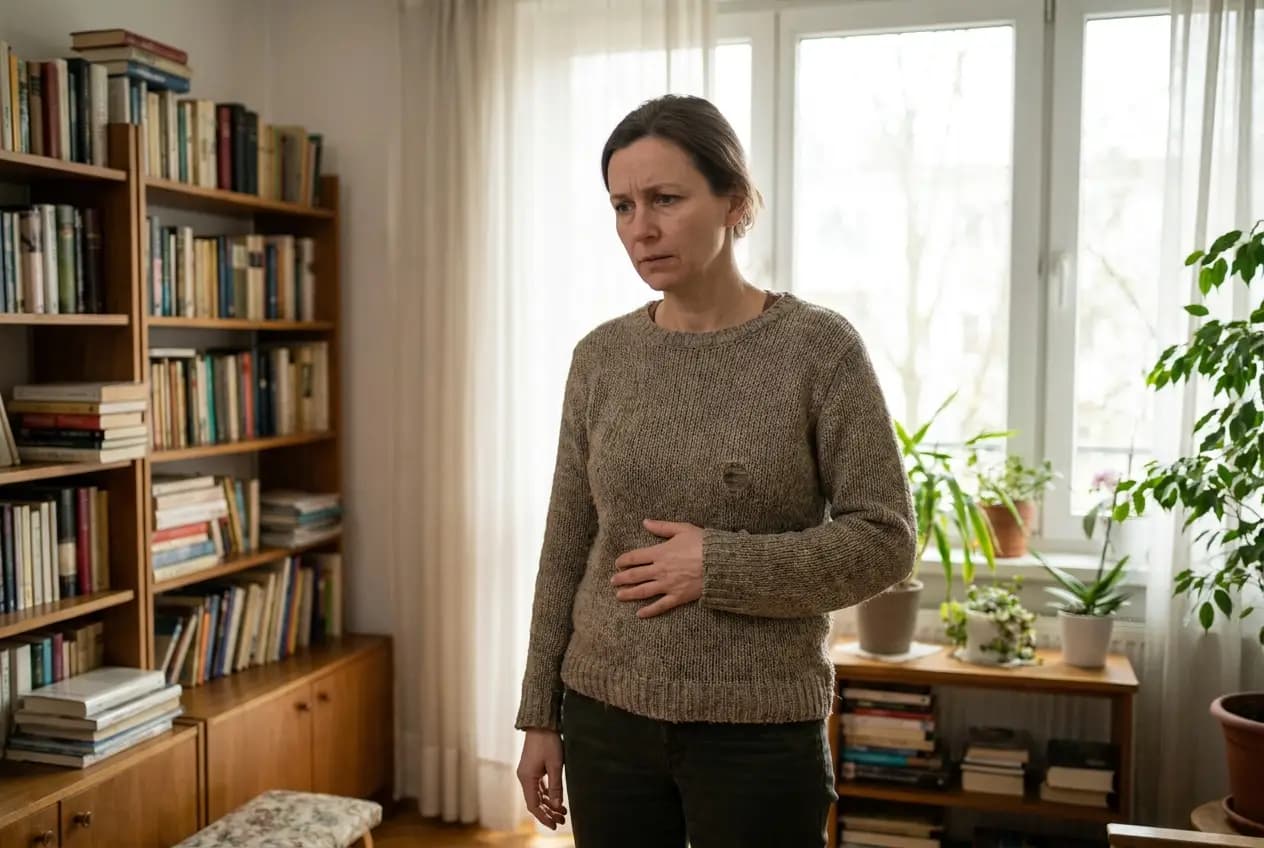
If your periods have turned heavier, your PMS feels harder to manage, or your breasts ache and you feel puffy and irritable, you may be wondering whether your estrogen is running high. "High estrogen" simply means this hormone is above your body's usual balance, and it can show up in real, day-to-day ways. Here is an honest look at the signs, the causes, and what genuinely tends to help.
What "high estrogen" actually means
Estrogen is a key hormone for the menstrual cycle, bone health, mood, and much more. Levels naturally rise and fall across each cycle and across the life stages. "High estrogen" describes estrogen sitting above your normal range, either on its own or high relative to progesterone, the hormone that balances it in the second half of the cycle.
You may have seen the term "estrogen dominance" online. It is worth being clear: this is a popular lay term, not a formal medical diagnosis. It refers loosely to the idea of estrogen being high relative to progesterone. It can be a useful way to picture the hormonal balance, but it is not a condition your clinician will find in a diagnostic manual, and it should not be treated as one. What matters is your actual symptoms and, where appropriate, what testing and an examination show. For a deeper look at how these two hormones work together, see estrogen vs progesterone.
Signs and symptoms of high estrogen
No single symptom proves estrogen is high, and many of these overlap with other common conditions. Still, the symptoms often linked with higher estrogen include:
- Heavy or irregular periods, including longer or more unpredictable cycles. See irregular periods in perimenopause.
- Worsening PMS, meaning more intense premenstrual symptoms than you are used to (more on PMS).
- Breast tenderness or swelling: sore, full, or lumpy-feeling breasts, often premenstrually. See sore breasts.
- Bloating and water retention. See menopause bloating.
- Mood swings, irritability, or anxiety. See mood swings and irritability.
- Headaches or migraines, sometimes tied to your cycle. See menopause migraines.
- Weight gain, sometimes around the hips and thighs.
Estrogen also influences conditions such as uterine fibroids, which are sensitive to hormones and may grow when estrogen is higher. This does not mean high estrogen "causes" every fibroid, but the two are linked. Because these symptoms are so common and so non-specific, they are a reason to talk with a clinician rather than to self-diagnose from a checklist.
What causes high estrogen?
Several things can push estrogen up or tip the estrogen-to-progesterone balance:
| Cause | Why it can raise estrogen |
|---|---|
| Perimenopause | In the years before periods stop, estrogen does not simply decline. It can swing widely and even spike before it eventually falls. |
| Higher body weight | Fat tissue produces estrogen, so more body fat can mean more circulating estrogen. |
| Low progesterone | When ovulation is irregular (common in perimenopause), less progesterone is made, raising estrogen relative to it.[4] |
| Certain medications | Some forms of hormone therapy or birth control add estrogen; the type and dose matter. |
| Alcohol | Alcohol can affect how the liver clears estrogen, so heavier drinking may leave more in circulation. |
| Liver problems | The liver helps break down and remove estrogen, so reduced liver function can let levels rise. |
Perimenopause is one of the most common reasons women notice these shifts in midlife. If that stage is new to you, our guides to perimenopause symptoms and perimenopause vs menopause explain what to expect (more on the term at perimenopause).
High estrogen vs. low estrogen
It is easy to assume every difficult symptom means estrogen is "too high." In perimenopause and menopause, many of the best-known symptoms, such as hot flashes, night sweats, and vaginal dryness, are actually linked to estrogen falling.[2] Symptoms can also flip back and forth as levels swing. If your picture looks more like dryness, hot flashes, and disrupted sleep, read the sibling guide to low estrogen symptoms instead. This is exactly why testing one snapshot in time can be misleading.
How high estrogen is evaluated
There is no single tidy test for "high estrogen." A clinician will usually start with your symptoms, cycle history, and an examination, then decide whether testing adds anything. Because estrogen rises and falls so much across the cycle and across perimenopause, a one-off blood level can be hard to interpret.[3] Our overview of menopause hormone testing explains why bloodwork is often less helpful than people expect in midlife.
Evaluation may also look for other explanations for your symptoms, for example an ultrasound to check for fibroids if periods are heavy, thyroid testing, or a review of your medications. The goal is to understand the whole picture, not to chase a single number.
What may help with high estrogen
The most useful step is to treat the underlying cause rather than the label. Depending on what is going on, the following may help, ideally discussed with a clinician:
- Reach and maintain a healthy weight. Because fat tissue makes estrogen, gradual, sustainable changes can help. Regular movement supports this and your mood; see the benefits of exercise.
- Limit alcohol. Cutting back may help the liver clear estrogen more effectively.
- Eat plenty of fiber and a balanced diet. Fiber supports digestion and helps the body remove estrogen through the gut. A pattern like the Mediterranean diet is a sensible, well-studied option; see also our best diet for menopause guide.
- Manage related conditions. Heavy bleeding, fibroids, or severe PMS each have specific treatments worth exploring with a clinician.
- Review medications and consider progesterone. Sometimes adjusting hormone therapy or birth control, or adding progesterone to balance estrogen, is appropriate, but only under medical guidance.
A note on soy and phytoestrogens: moderate amounts of soy foods (like tofu, edamame, and soy milk) are considered safe for most people and are not the same as high-dose supplements. Current evidence suggests soy foods are fine for most people, including most breast-cancer survivors.[5] If you have a hormone-sensitive cancer, check with your doctor first. You can read more in our guide to phytoestrogen foods.
When to see a clinician
Please book an appointment if symptoms are affecting your life, or if anything feels new or worsening. Some bleeding patterns should always be checked promptly:
- Heavy or unusually heavy bleeding (for example, soaking through pads or passing large clots).
- Bleeding between periods or after sex.
- Any bleeding after menopause, that is, any bleeding once you have gone 12 months without a period.[6]
These do not mean something is seriously wrong, but they need evaluation to rule out treatable causes. If you would like specialist support, our guide can help you find a menopause specialist, and you can review online treatment options too. This article is for general education and is not a substitute for personal medical advice.
Related: High estrogen is just one way hormones drift out of balance. For the fuller picture across every hormone, see Hormone Imbalance in Women: Signs, Causes, and What Actually Helps.
Related: the common causes of breast tenderness and pain — how hormonal shifts, cysts, and other ordinary factors can make breasts sore, and when it may be worth checking.