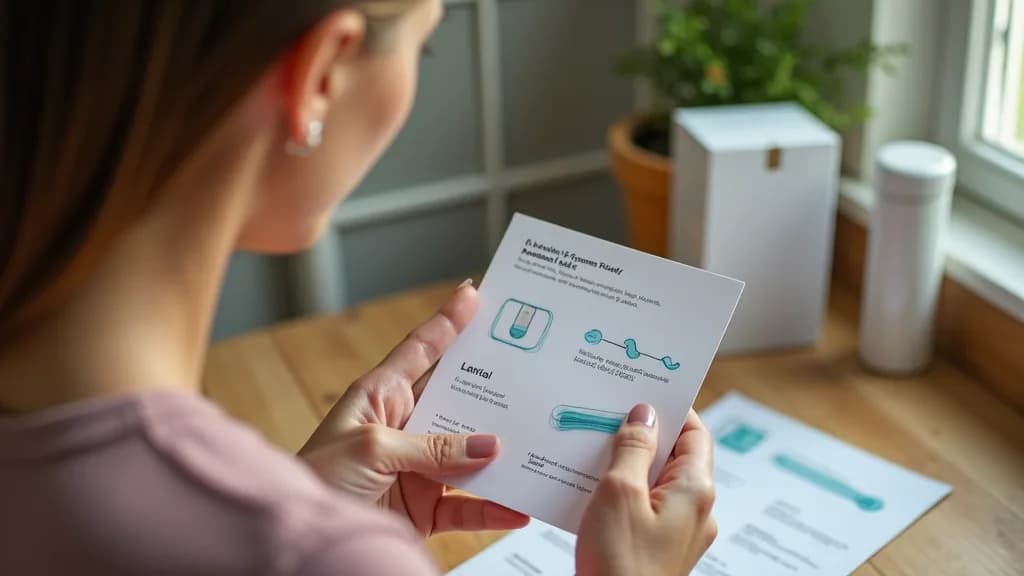
An at-home hormone test can be a reasonable first step for screening — but it is a starting point, not a diagnosis. The most useful kits measure a specific, validated marker (like thyroid-stimulating hormone), send your sample to a certified lab, and hand you results you can review with a clinician. The least useful ones promise to decode your "hormone balance" from saliva or urine and sell you a fix. Knowing the difference is the whole game.
What at-home hormone tests actually measure
Most women's hormone kits screen one or more of these: estradiol (the main estrogen in your reproductive years), FSH (follicle-stimulating hormone, often marketed as a "menopause" marker), progesterone, testosterone, thyroid hormones (TSH, and sometimes free T4 and thyroid antibodies), and cortisol (a stress hormone). A kit gives you a number and a reference range. What it usually cannot give you is context — and context is where hormones live.
Hormones are not fixed values. Estradiol and progesterone rise and fall across a single menstrual cycle; cortisol swings dramatically from morning to night; thyroid results can be nudged by illness, pregnancy, and some medications. A single snapshot, taken on the wrong day or at the wrong hour, can look "abnormal" when nothing is wrong — or look reassuringly normal while a real problem hides. This is why sample timing often matters as much as the test itself.
Blood spot vs saliva vs urine: how the sample changes the answer
The sample type is the single biggest driver of whether a result means anything. Here is how the three common formats compare.
| Sample type | How you collect it | Best suited for | Honest limits |
|---|---|---|---|
| Finger-prick blood spot | Lancet prick, drops onto a card | Screening markers with established blood reference ranges, above all thyroid TSH | Small sample; still needs a certified lab; not the same as a full venous panel, and a single reading (such as FSH) cannot diagnose menopause |
| Saliva | Spit into a tube, sometimes several times a day | Research and some cortisol-rhythm uses under clinical guidance | Saliva sex-hormone panels marketed for "balance" are not validated for diagnosis |
| Dried urine | Saturate strips across a day | Mapping hormone metabolites; used by some clinicians | Interpretation is complex; consumer "adrenal" versions are not validated screening tools |
The practical takeaway: a finger-prick blood-spot kit that reports a widely used marker (TSH is the classic example) and is analyzed by an accredited lab is the most defensible category. Saliva and dried-urine panels can have legitimate clinical uses, but the consumer versions sold for "hormone balance" carry claims that outrun the evidence.
What these tests can genuinely screen for
Used sensibly, an at-home kit can flag a value that sits well outside the normal range and prompt you to book a proper evaluation. A screening thyroid test, for instance, may surface an abnormal TSH worth investigating — the American Thyroid Association explains how TSH and related tests fit together. A testosterone or estradiol reading can add one data point to a bigger picture your clinician is assembling. Think of a home test as a smoke detector: useful for saying "look here," useless as the final word on what's burning.
Where the accuracy breaks down
Two problems recur. First, timing. Progesterone only rises meaningfully in the second half of a menstrual cycle, so a random-day result is nearly meaningless. Cortisol is usually highest in the early morning and lowest around midnight, so one reading tells you little without knowing when it was taken — Cleveland Clinic spells out that daily rhythm.[6] Estrogen behaves unpredictably too; the MedlinePlus estrogen levels test overview notes that estrogen levels change a lot, that you may need repeat testing to see a trend, and that a healthy level depends on your age and menopausal status.[5]
Second, interpretation. A number outside a lab's range is not automatically a disease, and a number inside it does not rule one out. Symptoms, history, medications, and repeat testing all shape what a value means — none of which a kit's automated report can weigh.
The tests that aren't validated — say it plainly
FSH for diagnosing menopause. Because FSH fluctuates so widely in the years around menopause, a single home FSH result cannot confirm or rule it out.[2] Major guidance is clear that menopause in women over 45 is diagnosed from symptoms and cycle history, not a blood test — see the NHS, which states there is no routine test and that a doctor diagnoses based on your age and symptoms, and the U.S. Office on Women's Health, which notes hormone levels go up and down unpredictably during the transition.[1] We cover this in depth in our guide to menopause hormone testing.
Saliva/urine panels sold for "hormone balance" or "adrenal fatigue." "Adrenal fatigue" is not a recognized medical diagnosis, and the tests marketed to detect it are not validated. The Endocrine Society states plainly that no scientific proof supports it and that there is no test that can detect it.[3] A normal-looking or scary-looking saliva cortisol curve should not send you toward supplements or self-treatment.
Anything promising to explain fatigue, weight, or mood from one panel. These symptoms have many causes. A hormone kit that claims to pinpoint the reason from a single reading is overreaching.
When a home test can be a reasonable first step
- You want a low-friction thyroid or general screen and will take any abnormal result to a clinician.
- You're tracking a marker your doctor already suggested watching, between appointments.
- You understand the sample timing (right cycle day, right time of day) the kit requires.
- You treat the number as a prompt to investigate, never as a diagnosis or a reason to start any treatment.
When you need a clinician-ordered test instead
- You have symptoms that worry you — irregular bleeding, a lump, severe fatigue, rapid weight change, or mood changes affecting daily life.
- You're considering hormone therapy or any treatment; those decisions require full clinical evaluation.
- A home result came back abnormal, borderline, or simply doesn't match how you feel.
- You need markers that demand careful timing or a venous draw, or you're pregnant, trying to conceive, or on medications that affect hormones.
A clinician can order the right test, on the right day, interpret it alongside everything else about you, and repeat it if needed — which is exactly what Cleveland Clinic describes for a hormone test like cortisol, where a provider weighs the result against your symptoms and medical history.
How to choose a kit without getting sold
- Check what it measures and why. Favor a specific, validated marker over a vague "balance" panel.
- Confirm lab accreditation. The sample should be analyzed by a certified laboratory, not scored by an app alone.
- Read the timing instructions before buying. If a kit ignores cycle day or time of day for cortisol, be skeptical.
- Distrust diagnosis-and-cure bundles. A test that also sells you the supplement it says you need has a conflict of interest baked in.
- Ask what happens next. Good products route abnormal results toward a clinician; they don't hand you a treatment plan.
An at-home hormone test can open a conversation. It cannot replace one. Any result that is abnormal, borderline, or paired with symptoms belongs in front of a clinician who can evaluate you as a whole person.
Direct-to-consumer kits are designed to be used without a provider, but the results are most meaningful when a clinician helps interpret them. If a kit ever prompts a change to your health, bring the actual result to your doctor and decide together — no at-home test should replace a clinical evaluation.
Related: Curious specifically about the FSH strips marketed for menopause? We break down their accuracy in At-Home Menopause (FSH) Tests: Do They Actually Work?