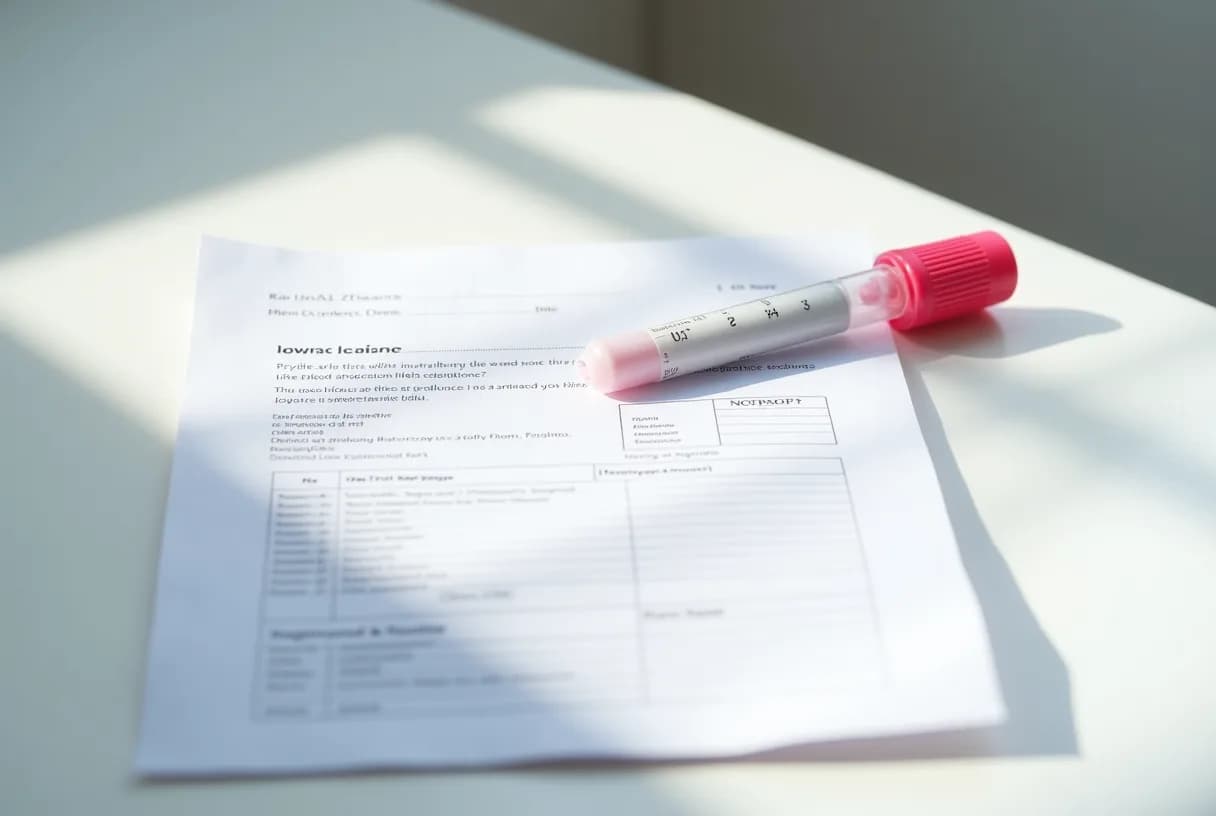
An at-home thyroid test lets you collect a small blood sample yourself — usually a finger-prick — and mail it to a lab that measures thyroid markers like TSH, free T4, free T3, and sometimes thyroid antibodies. It can be a convenient way to flag a possible thyroid issue, especially if you have symptoms such as fatigue, weight changes, or feeling cold. But it is a screening step, not a diagnosis: the numbers need a clinician to interpret, and an abnormal result almost always needs confirmation with a standard lab draw before anyone acts on it.
What at-home thyroid tests actually measure
Not every kit measures the same things, and the panel you choose matters more than the brand. The most common markers are below. Your thyroid is regulated by a feedback loop: the pituitary gland releases TSH to tell the thyroid how much hormone to make, so TSH is usually the first and most sensitive signal that something is off.
| Marker | What it is | Why it is measured |
|---|---|---|
| TSH | Thyroid-stimulating hormone from the pituitary | The most sensitive first-line screen; high TSH often suggests an underactive thyroid, low TSH an overactive one |
| Free T4 | The main hormone the thyroid releases | Helps confirm and grade a problem TSH hints at |
| Free T3 | The more active thyroid hormone | Sometimes added to assess an overactive thyroid; less useful for routine screening |
| TPO antibodies | Antibodies against thyroid peroxidase | The hallmark marker of autoimmune thyroiditis, most often Hashimoto's disease — the leading cause of an underactive thyroid |
A basic panel may test TSH alone. A fuller panel adds free T4, free T3, and TPO antibodies. More markers are not automatically better — extra numbers can raise more questions than they answer without a clinician to put them in context. If you are exploring this because of midlife symptoms, our overview of thyroid health in women and our guide to thyroid testing explain how these markers fit together.
How finger-prick collection works
Most home kits use a dried blood spot or a small collection device rather than a full vial from your arm. The typical steps:
- Register the kit online so the lab can match your sample to your order.
- Warm your hand and prick the side of a fingertip with the sterile lancet provided.
- Let drops fall onto a collection card or into a small tube — filling the target area fully matters.
- Let it dry if required, seal it, and mail it back the same day in the prepaid envelope.
- Receive results through a secure portal, often within several days.
Some services instead send you to a partner lab for a standard venous draw, which sidesteps many collection problems. The main advantages of the finger-prick route are convenience and privacy; the main risk is a sample that is too small, clotted, or contaminated, which can be rejected or skew a result.
Who might consider one
An at-home thyroid test can be a reasonable starting point if you have ongoing symptoms that overlap with thyroid dysfunction — persistent fatigue, unexplained weight change, feeling unusually cold or hot, dry skin, hair thinning, low mood, or irregular periods — and you want a quick look before booking an appointment. Women in the menopause transition often face symptoms that could come from either hormonal change or the thyroid, and testing can help sort that out.
It may also appeal if you have a known family history of thyroid or autoimmune disease and want to monitor, or if you simply value doing the first step at home. What a home test is not is a substitute for medical care. If you feel seriously unwell, are pregnant or planning pregnancy, or already take thyroid medication, skip the DIY route and see a clinician — dose decisions and pregnancy monitoring need proper lab testing and professional oversight. And whatever a kit shows, do not use it to self-diagnose or self-treat a thyroid condition.
How accurate are they versus a lab draw?
When the sample is collected correctly and analyzed by a certified lab, finger-prick thyroid testing can track reasonably well with a traditional venous blood draw. Accuracy depends on two things: the quality of your sample and the quality of the lab. Look for a service that uses a lab accredited to recognized standards and that reports the specific method and reference ranges it uses.
The bigger real-world issue is usually collection, not chemistry. An under-filled card, a sample that sat in a hot mailbox, or blood squeezed too hard from the finger can all affect a result. Reference ranges also vary between labs, so a number that looks "abnormal" on one report might sit inside another lab's normal range. This is one reason a single home result should never be treated as a verdict. MedlinePlus notes that at-home medical tests vary in quality and are not a replacement for evaluation by a health professional.
Biotin can distort your results — a critical caution
This is the single most important thing to know before you test. Biotin (vitamin B7), found in many hair, skin, and nail supplements and in some multivitamins, can interfere with the lab methods used for many thyroid tests. Depending on the assay, high biotin intake can push results falsely high or falsely low — potentially making a normal thyroid look abnormal, or masking a real problem.
The FDA has warned that biotin can interfere with many lab tests, including thyroid tests. Many labs advise pausing biotin supplements for a period before testing — but the exact timing depends on the dose and the assay, so ask the testing service or your clinician what they recommend rather than guessing. If you take a biotin-containing supplement and cannot stop it, mention it so results can be interpreted with that in mind.
How to read your results — at a high level
Home reports usually flag each marker as within range or outside it, but the pattern matters more than any single value. In broad terms, a high TSH with a low free T4 points toward an underactive thyroid (hypothyroidism), while a low TSH with high thyroid hormones points toward an overactive thyroid (hyperthyroidism). Positive TPO antibodies suggest an autoimmune process — most often Hashimoto's thyroiditis — behind it.
Resist the urge to self-diagnose from these patterns. Mildly abnormal numbers are common and often transient — a temporary illness, timing of the sample, medications, or biotin can all nudge results. Cleveland Clinic's overview of thyroid tests explains why the full picture, not one flag, drives any decision. The right next move after an abnormal home result is almost always a confirmatory test through a clinician, ideally a standard venous draw.
The limits you should keep in mind
- Screening, not diagnosis. A home test can raise a question; it cannot answer it on its own.
- Snapshot in time. Thyroid levels shift with illness, stress, medication, and even time of day, so one reading may not reflect your baseline.
- No physical exam. A clinician can feel your thyroid, review your history, and order imaging or additional tests a kit cannot.
- Reference-range gaps. "Normal" varies by lab, by age, and in pregnancy, where different ranges apply entirely.
- Anxiety and cost. An ambiguous result can prompt unnecessary worry or repeat testing that a single clinician visit might have resolved.
The American Thyroid Association's thyroid function tests resource is a good reference for what a complete work-up looks like and why interpretation belongs with a professional.
When to see a clinician
See a healthcare professional if a home test comes back abnormal, if your symptoms persist or worsen regardless of what a test shows, or if you are pregnant, planning pregnancy, or already on thyroid medication. Bring your home results to the appointment — they can be a useful conversation starter — but expect that a proper diagnosis will rest on confirmatory testing, your history, and an exam. Thyroid conditions are common and highly treatable once correctly identified, but that treatment belongs with a clinician, not with self-directed dosing based on a kit. The goal of an at-home test is simply to help you take that first step, not to replace the care that follows. If symptoms are affecting your daily life, do not wait for a kit result to book an appointment.