The fear is real, and it was sold to you
If you have an underactive thyroid or Hashimoto's, you have almost certainly been told to stop eating broccoli. Possibly by a wellness site, possibly by a well-meaning friend, occasionally by a clinician who read the same wellness site. And it lands on fertile ground: thyroid symptoms — the fatigue that sleep doesn't fix, the cold hands, the weight that moves the wrong way, the hair in the shower drain — are among the most casually dismissed complaints in medicine. When medicine shrugs, food fills the vacuum. A list of forbidden foods at least gives you something to do.
So it is worth being blunt: the food restriction that most thyroid patients are practising is the wrong one, and the interaction that is actually moving their TSH is the one nobody mentioned.
The goitrogen myth, dismantled
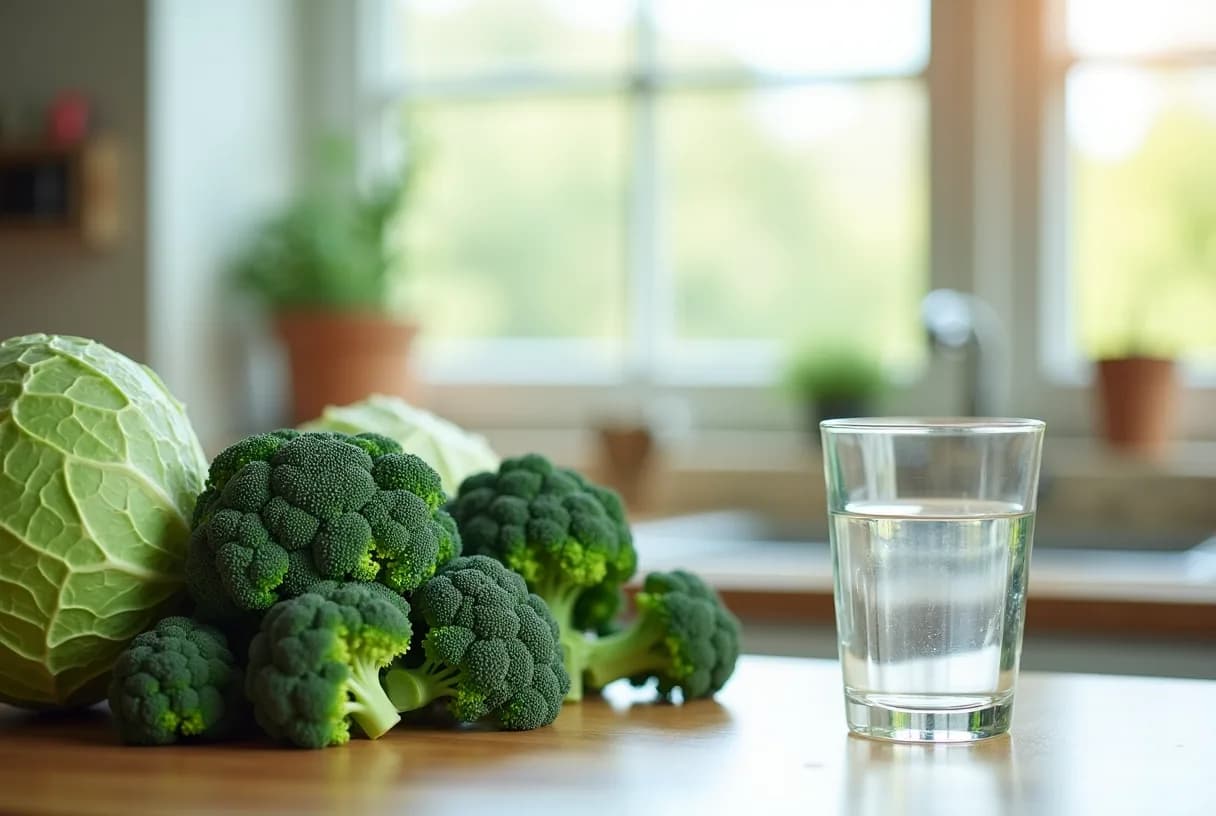
Cruciferous vegetables — broccoli, kale, cabbage, Brussels sprouts, cauliflower, bok choy, collards — contain glucosinolates. When the plant tissue is damaged (chopped, chewed), these break down into compounds including thiocyanates, which compete with iodide for the sodium–iodide symporter, the transporter that pulls iodine into the thyroid gland. That is a real mechanism. It is not an invented one.
What matters is the conditions under which the mechanism produces disease. Three things have to be true at once:
- You have to be iodine-deficient. Thiocyanate competes with iodide. If your iodine intake is adequate — as it is for most women in countries that iodise salt or drink iodine-containing milk — competition at the transporter is easily overcome. Goitrogens are a problem in populations where iodine intake is already marginal, not in iodine-replete ones.
- The dose has to be implausible. The case in the literature that everyone quotes, reported in the New England Journal of Medicine in 2010, involved an elderly woman who ate roughly 1–1.5 kg of raw bok choy every day for months. That is not a salad. That is a hobby. Normal servings of cruciferous vegetables have not been shown to cause thyroid disease in people with adequate iodine.
- It largely has to be raw. Cooking — boiling, steaming, roasting — inactivates myrosinase, the enzyme that generates the goitrogenic breakdown products, and boiling leaches a good share of the remainder into the water. Cooked crucifers carry substantially less goitrogenic activity than raw ones.
Nobody has broken their thyroid with broccoli. Meanwhile, cruciferous vegetables are one of the better-evidenced food groups for cardiovascular and colorectal outcomes, and midlife women — losing the cardioprotective effect of oestrogen, gaining LDL, gaining visceral fat — are precisely the group who can least afford to delete them out of superstition. If you want the upside without the theoretical downside, cooking them is the entire adjustment.
More on what crucifers actually do for you.
The real issue: levothyroxine absorption
Levothyroxine is absorbed mainly in the jejunum and ileum, and absorption is fragile. Under fasting conditions roughly 70–80% of an oral dose is taken up; food, drinks, minerals and gut-binding agents can drag that down substantially. Because the therapeutic window is narrow and dose adjustments are made in micrograms, a habitual absorption problem does not feel like a stomach issue — it shows up as a TSH that will not settle, a dose that keeps creeping upward, and symptoms that persist despite "being on treatment".
This is why professional guidance from bodies including the American Thyroid Association centres on consistency and separation: the tablet is described as an empty-stomach medicine, taken the same way every day, with distance between it and the things that bind it.
| Substance | What it does | Typical separation described in guidance |
|---|---|---|
| Calcium (supplements, calcium carbonate antacids, fortified drinks) | Forms insoluble complexes with levothyroxine in the gut; a well-documented cause of rising TSH on an unchanged dose | Around 4 hours apart |
| Iron (ferrous sulfate and other salts) | Chelates levothyroxine, reducing uptake — relevant to many midlife women, who are also the group most likely to be taking iron for heavy bleeding | Around 4 hours apart |
| Antacids and acid-reducers (aluminium/magnesium antacids, sucralfate; PPIs by a different route) | Bind the drug directly, or raise gastric pH — levothyroxine dissolves best in an acidic stomach | Around 4 hours apart; PPIs are a longer conversation with the prescriber |
| Coffee (including espresso) | Sequesters levothyroxine and speeds transit; a controlled study found measurably lower absorption when the tablet was swallowed with espresso rather than water | Product guidance generally describes a gap of around 30–60 minutes after the tablet |
| Soy (soy protein isolates, soy milk, soy-based formula) | Reduces absorption of the tablet — this, not thyroid damage, is soy's real relevance here | Treated like other food: separated from the dose, with intake kept consistent day to day |
| High-fibre foods and fibre supplements | Bind the drug and hasten transit through the absorptive window | Separated from the dose; consistency matters more than avoidance |
| Food in general (any breakfast) | Substantially reduces absorption compared with the fasting state — enough to shift TSH on an unchanged dose | Usually described as 30–60 minutes before eating, or at bedtime several hours after the last meal |
This table is reference, not an instruction. Do not restructure your medication routine on the strength of a web page — including this one. If any row above describes your morning, the move is to write it down and take it to whoever prescribes your levothyroxine, because changing when and how you absorb a drug changes the effective dose, and that needs a TSH check on the other side of it, not a guess. There is a related trap worth knowing about: biotin (often in hair, skin and nail supplements) does not touch absorption at all, but it can distort the thyroid blood test itself on common immunoassay platforms, producing results that look like thyroid disease when they are not. Tell the lab and your clinician if you take it. If you're stacking several supplements, our interaction checker will show you what collides with what. The levothyroxine drug page has the fuller pharmacology.
Iodine: necessary, and dangerous in excess
Iodine is the raw material of thyroid hormone; you cannot make T4 without it. This has led to one of the most persistent and most harmful pieces of internet advice in the thyroid world: that if your thyroid is underactive, you should take iodine — kelp tablets, iodine drops, "thyroid support" blends.
In an iodine-sufficient population, this is at best pointless and at worst actively harmful. The relationship between iodine and thyroid function is U-shaped: too little causes goitre and hypothyroidism, and too much also causes thyroid dysfunction. Excess iodine can trigger the Wolff–Chaikoff effect (a transient shutdown of hormone synthesis that some thyroids fail to escape from), and in people with underlying autoimmune thyroid disease — which is what Hashimoto's is, and Hashimoto's is by far the commonest cause of hypothyroidism in iodine-replete countries — iodine supplementation can worsen autoimmunity and precipitate or deepen hypothyroidism. It can also tip a nodular thyroid into hyperthyroidism.
So the counterintuitive but correct summary: if you have Hashimoto's and you are not iodine-deficient, adding iodine is one of the few genuinely risky things on the supplement shelf. Iodised salt, dairy, eggs and fish already carry it. Read the label of anything marketed as "thyroid support" — a great many contain iodine or kelp, and some have been found to contain undeclared thyroid hormone. If you're pregnant or planning pregnancy, iodine requirements rise and that is a real, separate conversation to have with your clinician — not a reason to self-dose. More detail: Hashimoto's disease and thyroid supplements and vitamins.
Selenium: real biology, modest evidence
Selenium is not decoration. The deiodinase enzymes that convert T4 into active T3 are selenoproteins, and glutathione peroxidase — which mops up the peroxide the thyroid generates while making hormone — is also selenium-dependent. The gland holds more selenium per gram than almost any other tissue. That is why the "selenium for Hashimoto's" idea exists at all.
What the trials actually show is narrower than the marketing. Selenium supplementation can lower thyroid peroxidase (TPO) antibody titres in Hashimoto's. What Cochrane's review of the randomised evidence concluded, though, is that the data are of low quality and do not demonstrate that this translates into what patients care about: better symptoms, better quality of life, less need for levothyroxine. Falling antibodies are a lab number, not a cured thyroid.
And selenium has a genuinely narrow safety margin — one of the narrowest of any nutrient. The tolerable upper intake level for adults is 400 mcg/day against a requirement of 55 mcg/day, and chronic excess causes selenosis: brittle hair and nails, hair loss, garlic breath, GI upset, neuropathy. A single Brazil nut can carry most of a day's requirement, and two can exceed it. Stacking a "thyroid formula", a multivitamin and a handful of Brazil nuts is a realistic way to overshoot.
Bottom line: food contains it already (seafood, eggs, meat, nuts, whole grains). Whether to supplement is a question for your clinician, ideally with a reason and a plan to reassess — not a default.
Soy, gluten and the other usual suspects
Soy. Soy isoflavones inhibit thyroid peroxidase in the test tube, which is where the panic comes from. In human studies of people with normal iodine status and normal thyroid function, normal dietary soy does not cause hypothyroidism. Its real, documented relevance is the one already covered: it interferes with levothyroxine absorption. That makes soy a spacing-and-consistency question to raise with your prescriber — not a food to fear — and a big swing in soy intake, from none to a lot or back, is worth flagging, because it can change how much drug you absorb. See soy in midlife.
Gluten. Coeliac disease and autoimmune thyroid disease genuinely cluster — they share autoimmune risk, and untreated coeliac disease causes malabsorption that can wreck levothyroxine absorption. That is a reason to be tested for coeliac disease if you have Hashimoto's and suggestive symptoms. It is not evidence that everyone with Hashimoto's benefits from a gluten-free diet; the trial evidence for that is thin. And testing requires you to still be eating gluten, which is why an elimination diet started before a coeliac test can bury the diagnosis. More: the Hashimoto's diet, evaluated.
Everything else. There is no evidence base for the elaborate elimination protocols sold to thyroid patients. What does have an evidence base in midlife hypothyroidism is unglamorous: enough protein to defend muscle mass as it declines, enough fibre for the constipation that hypothyroidism causes, enough calcium and vitamin D for bone, and a cardiovascular-protective eating pattern, because hypothyroidism raises LDL. See the hypothyroidism diet.
The midlife overlap nobody names
Between roughly 45 and 55, two things happen at once: thyroid disease becomes markedly more common in women, and perimenopause starts. They produce an almost identical symptom list — fatigue, brain fog, weight change, hair thinning, cold or heat intolerance, mood change, disrupted periods. So women get told it is "just menopause" when the thyroid is under-treated, or handed a levothyroxine dose when the problem is oestrogen — and sometimes both are true at once.
There is also a specific pharmacological trap. Oral oestrogen (not transdermal) raises thyroxine-binding globulin, which increases the amount of T4 bound up in circulation and can increase levothyroxine requirements — this was shown in a controlled study published in the New England Journal of Medicine. If you start oral HRT while on levothyroxine, thyroid function should be rechecked — that is a genuine, guideline-recognised interaction, and it is missed constantly. Read thyroid or menopause? and, if you're trying to work out which cluster you're in, run the thyroid symptom check.
When to see a doctor
Food is not the lever here. Testing is. Book an appointment — and ask for thyroid function tests — if you have:
- Persistent fatigue, cold intolerance, constipation, dry skin, hair loss, hoarseness or unexplained weight change that has lasted weeks
- A TSH that keeps drifting despite a stable levothyroxine dose — this is the classic footprint of an absorption problem (a new calcium or iron supplement, a new PPI, coffee that has drifted to the same moment as the tablet)
- Any new lump or swelling in the front of the neck, difficulty swallowing, or a hoarse voice that does not resolve — see thyroid nodules
- Hashimoto's plus GI symptoms, iron deficiency or unexplained anaemia — ask about coeliac testing before removing gluten
- Pregnancy, or planning it, while on levothyroxine — requirements typically rise early and this needs prompt monitoring, not dietary tinkering
Seek urgent medical care for a racing or irregular heartbeat with fever and agitation (possible thyroid storm), or for extreme lethargy, confusion and hypothermia in someone with known hypothyroidism (possible myxoedema coma). Both are emergencies.
And the sentence worth taking with you: if a page tells you to cut out vegetables but never mentions when you take your tablet, it has the priorities exactly backwards.