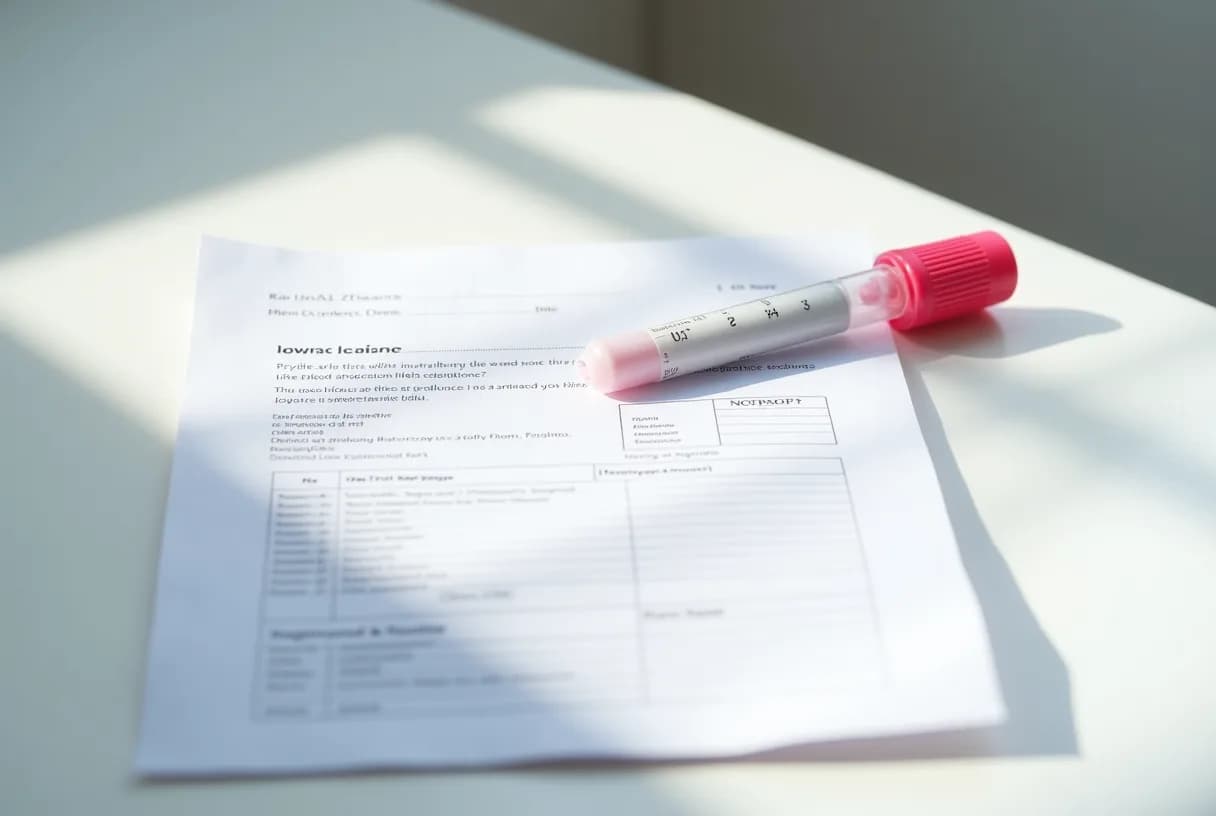
If you feel exhausted, your weight has shifted, your mood is all over the place, and your hair seems thinner, your thyroid is worth a thought. Thyroid problems are common in women, the symptoms are vague, and they overlap heavily with perimenopause, which is exactly why so many women go undiagnosed for a while. The good news: a simple blood test usually sorts it out, and treatment is well established.
Why thyroid problems are more common in women
The thyroid is a small, butterfly-shaped gland in your neck that sets the pace of your metabolism, the speed at which your body uses energy. When it makes too little or too much hormone, almost every system feels it.
Women are several times more likely than men to develop thyroid disease. Two big reasons stand out:
- Autoimmunity. Most thyroid problems are autoimmune, where the immune system mistakenly targets the gland. Autoimmune conditions in general are far more common in women, and the thyroid is a frequent target. Hashimoto's disease (an underactive cause) and Graves' disease (an overactive cause) are the leading examples.
- Hormonal transitions. Pregnancy, the months after birth, and the perimenopause years are all times when the thyroid can wobble. Shifting estrogen levels appear to play a role.
The two main thyroid problems, briefly
Almost everything comes down to two opposite directions. This is an overview, so each one has its own detailed guide.
An underactive thyroid (hypothyroidism)
The gland makes too little hormone, so things slow down: low energy, feeling cold, weight gain, constipation, dry skin, and low mood. It is the more common pattern, especially as women get older. Read the full picture in our guide to hypothyroidism symptoms and the term hypothyroidism.
An overactive thyroid (hyperthyroidism)
The gland makes too much hormone, so things speed up: a racing or pounding heart, anxiety, shakiness, feeling hot, and unexplained weight loss despite a normal or bigger appetite. Our guide to hyperthyroidism symptoms covers it in depth.
Underactive vs overactive: a side-by-side look
Many thyroid symptoms in women are mirror images of each other. This table makes the contrast clear, but remember the lists overlap and symptoms vary a lot from person to person.
| Feature | Underactive (too little hormone) | Overactive (too much hormone) |
|---|---|---|
| Weight | Gradual gain, hard to shift | Unexplained loss |
| Temperature | Feeling cold, cold hands and feet | Feeling hot, sweating, heat intolerance |
| Energy | Fatigue, sluggishness | Tired but wired, restless |
| Heart rate | Slow pulse | Fast, pounding, or irregular heartbeat |
| Mood | Low mood, brain fog | Anxiety, irritability |
| Bowels | Constipation | Frequent or loose stools |
| Sleep | Sleepy, oversleeping | Trouble sleeping |
| Periods | Heavier or more frequent | Lighter or less frequent |
| Hair and skin | Dry skin, brittle hair, hair loss | Fine, thinning hair; warm, moist skin |
If your symptoms don't fit neatly into one column, that's normal. The point of the table isn't to self-diagnose, it's to show why a blood test matters.
The life stages when women are most at risk
After having a baby
In the first year after birth, some women develop postpartum thyroiditis, a temporary inflammation of the gland. It can cause a brief overactive phase, an underactive phase, or both in sequence. It's easy to write off as the exhaustion of new parenthood, so it's worth raising with your clinician if you feel unusually off.
Perimenopause and menopause
This is the overlap that catches people out. Tiredness, weight change, mood swings, brain fog, hair thinning, and palpitations can all come from either a thyroid problem or the menopause transition, and the two can happen at the same time. They are different things: thyroid disease is a gland making the wrong amount of hormone, while menopause is the natural decline of ovarian hormones. Because the symptoms blur, it's worth reading thyroid or menopause and our overview of perimenopause symptoms together, and asking for testing rather than assuming.
Common features: hair, energy, mood, and weight
A few symptoms come up so often that they deserve their own note, because they're also the ones most easily blamed on stress, age, or menopause.
- Hair changes. Both under- and overactive thyroids can thin the hair. Thyroid-related shedding usually improves once levels are corrected, though regrowth takes time. See thyroid and hair loss and, for the menopause angle, menopause hair loss.
- Energy. Persistent, unrefreshing tiredness is one of the most common reasons women get tested, and it usually lifts once the thyroid is properly treated. More in thyroid and fatigue and menopause fatigue.
- Mood and brain fog. Low mood, anxiety, and fuzzy thinking can all be hormone-driven; compare menopause brain fog.
- Weight. An underactive thyroid can cause modest gain that's hard to shift, though it's rarely the whole story. We unpack this honestly in thyroid weight gain.
What about lumps and nodules?
Finding a lump in your neck is understandably worrying, but try not to panic. Thyroid nodules are very common, especially in women and with age, and the large majority are benign (non-cancerous). Only a small minority turn out to be thyroid cancer, which is usually treatable. The honest message is reassurance plus vigilance: most nodules are harmless, but a new or growing lump should always be checked. Our guide to thyroid nodules explains what assessment involves.
How thyroid problems are diagnosed
You cannot diagnose a thyroid problem from symptoms alone, and you shouldn't try. The first and most useful test is a simple blood test for TSH (thyroid-stimulating hormone), which signals whether the gland is over- or under-working. Depending on the result, your clinician may add thyroid hormone levels (free T4, sometimes free T3) and antibody tests to look for an autoimmune cause.
- TSH first. A high TSH points toward an underactive thyroid; a low TSH points toward an overactive one.
- Follow-up tests confirm the picture and the likely cause.
- Treatment is well established. An underactive thyroid is usually treated with daily levothyroxine, a replacement hormone. An overactive thyroid is managed with antithyroid medicine, radioactive iodine, or surgery, decided with a clinician.
For what to expect from the bloods, see our guide to thyroid testing. A quick reassurance: thyroid problems are common and, once diagnosed, very treatable. Most women feel substantially better once their levels are corrected.
A note on diet, supplements, and "cures"
No food or supplement cures a thyroid condition, and some marketing is misleading. A balanced diet supports overall health, but be cautious with iodine supplements: too much can harm the thyroid, so don't take high-dose iodine without medical advice. If you take levothyroxine, timing matters more than any superfood, take it on an empty stomach and keep it apart from calcium, iron, soy, and coffee. For practical eating advice, see our hypothyroidism diet guide.
When to get medical advice
Because thyroid symptoms are nonspecific and overlap with menopause and everyday stress, the right move is a blood test, not self-diagnosis. Book an appointment if you have ongoing fatigue, unexplained weight change, mood changes, hair thinning, or feel persistently cold or hot.
Seek prompt or urgent medical care for these red flags:
- A rapid, pounding, or irregular heartbeat, chest pain, or breathlessness.
- A visibly enlarged neck, a new or growing lump, or trouble swallowing or breathing.
- New bulging, painful, or double vision (linked to autoimmune overactive thyroid).
- Severe agitation, confusion, fever, or feeling extremely unwell, which can signal a rare thyroid emergency.
- Pregnancy, or planning it, with any thyroid symptoms, because thyroid levels matter for both you and the baby.
This article is general information, not medical advice. A clinician can interpret your symptoms and bloods together and recommend the right next step.