If you have an underactive thyroid, it is natural to wonder whether changing what you eat could fix it. The honest answer is reassuring in one way and humbling in another: no food and no diet cures hypothyroidism, but the right eating habits — and crucially, the right timing of your medication — can genuinely help you feel better.
The honest headline: no diet cures hypothyroidism
Let us be clear up front. Hypothyroidism usually happens because the thyroid gland cannot make enough hormone, most often due to the autoimmune condition Hashimoto's disease. The established treatment is a daily dose of levothyroxine, a synthetic version of the hormone your body is missing. No combination of foods can replace it, and no "thyroid diet" can switch a damaged gland back on.
This matters because the internet is full of plans that promise to "heal your thyroid naturally." If you have the classic symptoms of an underactive thyroid — fatigue, weight changes, feeling cold, dry skin, low mood — the answer is a blood test and proper treatment, not a restrictive diet. Never stop or self-adjust your thyroid medication to try a diet instead.
What a hypothyroidism diet actually can do
So why eat well at all? Because a good overall pattern supports the things hypothyroidism makes harder:
- Energy and mood: steady blood sugar and balanced meals help with the fatigue many people feel, especially while a dose is still being fine-tuned.
- Weight: an underactive thyroid can slow metabolism and contribute to weight gain, though usually less dramatically than people fear. A balanced diet and movement still do the heavy lifting once your levels are stable.
- Heart and bone health: hypothyroidism can raise cholesterol, so fibre-rich, plant-forward eating is a sensible long-term ally.
In other words, the best diet for thyroid health is the same one that is good for everyone — it just happens to matter a bit more for you.
The under-covered point: food, coffee and levothyroxine absorption
Here is the genuinely useful angle most "foods for hypothyroidism" articles skip. What you eat — and when — strongly affects how much levothyroxine your body absorbs. Get this right and your dose works as intended; get it wrong and your TSH can drift even on a "correct" dose.
The golden rule: empty stomach, then wait
Levothyroxine is absorbed best on an empty stomach. The standard advice is to take it with water first thing in the morning and wait 30 to 60 minutes before eating or drinking anything other than water. Some people prefer a consistent bedtime dose, several hours after their last food and drink — either way, consistency is what counts, because your dose is fine-tuned to whatever routine you keep.
Space these out from your pill
Certain foods, drinks and supplements bind to levothyroxine in the gut and blunt absorption. You do not have to give them up — they are healthy — you just keep them away from the pill itself.
| Take separately from your pill | Why | Practical gap |
|---|---|---|
| Coffee and tea | Can sharply reduce absorption if taken with the dose | Wait 30–60 minutes |
| Calcium supplements and fortified foods | Binds levothyroxine in the gut | About 4 hours |
| Iron supplements and iron-containing multivitamins | Binds levothyroxine in the gut | About 4 hours |
| Soy (regular or large amounts) and high-fibre foods or fibre supplements | Slow or reduce absorption | Keep away from the dose; stay consistent |
The two rules that matter most are separation and consistency: take your pill alone, then keep your routine the same every day so your dose is calibrated to how you actually eat. If you start or stop a supplement such as iron or calcium, tell your clinician — your dose and thyroid blood tests may need rechecking.
A balanced pattern that fits hypothyroidism
Rather than a special "thyroid diet," aim for a varied, mostly whole-food pattern. The Mediterranean style of eating is a great template, and it overlaps neatly with the best diet for menopause — relevant because thyroid disease and menopause so often coincide in women.
- Vegetables and fruit at most meals, for fibre and micronutrients.
- Whole grains and legumes for steady energy.
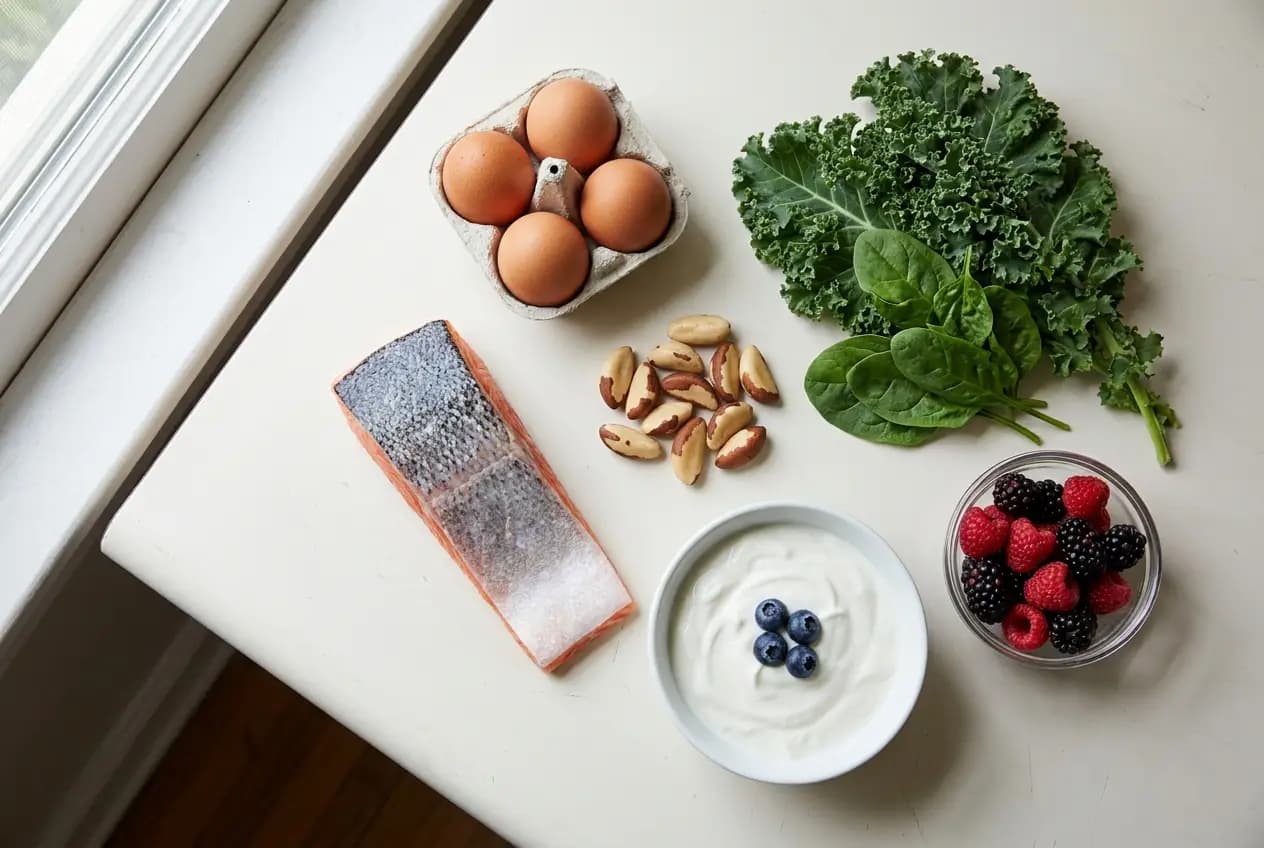
- Lean protein (fish, poultry, eggs, beans) to support muscle and satiety.
- Healthy fats such as olive oil, nuts and oily fish.
- Less ultra-processed food, added sugar and excess alcohol.
One common worry: cruciferous vegetables (broccoli, kale, cabbage). In normal amounts, cooked, they are perfectly fine for almost everyone — you would need to eat enormous quantities of raw goitrogenic vegetables to affect the thyroid, and the benefits of these foods far outweigh the theoretical risk.
Iodine, selenium and gluten: the short, honest version
These three nutrients dominate the online conversation, and the evidence is more sober than the hype. Because so much underactive thyroid is autoimmune, we cover the full nutrient evidence in our Hashimoto's disease guide. The practical bottom line for eating well:
- Iodine is double-edged. It is needed to make thyroid hormone, but too much can worsen thyroid disease, and most people who use iodised salt already get enough. Do not take iodine or kelp supplements without medical advice — more is not better.
- Selenium evidence is limited; a couple of Brazil nuts cover daily needs, so high-dose supplements are unnecessary and can be toxic.
- Gluten-free eating clearly helps only people who also have coeliac disease (more common alongside autoimmune thyroid disease). If you suspect coeliac, ask for testing before cutting gluten.
A serious caution about "thyroid support" supplements
Be wary of over-the-counter products marketed as "thyroid support," "metabolism boosters" or glandular extracts. Some have been found to contain hidden, unlabelled thyroid hormone, and others simply megadose iodine. Taking extra thyroid hormone on top of your prescription can push you into a temporary overactive-thyroid state. If you have taken such a product and develop a racing or pounding heartbeat, chest pain, tremor, or feel suddenly very wired or anxious, seek urgent medical care. If you are exploring supplements for related menopause symptoms, our guide to the best supplements for menopause takes the same honest approach: check before you take.
The menopause overlap worth knowing
Thyroid disease is far more common in women, and its symptoms — fatigue, weight change, brain fog, hair changes — overlap heavily with perimenopause and menopause. They are different conditions that can coexist, so feeling unwell on a "perfect" diet does not mean you have failed; it may mean your thyroid, your hormones, or both need attention. If you are unsure which is which, see thyroid or menopause. The encouraging news: thyroid-driven fatigue and hair loss usually improve once the thyroid is properly treated, though it can take a few months.
When professional care makes sense
Diet supports treatment — it does not replace it. Talk to a clinician if you:
- Have ongoing fatigue, weight change, cold intolerance, dry skin or low mood and have not had a recent thyroid blood test.
- Are taking levothyroxine but still feel unwell — your dose or timing may need reviewing.
- Are considering iodine, selenium or any "thyroid support" supplement — get advice first, especially in pregnancy, when iodine needs and risks both change.
- Plan to start or stop calcium, iron or other supplements, so your dose can be rechecked.
Seek urgent care for a racing or pounding heartbeat, chest pain, severe tremor or feeling dangerously wired after any thyroid or "metabolism" supplement. Remember: hypothyroidism is diagnosed by a blood test, not by self-diagnosis or symptom-matching online. Never stop or self-adjust your thyroid medication. Use food to support your health — and let proper treatment do the work only it can do.
Related: Beyond food choices, certain nutrients and supplements can either support or sabotage an underactive thyroid, so it's worth knowing Thyroid Supplements and Vitamins: What Helps and What to Avoid before adding anything to your routine.
Related: If your underactive thyroid stems from an autoimmune cause, tailor your eating further with Hashimoto's Diet: What to Eat and What to Limit, which zeroes in on gluten, selenium and gut-friendly foods.