If you've been handed a lab slip or a list of results, the terminology can feel like alphabet soup. This guide walks through the main thyroid blood tests, what each one means, and why your results only make full sense alongside your symptoms and a clinician's read.
Why thyroid testing matters, especially for women
Thyroid problems are far more common in women than in men, and they often surface in midlife. That's also when many women are navigating perimenopause, so the symptoms can blur together. Fatigue, weight change, hair thinning, brain fog, mood shifts, feeling cold or hot, and irregular periods can all come from an under- or overactive thyroid or from shifting hormones, which is exactly why sorting out thyroid vs menopause usually needs a blood test rather than guesswork.
The TSH test: the main screening test
The TSH test (thyroid-stimulating hormone) is the first-line thyroid function test for most people. Here's the counterintuitive part worth understanding: TSH isn't made by your thyroid. It's made by your pituitary gland to tell the thyroid how hard to work.
- When the thyroid is underactive, the pituitary shouts louder, so TSH goes up. A high TSH suggests an underactive thyroid (hypothyroidism).
- When the thyroid is overactive, the pituitary backs off, so TSH goes down. A low TSH suggests an overactive thyroid (hyperthyroidism).
So the TSH number moves in the opposite direction to thyroid activity. You can read more about the hormone itself in our TSH glossary entry. Because TSH is sensitive, it's often the only test ordered first, with others added if it's abnormal.
Free T4 and free T3: the actual thyroid hormones
If TSH is off, a clinician usually checks the hormones the thyroid actually produces. Free T4 (free thyroxine) is the main storage hormone, and free T3 (free triiodothyronine) is the more active form your cells use. "Free" means the portion not bound to proteins, which is the part that's biologically available.
Pairing TSH with free T4 helps clarify the picture. For example, a high TSH with a low free T4 points more firmly toward an underactive thyroid, while a low TSH with a high free T4 or free T3 points toward an overactive one. Free T3 is added selectively, often when overactivity is suspected.
Thyroid antibodies: looking for an autoimmune cause
Antibody tests help explain why a thyroid is misbehaving. The two common ones are TPO antibodies (thyroid peroxidase) and Tg antibodies (thyroglobulin). Raised TPO antibodies are strongly linked to Hashimoto's disease, the most common cause of an underactive thyroid, where the immune system gradually attacks the gland. You can also read the Hashimoto's thyroiditis glossary entry for a quick definition.
Antibodies don't always mean you need treatment, and some people have them without symptoms. They mainly help a clinician understand the cause and anticipate how things may change over time.
A quick results table
This is a simplified guide, not a diagnosis. Numbers are interpreted together, not one at a time.
| Test | What HIGH may suggest | What LOW may suggest |
|---|---|---|
| TSH | Underactive thyroid (hypothyroidism) | Overactive thyroid (hyperthyroidism) |
| Free T4 | Overactive thyroid | Underactive thyroid |
| Free T3 | Overactive thyroid | Less commonly used alone; can be low in illness |
| TPO / Tg antibodies | Autoimmune cause likely (e.g. Hashimoto's) | Autoimmune cause less likely |
Why reference ranges vary and "subclinical" changes
Reference ranges differ between laboratories, and what's normal can shift with age, pregnancy, and the specific assay used. That's one reason results should be read in context, not in isolation. A number just outside the range doesn't automatically mean disease, and a number inside it doesn't always rule one out, particularly if symptoms are clearly present.
You may also hear the term subclinical. This usually describes a mildly abnormal TSH with normal free T4, suggesting an early or mild change that may not yet cause obvious symptoms. Subclinical findings are common, don't always need treatment, and are often simply monitored with a repeat test. This is a judgment call a clinician makes with you.
Thyroid vs menopause: when testing is worth asking for
Because thyroid and perimenopause symptoms overlap so heavily, a thyroid blood test can be a useful tiebreaker. It can be reasonable to ask about testing if you have persistent fatigue, brain fog, hair loss, unexplained weight change, palpitations, or mood changes, especially if they feel out of step with your perimenopause picture.
It helps to know the two are measured differently. Thyroid status is assessed with the blood tests above, whereas the value and limits of menopause hormone testing are a separate question, since menopause is often diagnosed from symptoms and cycle changes rather than a single blood result. The two conditions can also coexist, so finding one doesn't rule out the other. Our overview of thyroid testing covers this in more depth.
How the test is done and prep
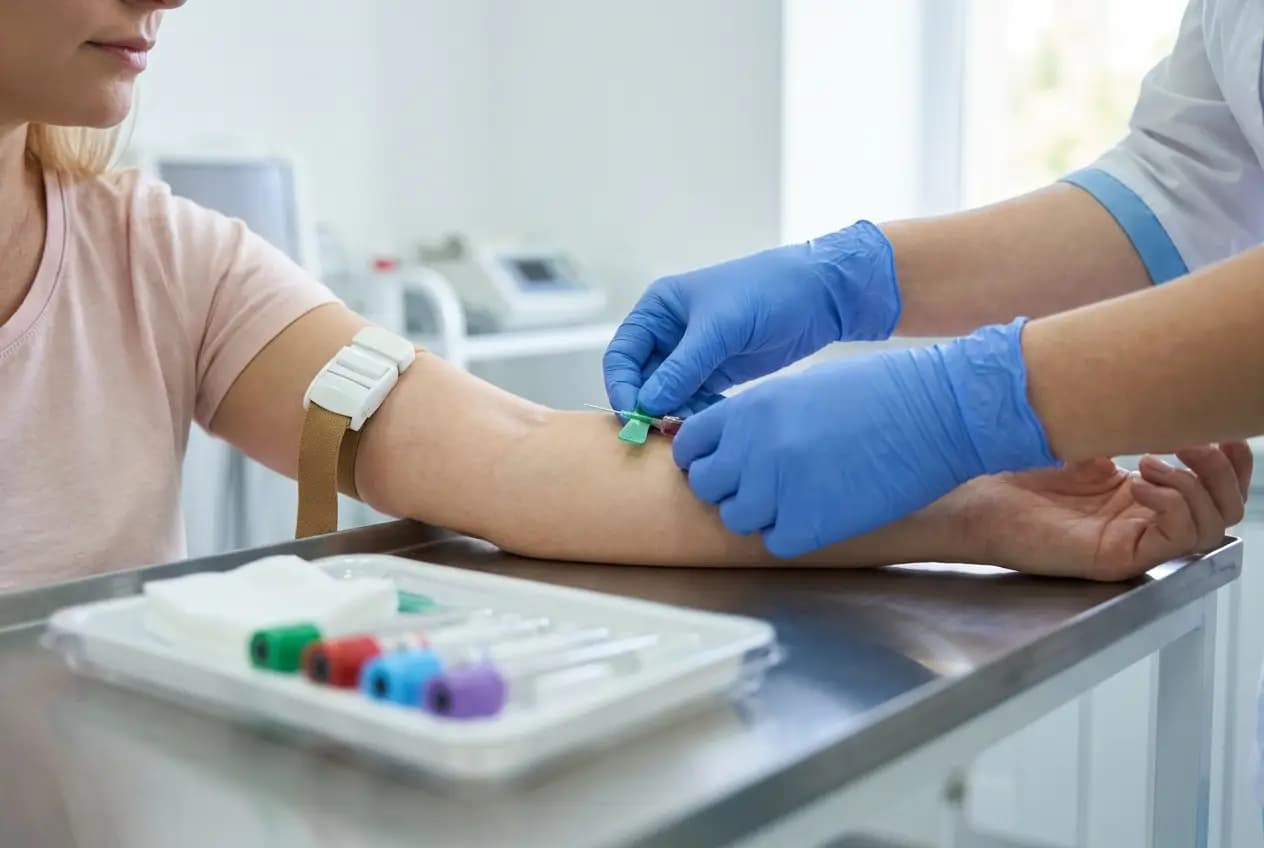
A thyroid function test is a standard blood draw, usually from a vein in your arm, and it's often done alongside other routine bloods. For most people no special preparation is needed, and you don't usually need to fast for thyroid tests specifically.
One practical heads-up: biotin, a supplement found in many hair, skin, and nail products, can interfere with some thyroid assays and skew results in either direction. Tell whoever orders the test about any supplements you take, as you may be advised to pause biotin for a few days beforehand. If you already take thyroid medication such as levothyroxine, ask whether to take it before or after the draw, as advice can vary.
When professional care makes sense
Thyroid conditions are diagnosed with blood tests and managed by a clinician, not self-diagnosed or self-treated. Results from a home or online test should always be reviewed by a healthcare professional before any conclusions are drawn.
- Don't self-adjust thyroid medication based on a home test or how you feel. Dose changes should be guided by a clinician using repeat blood tests.
- Seek prompt advice for symptoms like a fast or irregular heartbeat, marked weight loss, or severe anxiety, which can signal an overactive thyroid that needs attention.
- Get a new or enlarging lump or swelling in the neck checked promptly. A swollen thyroid (goiter) is not specific to one diagnosis: it can occur with an underactive or overactive thyroid, with Hashimoto's, or with thyroid nodules, so it warrants assessment either way.
- Be wary of "thyroid detoxes," promises to "heal" the thyroid with diet, or blanket iodine supplements. The mainstream treatment for an underactive thyroid is hormone replacement, and too much iodine can actually worsen thyroid problems.
If your symptoms are persistent, worsening, or simply hard to explain, that's a good reason to ask your clinician whether a thyroid blood test belongs in the workup.
Related: Considering a finger-prick kit? At-Home Thyroid Tests explains how they work and what to watch for (including biotin interference).