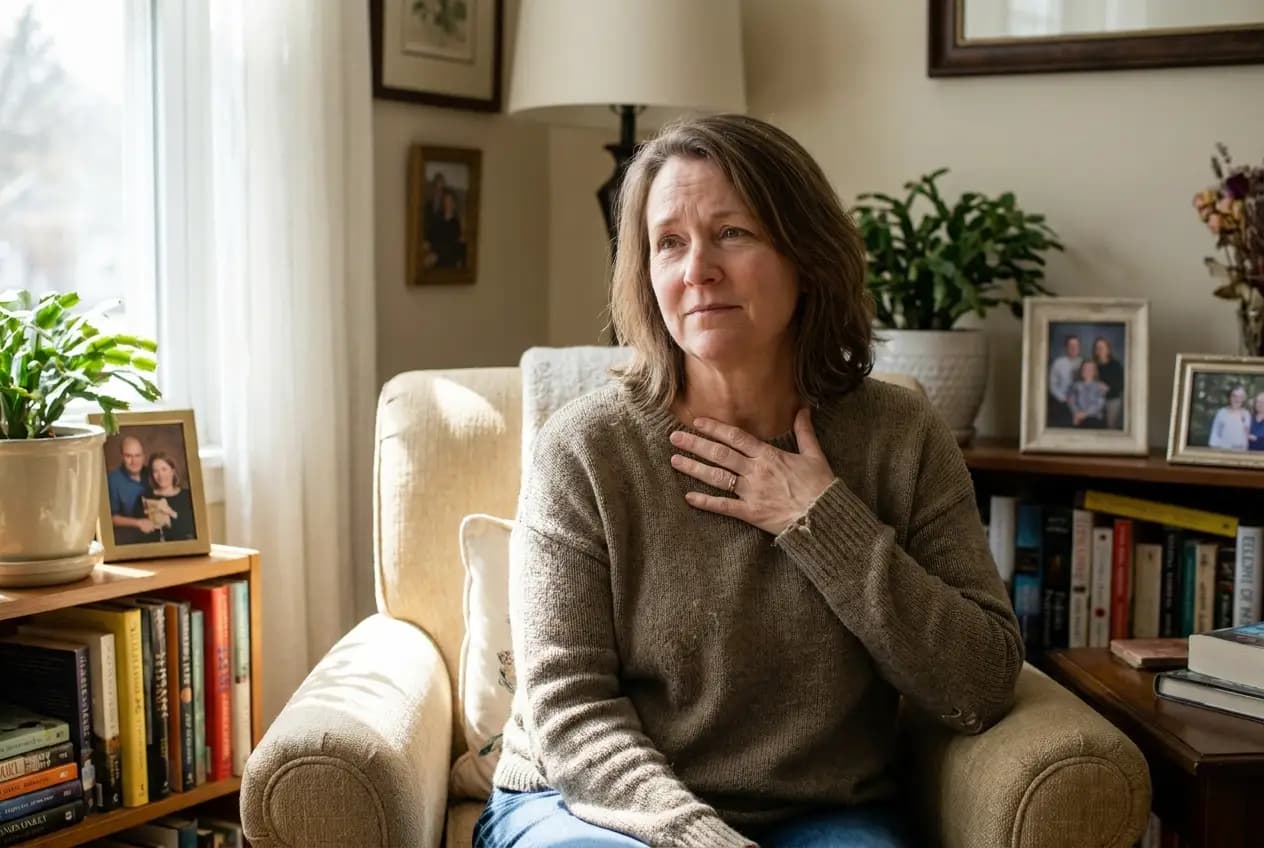
If your heart suddenly flutters, pounds, races, or seems to skip a beat, it can be unsettling — especially when it arrives out of nowhere in your 40s or 50s. Heart palpitations are a common, usually benign part of the menopause transition, but knowing why they happen and which symptoms are genuine warning signs helps you respond calmly and safely.
What menopause heart palpitations feel like
A palpitation is simply an awareness of your own heartbeat. People describe perimenopause heart palpitations in different ways, including:
- Fluttering — a light, quivering sensation in the chest or throat.
- Pounding — a forceful heartbeat you can feel in your chest, neck, or ears.
- Racing — your heart speeds up suddenly, even at rest.
- Skipped or extra beats — a pause followed by a noticeable thump, often caused by harmless extra beats (ectopics).
Episodes usually last seconds to a few minutes and settle on their own. They often turn up at predictable moments: lying in bed, during a hot flash, after caffeine, or in a stressful moment. Like other perimenopause symptoms, they can come and go for months or years.
Why hormone changes cause heart palpitations
The main driver is changing estrogen. As you move through perimenopause, estrogen doesn't just decline — it swings unpredictably, and the heart is sensitive to those shifts.
Estrogen helps regulate the autonomic nervous system, the automatic control system that sets your heart rate and rhythm.[3] As levels fall and fluctuate, this system can become more reactive, nudging the heart to beat faster or harder. Estrogen also influences blood vessels and the body's stress-hormone (adrenaline) response, which can make you more aware of your heartbeat. The result, for many women, is occasional palpitations — often clustered with vasomotor symptoms like hot flashes and night sweats.
The hot-flash connection
Palpitations and hot flashes frequently travel together. A flash triggers a surge of nervous-system activity — your skin flushes, you sweat, and your heart rate can briefly jump. So a pounding heart during or just after a flash is common and usually reflects that same temperature-regulation reflex rather than a heart problem.[5]
Common triggers for palpitations in perimenopause
Hormones set the stage, but everyday triggers often spark an individual episode. Common ones include:
- Caffeine — coffee, tea, energy drinks, and some sodas.
- Alcohol — especially in the evening or in larger amounts.
- Stress and strong emotions, which release adrenaline.
- Hot flashes and overheating.
- Poor or broken sleep — common when menopause insomnia or night sweats disrupt your rest.
- Nicotine and some stimulant medications or decongestants.
- Dehydration, skipped meals, or low blood sugar.
Keeping a brief diary of when palpitations strike can reveal your personal patterns and make them easier to head off.
How palpitations relate to anxiety
Anxiety and palpitations are closely linked, and the menopause transition can amplify both. Anxiety raises adrenaline, which can speed the heart — and feeling your heart race can itself spark worry, creating a loop that makes episodes feel more frequent and intense.[5]
This doesn't mean the sensation is "all in your head." The heartbeat is real; anxiety simply turns up the volume on it. Mood and anxiety changes are themselves common in perimenopause, partly hormonal and partly the knock-on effect of poor sleep, hot flashes, and brain fog. Learning to recognize and manage anxiety symptoms often eases palpitations too. That said, anxiety should be a diagnosis of reassurance reached after worrying causes have been considered — not an automatic assumption.
What helps menopause heart palpitations
For benign, hormone-related palpitations, lifestyle steps are the first line and are often enough:
- Manage triggers. Cut back on caffeine and alcohol and notice whether episodes ease.
- Protect your sleep. Consistent, restorative rest steadies the nervous system; see why sleep matters for practical steps.
- Lower baseline stress. Slow breathing, meditation, and time outdoors all calm the adrenaline response.
- Move regularly. The well-documented benefits of exercise include better autonomic balance and long-term heart health. Build up gradually — and note that palpitations brought on by exertion are a warning sign to get checked, not a normal training effect (see below).
- Treat the hot flashes. Because flashes and palpitations are linked, reducing hot flashes can reduce palpitations.
- Stay hydrated and eat regularly to avoid the dips that can set off a racing heart.
When to consider medical treatment
For some women, hormone therapy eases the vasomotor symptoms that drive palpitations, and many people notice their heart settles as flashes improve.[6] Whether it's right for you depends on your age, time since menopause, symptoms, and personal and family medical history — a conversation worth having with a clinician. Online menopause treatment options can make that first conversation easier to start. Some supplements are marketed for palpitations, but evidence is limited; review any supplement plan with realistic expectations and tell your clinician what you take.
Are menopause palpitations dangerous?
In the context of perimenopause and menopause, occasional palpitations are usually harmless, particularly when they're brief, settle on their own, and aren't paired with other symptoms. The fact that they're common, however, doesn't mean every cause is hormonal. Conditions that mimic or coexist with menopausal palpitations — a thyroid that's running fast (hyperthyroidism), anemia, a genuine arrhythmia, or underlying heart disease — deserve to be ruled out, especially if you have risk factors such as high blood pressure, diabetes, smoking, or a family history of heart disease. According to the American Heart Association, heart disease is the leading cause of death in women, and its symptoms can be subtler than the classic crushing chest pain.[4] When in doubt, get checked.
When to check in with a clinician
Call emergency services (911 or your local number) right away if palpitations come with any of these:
- Chest pain, pressure, tightness, or squeezing, or pain spreading to the arm, jaw, neck, or back.
- Shortness of breath or trouble breathing.
- Fainting, near-fainting, or sudden severe dizziness.
- A heartbeat that is very fast, very irregular, or sustained and won't settle.
- Palpitations that start during physical exertion (rather than easing with rest), which can signal a heart-rhythm or blood-flow problem.
Seek urgent (same-day) assessment if you have palpitations together with a family history of sudden cardiac death or an inherited heart condition, or if you have fainted with an episode — these features raise the priority of being checked quickly.
Make a prompt, non-emergency appointment if palpitations:
- Are happening often, getting worse, or lasting longer.
- Come with unexplained weight loss, heat intolerance, or tremor (a possible thyroid issue), or with paleness, breathlessness, and marked fatigue (a possible sign of anemia).
- Occur alongside known heart disease or high blood pressure.
- Are worrying you or disrupting daily life.
A clinician can check your pulse and blood pressure, run an ECG, order blood tests for thyroid and anemia, and — if needed — arrange a wearable heart monitor to capture an episode. Most often the news is reassuring, and identifying the pattern is the first step to feeling in control again.