The short answer
The FDA-approved label for Zepbound (tirzepatide), revised 22 April 2026, starts every adult at 2.5 mg injected under the skin once weekly for four weeks, regardless of indication. After that, the dose may be raised in 2.5 mg increments, but no sooner than four weeks on the current dose. Published maintenance doses are 5 mg, 10 mg or 15 mg once weekly for weight reduction and 10 mg or 15 mg for moderate-to-severe obstructive sleep apnea. The maximum is 15 mg weekly.
This page is reference, not instruction. It reports what the public FDA label says. Only your prescriber decides which dose you take, when you move up, and whether you stay where you are. Nothing here is a direction to start, stop, adjust, stretch, split or skip a dose.
The label's titration ladder
Tirzepatide is titrated slowly for one reason: tolerability. Nausea, vomiting, diarrhoea and constipation are the most common adverse reactions, and they cluster around dose increases. The four-week spacing exists to let the gut adapt. It is a floor, not a target — the label permits a clinician to keep someone on a lower dose longer.
| Step | Weekly dose | Minimum time before any increase | Status on the label |
|---|---|---|---|
| Start | 2.5 mg | 4 weeks | Initiation only — not approved as a maintenance dose |
| Step 2 | 5 mg | At least 4 weeks | Approved maintenance dose (weight) |
| Step 3 | 7.5 mg | At least 4 weeks | Titration step, not a listed maintenance dose |
| Step 4 | 10 mg | At least 4 weeks | Approved maintenance dose (weight and OSA) |
| Step 5 | 12.5 mg | At least 4 weeks | Titration step, not a listed maintenance dose |
| Maximum | 15 mg | — | Approved maintenance dose (weight and OSA); maximum dose |
Two details people miss. First, 2.5 mg is a starter dose, not a place to live — the label says it is for treatment initiation and is not approved for maintenance. Second, 7.5 mg and 12.5 mg are rungs on the ladder, not endpoints, though in practice a clinician may hold someone there if a higher dose is not tolerated. That is a clinical judgement, made by a prescriber who knows your history — not something to decide alone.
Sleep apnea uses the same ladder
On 20 December 2024 the FDA approved Zepbound for moderate-to-severe obstructive sleep apnea in adults with obesity — the first drug ever approved for OSA. The dosing schedule is identical: same 2.5 mg start, same four-week minimum between steps. The only difference is at the top, where the label lists maintenance as 10 mg or 15 mg rather than 5 mg. If you have OSA, this matters for coverage as much as for dosing — see below, and our guide to sleep apnea in women, which is chronically underdiagnosed at midlife.
Missed doses, and the rule that has no exceptions
The label publishes a missed-dose window: a missed dose may be taken within four days (96 hours), and if more than four days have passed it is skipped and the regular weekly schedule resumed. Ask your prescriber or pharmacist how that applies to you before you need it, not in the moment.
What is not open to interpretation: never double up to "catch up," and never self-adjust your dose. Doubling a GLP-1/GIP dose is a straight line to severe nausea, vomiting and dehydration. Moving yourself up the ladder faster than the label allows does the same. If the schedule has gone sideways, that is a phone call to the prescribing office, not a decision to make over a vial.
Vials versus pens: the cost lever with a safety catch
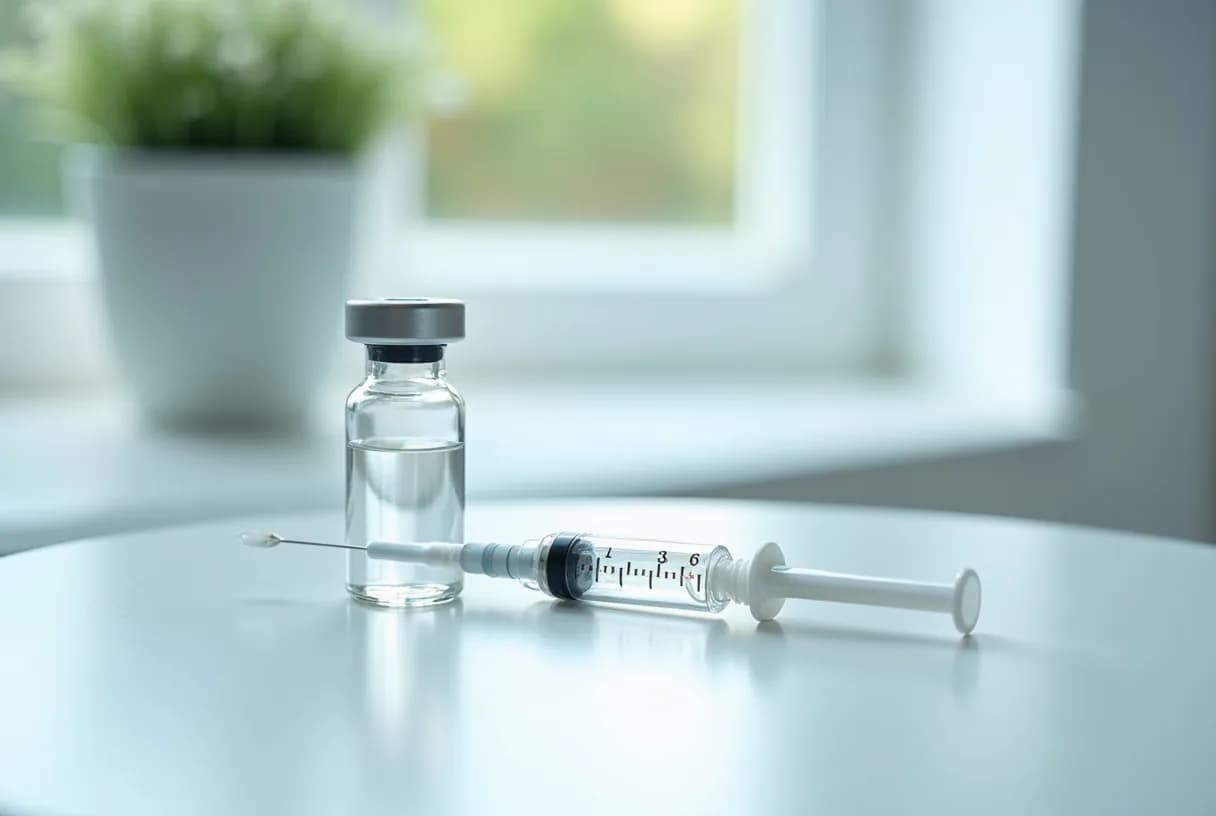
The label lists Zepbound in several presentations: single-dose prefilled pens, single-dose vials, multi-dose vials, and the single-patient-use KwikPen, which holds four weekly doses. All contain the same medicine at the same strengths. The difference is entirely in how the dose gets out of the container and into you: a pen or KwikPen delivers a set dose, while a vial requires you to draw the dose up with a syringe.
| Factor | Single-dose vial | Pen / KwikPen |
|---|---|---|
| How the dose is measured | You draw it up yourself with a syringe | The device delivers a set dose; no measuring step |
| Dose-error risk | Real. A mis-drawn syringe, a wrong-size syringe, or air in the barrel can change the dose delivered | Minimal — nothing to measure |
| Training needed | Yes: a pharmacist or clinician should walk you through drawing up and injecting, in person | Yes, but shorter |
| Published self-pay price (13 July 2026) | LillyDirect self-pay: $299/mo (2.5 mg), $399/mo (5 mg), $449/mo (7.5–15 mg) if refilled within 45 days | Lilly does not publish the vial self-pay tiers for pens. Its savings program lists the KwikPen from $299/mo and the single-dose pen at $499/mo for commercially insured people whose plan does not cover Zepbound |
| Usually suits | People paying cash who have been trained on a syringe | People with coverage, and anyone with poor eyesight, tremor, or a preference for removing the measurement step |
Be clear about what the vial is and is not. It is the same FDA-approved, Lilly-made Zepbound as the pen — not a compounded copy, not a grey-market product. It is a legitimate, cheaper route the manufacturer created deliberately. What it adds is a measuring step, and every measuring step is a place a dose can go wrong. This is not hypothetical: the FDA has documented dosing errors from GLP-1 medicines supplied in vials with syringes, including patients who drew up and injected five to twenty times the intended dose and were hospitalised. Those reports involved compounded products, but the mechanism — a person converting a dose in milligrams into a volume in a syringe — is the same one a Zepbound vial asks of you.
That is not a reason to avoid vials. It is a reason to insist on being shown, in person, once — and to use only the syringe size you were shown. If you use vials, three questions are worth asking your pharmacist out loud: which syringe do I use, what does the correct volume look like in it, and what do I do if I think I drew the wrong amount?
What it costs, and what your plan decides
Checked 13 July 2026 against Lilly's own pages: through LillyDirect self-pay, single-dose vials are listed at $299/month for 2.5 mg, $399/month for 5 mg, and $449/month for 7.5 mg through 15 mg — but that $449 tier depends on refilling within 45 days of your previous delivery. Miss the window and the price reverts to Lilly's standard rates, published as $499 to $699 a month depending on dose. If money is the reason you are reading this, the refill window is the single most expensive detail on the page.
If you have commercial insurance that covers Zepbound, Lilly's savings card is advertised at as little as $25 per fill, with per-fill savings caps and an annual maximum. If your commercial plan does not cover it, the same program lists the KwikPen from $299/month and the single-dose pen at $499/month. Lilly states these terms run to 31 December 2026 and reserves the right to change them, so verify the number on Lilly's page before you count on it.
Medicare is the hard part. Part D has historically been barred from covering drugs used solely for weight loss, which is why the OSA indication changed the picture — a Part D plan may cover Zepbound when it is prescribed for moderate-to-severe obstructive sleep apnea with obesity. Whether your plan does, and on what terms, we cannot know. Nobody writing an article can. Call the number on your card and ask exactly this: "Is tirzepatide on formulary, at what tier, is prior authorization required, and is it covered for the obstructive sleep apnea indication as well as for weight?" Write the answer down with the date and the representative's name. Our cost and coverage estimator can help you frame the appeal if the answer is no.
And to say it plainly: never describe a symptom you do not have, or a diagnosis you do not have, to get a drug covered. That is insurance fraud, and it also puts a false diagnosis in your permanent medical record.
Compounded tirzepatide
The FDA declared the tirzepatide shortage resolved in December 2024, and the enforcement-discretion period that allowed large-scale compounding of tirzepatide ended in the first half of 2025. That changes the legal footing of any compounded tirzepatide offered to you now. We are not going to tell you to use it or to avoid it — that is between you and a clinician who knows your history. What you should know before that conversation: a compounded product is not FDA-approved, is not the product this label covers, is usually supplied as a vial you draw up yourself (the setting in which the FDA's dosing-error reports arose), and may come in a concentration that makes the milligram ladder above meaningless.
Stopping — the part nobody advertises
Obesity behaves like a chronic condition, and the withdrawal data are unambiguous. In the SURMOUNT-4 trial, adults who lost a mean of 20.9% of body weight over 36 weeks on tirzepatide were then randomised either to continue or to switch to placebo. Over the following 52 weeks, those who continued lost a further 5.5%. Those who switched to placebo regained 14.0%. Nearly nine in ten of those who continued kept at least 80% of the weight they had lost; fewer than two in ten of those who stopped did.
This is not a moral failure and it is not evidence the drug "didn't work." It is what happens when a treatment for a relapsing condition is removed. It does mean that "how long am I on this, and what is the plan if I come off?" belongs in your first conversation with a prescriber, not your fifth — alongside protecting muscle while you lose weight (see GLP-1s and muscle loss, which matters disproportionately for women after menopause).
Talk to your prescriber — and when to call sooner
Book a conversation, don't improvise, if any of this applies:
- Nausea, vomiting or diarrhoea that stops you eating or drinking normally, or any sign of dehydration.
- Severe, persistent abdominal pain, especially radiating to the back, with or without vomiting — pancreatitis is a labelled risk and needs urgent assessment.
- Gallbladder symptoms: right upper abdominal pain, fever, jaundice, clay-coloured stools.
- A lump or swelling in the neck, hoarseness, trouble swallowing or persistent shortness of breath — the label carries a boxed warning about thyroid C-cell tumours seen in rodents.
- You take insulin or a sulfonylurea, or any medication whose dose depends on how much you eat — those doses may need review by the person who prescribes them.
- Vision changes if you have diabetic retinopathy, mood changes, or a planned pregnancy — tirzepatide is not for use in pregnancy, and the label notes it may reduce the effectiveness of oral contraceptives around dose changes.
- You missed a dose and are unsure what to do, or you think you drew up the wrong amount from a vial. Do not guess, and do not double up.
Related reading: tirzepatide side effects, Zepbound vs Wegovy, Mounjaro vs Zepbound (same molecule, different label), and the broader weight and metabolism section. If you are choosing an online prescriber, our guide to evaluating GLP-1 telehealth services shows what to check — who examines you, who can be reached at 9pm on a Sunday, and whether they dispense the FDA-approved product or a compounded one. We name no provider, because we have tested none.
Commerce disclosure: VidaBeacon may earn a commission if you use some links on this site. We were not paid by Eli Lilly or by any telehealth company for this article, no company reviewed it before publication, and no product, pharmacy or provider is recommended here. Prices were verified against Lilly's own published pages on 13 July 2026 and change without notice.
This article is health information, not medical advice, and not a dosing instruction. It reports what the FDA label publishes. Do not start, stop or change any medication based on it — that decision belongs to you and your prescriber.