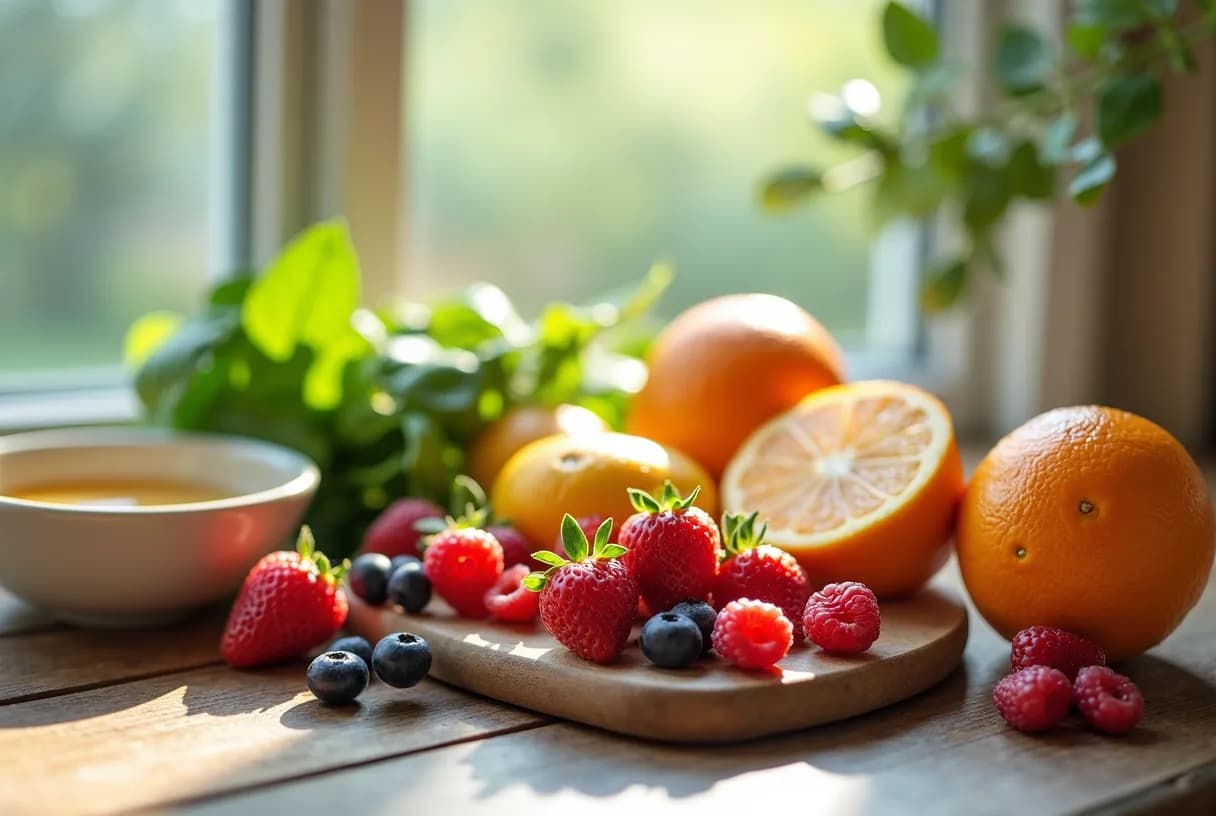
Short answer: Your body builds collagen from amino acids — mainly glycine and proline — together with vitamin C, zinc, and copper. So the most "collagen-boosting" diet is simply one that's rich in protein and colorful fruits and vegetables: eggs, fish, chicken, beans, citrus, bell peppers, berries, leafy greens, nuts, and shellfish. No single food adds collagen straight to your skin. Instead, these foods supply the raw materials your cells need to make their own — plus antioxidants that help protect the collagen you already have.
How does your body actually make collagen?
Collagen is the most abundant protein in your body — the structural scaffolding in skin, tendons, ligaments, cartilage, bone, and the walls of your blood vessels. Specialized cells called fibroblasts assemble it from a specific recipe, and every ingredient has to be present at once:
- Amino acids. Collagen is unusually rich in three amino acids — glycine, proline, and hydroxyproline. You get these building blocks from the protein in your diet.
- Vitamin C. This is a non-negotiable cofactor. Your cells can't stabilize collagen's rope-like triple helix without it, which is why a severe vitamin C deficiency (scurvy) makes existing collagen break down — showing up as bleeding gums, poor wound healing, and easy bruising, according to MedlinePlus.
- Copper. Copper activates lysyl oxidase, the enzyme that cross-links collagen and elastin fibers so your tissues are both strong and springy, per the NIH Office of Dietary Supplements (ODS).
- Zinc. Zinc supports protein synthesis and wound healing — the everyday work fibroblasts do to build and repair collagen (ODS).
The takeaway: "eating collagen" isn't really the point. What matters is keeping the assembly line stocked.
| Nutrient | What it does for collagen | Best food sources |
|---|---|---|
| Protein (amino acids) | Supplies glycine and proline, the raw building blocks of every collagen fiber | Eggs, chicken, fish, Greek yogurt, beans, lentils, tofu, edamame |
| Vitamin C | Essential cofactor that lets collagen fibers form and hold their shape | Citrus, red bell peppers, strawberries, kiwi, broccoli, tomatoes |
| Zinc | Supports protein synthesis and wound healing and repair | Oysters and other shellfish, beef, pumpkin seeds, chickpeas, cashews |
| Copper | Activates the enzyme that cross-links collagen and elastin | Shellfish, liver, nuts, seeds, whole grains, dark chocolate |
| Antioxidants (vitamins A and E, polyphenols) | Help shield existing collagen from UV and free-radical damage | Leafy greens, berries, carrots, tomatoes, green tea, olive oil |
What foods help your body build collagen?
Protein: the raw material
Because collagen is itself a protein, getting enough dietary protein is the foundation — this is where those glycine and proline building blocks come from. Spread protein across the day using eggs, fish, poultry, dairy, and plant sources like beans, lentils, tofu, and edamame. If your intake runs low (common as we get busier or older), a simple protein powder can help fill the gap, though whole foods should do most of the work. See our nutrition hub for practical targets.
Vitamin C: the assembly cofactor
Without vitamin C, collagen literally can't be finished. Adult women need about 75 mg per day, and smokers need an extra 35 mg (ODS); the UK's NHS sets a similar everyday target of 40 mg. The good news: this is easy to hit. One orange, half a cup of chopped red pepper, a cup of strawberries, or a serving of broccoli each covers a full day. More is not better — the tolerable upper limit is 2,000 mg per day, above which vitamin C can cause diarrhea and stomach upset.
Zinc and copper: the finishing minerals
These trace minerals do the cross-linking and repair work. Women need about 8 mg of zinc and 900 mcg of copper per day (ODS). Shellfish (oysters are the standout), beef, pumpkin and sunflower seeds, cashews, chickpeas, whole grains, and a little dark chocolate cover both. Zinc has a fairly low upper limit of 40 mg per day, so this is another case where food beats megadosing.
Bone broth and collagen-rich foods — are they worth it?
Bone broth, chicken skin, and slow-cooked cuts with connective tissue do contain actual collagen and gelatin. Here's the honest part: your digestive system breaks these down into amino acids, so they ultimately behave like any other protein source. A mug of bone broth is a perfectly good, mineral-containing protein — but it isn't a shortcut that pipes collagen into your face. The same logic applies to liquid collagen drinks.
Which foods help protect the collagen you already have?
Building collagen is only half the story — you're also constantly losing it. UV light, pollution, smoking, and even chronically high blood sugar (which drives "glycation," stiffening collagen fibers) all degrade it. Antioxidant-rich foods help blunt some of that damage: berries, leafy greens, tomatoes (rich in lycopene), carrots, green tea, and a little dark chocolate. The effect is real but modest — think of it as insurance for your skin, not a reversal button. For the topical side of this, see our skin-care hub.
Should you eat collagen foods or take a collagen supplement?
Food first is the honest recommendation, and here's why. Collagen-supporting foods are cheaper and arrive bundled with protein, fiber, vitamin C, and minerals your body needs anyway. Collagen supplements, by contrast, are a narrower bet: some randomized trials show that hydrolyzed collagen peptides can modestly improve skin hydration and elasticity, but the largest improvements tend to come from small, industry-funded studies, while independent reviews are more cautious. We unpack that evidence in does collagen work?, sort out the types of collagen, cover the benefits and what it does for skin, and compare products in our best collagen supplements guide and best collagen for women roundup. If you do try one, temper your expectations with our how-long-until-it-works tool and vet the label with the supplement scorecard. And a quick myth-check: biotin is often bundled into "beauty" blends, but it rarely helps hair unless you're genuinely deficient.
Does menopause change your collagen?
It does. Estrogen helps maintain skin collagen, and many women lose a meaningful share of it in the years right around menopause, which shows up as thinner, less elastic, drier skin. No diet can stop that hormonal shift, but getting enough protein and staying physically active supports the collagen you have — and is worth prioritizing during this window rather than chasing a single miracle food.
What lifestyle habits protect collagen?
The two biggest collagen destroyers aren't on your plate at all. According to the American Academy of Dermatology, daily sun protection — broad-spectrum SPF 30 or higher, seeking shade, and UPF clothing — and not smoking do more to preserve collagen than any food or supplement. Tobacco smoke contains toxins that degrade collagen and elastin, producing "smoker's face": dullness, sagging, and early lines. Sleeping well, managing stress, and keeping alcohol moderate all help too.
When should you see a doctor?
Diet supports skin, hair, and joints, but some symptoms deserve a professional rather than a grocery list. Check in with a clinician if you have joint pain or swelling that persists; noticeably slow wound healing, easy bruising, or bleeding gums (which can signal a real vitamin C deficiency); or sudden, patchy, or accelerating hair loss, which is more often about hormones, thyroid, or iron than collagen. A doctor can order simple bloodwork and rule out causes a smoothie never will.
The bottom line
There is no magic collagen food — but there is a genuinely collagen-friendly way of eating. Cover your protein, eat vitamin C with most meals, work in zinc- and copper-rich shellfish, seeds, nuts, and whole grains, and load up on antioxidant-rich produce. Then protect the collagen you build with daily sunscreen and no smoking. Do that consistently and you're giving your skin, hair, and joints everything they can actually use — which is more than any single "collagen food" or drink can promise.