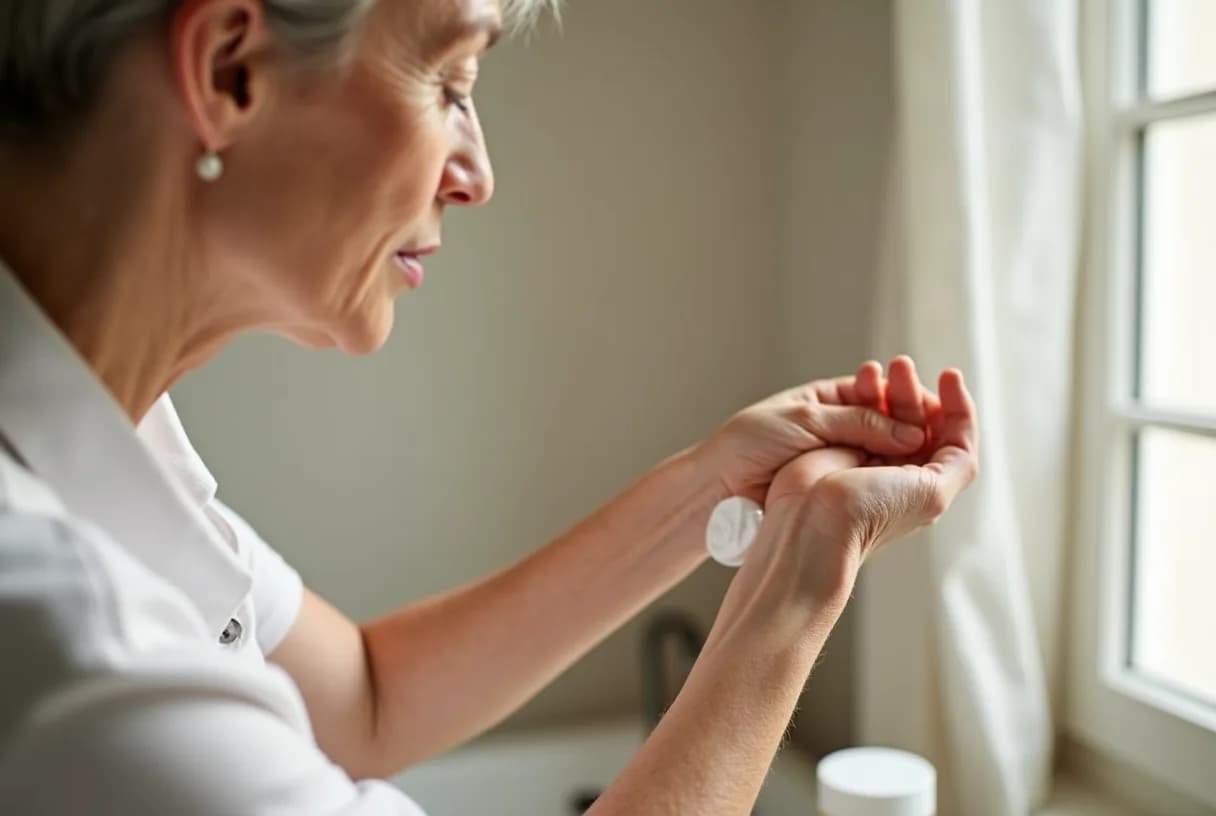
Topical minoxidil is the only over-the-counter medicine dermatologists consistently recommend for female-pattern hair loss, and it can also speed recovery from telogen effluvium (stress- or illness-related shedding). The confusing part is that many women shed more hair for the first few weeks — usually between weeks 2 and 8 — before anything grows back.[1] That early “dread shed” is normal and often means old resting hairs are being pushed out so newer, healthier ones can replace them. Realistically, expect little visible change for the first two months, the earliest fine regrowth around months 3–4, clearly visible improvement by 4–6 months, and a full verdict at about 12 months.
How does minoxidil actually work on women's hair?
Minoxidil is a “vasodilator” that was first used as a blood-pressure pill; hair growth was a side effect. Applied to the scalp, it is thought to widen the tiny blood vessels feeding the follicle and — more importantly — to lengthen the anagen (active growth) phase of the hair cycle while shortening the resting phase. In practice that means thicker, longer-lived strands over time rather than brand-new follicles.
It works best for the two most common causes of thinning in women: female-pattern hair loss (a genetic, hormone-sensitive gradual thinning across the crown and part) and telogen effluvium (a temporary wave of shedding triggered by illness, childbirth, crash dieting, surgery or stress). It does not regrow hair on smooth, scarred or completely bald areas, and it does little for a receding frontal hairline.[3] Both 2% and 5% strengths are FDA-approved for women, and it is today the most-recommended treatment for female-pattern hair loss.[1]
Does shedding mean minoxidil is working? The “dread shed” explained
Often, yes — counterintuitive as it feels. When minoxidil nudges resting follicles into a new growth cycle, the hairs already sitting in the resting phase get pushed out early to make room for the incoming ones. So a burst of shedding in the first weeks is frequently a sign the medicine has “woken up” the follicles, not evidence that it is thinning your hair.
The American Academy of Dermatology notes that for the first two to eight weeks you may notice a temporary increase in hair loss, which stops as new hair begins to regrow.[1] Here is how to tell an expected shed from a red flag:
- Reassuring: extra hairs in the brush or drain that ramp up around weeks 2–8, then settle toward your normal by month 2–3.
- Reassuring: the shed hairs are full-length with a tiny white bulb at the root (old resting hairs completing their cycle).
- Worth a check-in: heavy shedding that is still worsening past 3–4 months, or shedding with a burning, itchy or sore scalp.
- See a doctor: hair coming out in round patches or clumps, or widening bald areas — that is a different problem, not a minoxidil shed.
Not everyone sheds, and skipping the dread shed does not mean minoxidil isn't working. It's a common pattern, not a required rite of passage.
The minoxidil timeline: what to expect week by week and month by month
Hair grows about a centimetre a month, so patience is built into the biology. Take a photo of your part in the same spot and lighting on day one — your memory won't be a fair judge three months from now. Our how-long-until-it-works tool can help you set realistic checkpoints for any hair or supplement routine.
| Time since starting | What's usually happening | What it means / what to do |
|---|---|---|
| Weeks 0–2 | No visible change. You're building the daily habit. | Consistency matters more than anything now. Anchor it to a fixed time so you don't miss doses. |
| Weeks 2–8 | The “dread shed”: a temporary increase in hair fall, sometimes noticeably more than usual. | Usually the follicle cycle resetting — resting hairs pushed out so new ones can grow. Expected, not a reason to stop. |
| Months 2–3 | Shedding settles back toward baseline; still little to no regrowth you can see. | The quiet stretch. New hairs are in an early, invisible growth phase. |
| Months 3–4 | Earliest fine “baby hairs” appear, often along the part or temples. Easy to miss. | Compare your day-one photo now — this is the first sign of turnaround. |
| Months 4–6 | Visible improvement for many women: more coverage, a narrower-looking part, fuller feel. | The first honest checkpoint for “is this doing anything?” |
| Months 6–12 | Results build toward their peak, then plateau. | The 12-month mark is when a dermatologist judges how well it works for you. |
| 12 months and beyond | Maintenance phase. | Benefits continue only while you keep applying it; gains gradually reverse over a few months if you stop. |
Two anchors are worth memorising. MedlinePlus advises using minoxidil for at least four months, and possibly up to a year, before judging any effect.[3] The AAD puts the honest window at six to 12 months of continuous use before you know how well it will work.[1] Minoxidil doesn't work for everyone, though: a meaningful share of women see little regrowth even with correct use, which is why a specialist assessment matters if you're not responding by the 12-month mark.
2% vs 5%, foam vs liquid: which minoxidil should women use?
Both strengths are approved for women, so the choice is mostly about tolerance and convenience rather than a hard rule. The 5% foam applied once daily has become a popular default because it skips propylene glycol — the ingredient behind much of the dryness, flaking and itch some women get from the liquids — and it dries fast without greasiness. The 2% solution remains a solid choice for sensitive scalps that tolerate a twice-daily routine.
| Feature | 2% solution | 5% foam | 5% solution |
|---|---|---|---|
| FDA-approved for women | Yes | Yes (once daily) | Approved for men; used by women only under a clinician's guidance |
| Typical routine | Twice a day | Once a day | Once or twice a day |
| Contains propylene glycol | Yes — can cause dryness, flaking or itch | No — usually gentler on the scalp | Yes |
| Texture & convenience | Liquid; slower to dry, can feel greasy | Dries fast, little residue, easy to work into the part | Liquid |
| Unwanted facial-hair risk | Lower | Low–moderate | Higher with the stronger, twice-daily liquid |
| Often best for | Sensitive scalps that tolerate twice-daily use | Most women — a sensible default | Those advised to step up strength by a dermatologist |
Whichever you pick, one habit protects you from the most common cosmetic side effect: wash your face and hands after applying, and keep the product to your scalp. Cleveland Clinic warns that stray minoxidil can grow fine hair on the cheeks or forehead.[4]
How to apply it so it actually works
- Start with dry hair and scalp — water dilutes the medicine and worsens dripping.
- Part your hair to expose the thinning area and apply directly to the scalp, not the lengths.
- Use the labelled amount (a set number of foam “caps” or dropper marks). More is not better and raises the odds of side effects.
- Massage in lightly with fingertips, then wash your hands and face.
- Let it dry fully — about 2–4 hours — before styling products or bed. Apply once (5% foam) or twice (2% solution) daily at consistent times.[2]
Consistency beats intensity. A missed day here and there won't undo your progress, but a routine you actually keep for a year is what produces results.
How long do you have to keep using minoxidil?
Indefinitely, if you want to keep the regrowth. Minoxidil manages the condition; it doesn't cure it. MedlinePlus is blunt: it does not cure baldness, and most new hair is lost within a few months of stopping.[3] The NHS makes the same point — these treatments only work for as long as they're used.[5] That's worth knowing before you invest six months of effort, so the ongoing commitment isn't a surprise.
Who minoxidil suits — and who should see a dermatologist first
Minoxidil is a reasonable first step for a woman with gradual, all-over thinning (a widening part, a smaller ponytail) and a healthy scalp. But thinning hair is a symptom with many causes, and some need a diagnosis before you spend a year on a topical aimed at the wrong problem. Under-treated thyroid disease, low iron/ferritin, PCOS-related androgens, recent pregnancy, new medications and rapid weight loss can all shed hair — and several respond to fixing the root cause rather than minoxidil alone.
See a dermatologist or GP before (or instead of) starting minoxidil if:
- Hair is falling out in round patches, clumps or a sudden dramatic shed rather than a slow, even thinning.
- Your scalp is red, scaly, scarred, painful or intensely itchy, or the skin looks smooth and shiny where hair is gone (possible scarring alopecia).
- Thinning comes with signs of a thyroid problem — fatigue, weight change, cold intolerance — worth reviewing alongside thyroid-related hair loss and our thyroid health hub.
- You also have acne, irregular periods or new facial hair, which can point to PCOS-related hormonal shedding.
- The shedding started in perimenopause or menopause — hormone shifts change hair, and menopause hair loss sometimes needs a different plan (see our menopause section).
- You're pregnant, planning pregnancy or breastfeeding — the AAD advises avoiding minoxidil in these cases.[1]
- You develop dizziness, chest discomfort, a fast heartbeat, or swelling of the hands, face or ankles after starting — stop and seek medical advice promptly.[3]
A dermatologist can confirm the diagnosis, run bloodwork, and open doors minoxidil can't — prescription options, low-dose oral minoxidil, spironolactone, in-office procedures, or treating an underlying condition. The NHS recommends getting a sense of what's causing your hair loss from a doctor before turning to a commercial hair clinic.[5]
What to combine it with (and what not to expect from supplements)
Minoxidil does the heavy lifting; the rest is support. Correcting a genuine deficiency — iron, vitamin D, protein — can help hair that is shedding because of it, but piling on pills won't out-perform the medicine, and high-dose “hair, skin and nails” products can occasionally backfire. We weigh the evidence in hair-growth supplements, and if you're filling nutritional gaps, a plain, well-formulated option beats a boutique blend — see our best multivitamin for women guide and the wider supplements library. Gentle handling helps too: looser styles, less heat, and a soft-bristle brush reduce breakage while regrowth catches up.