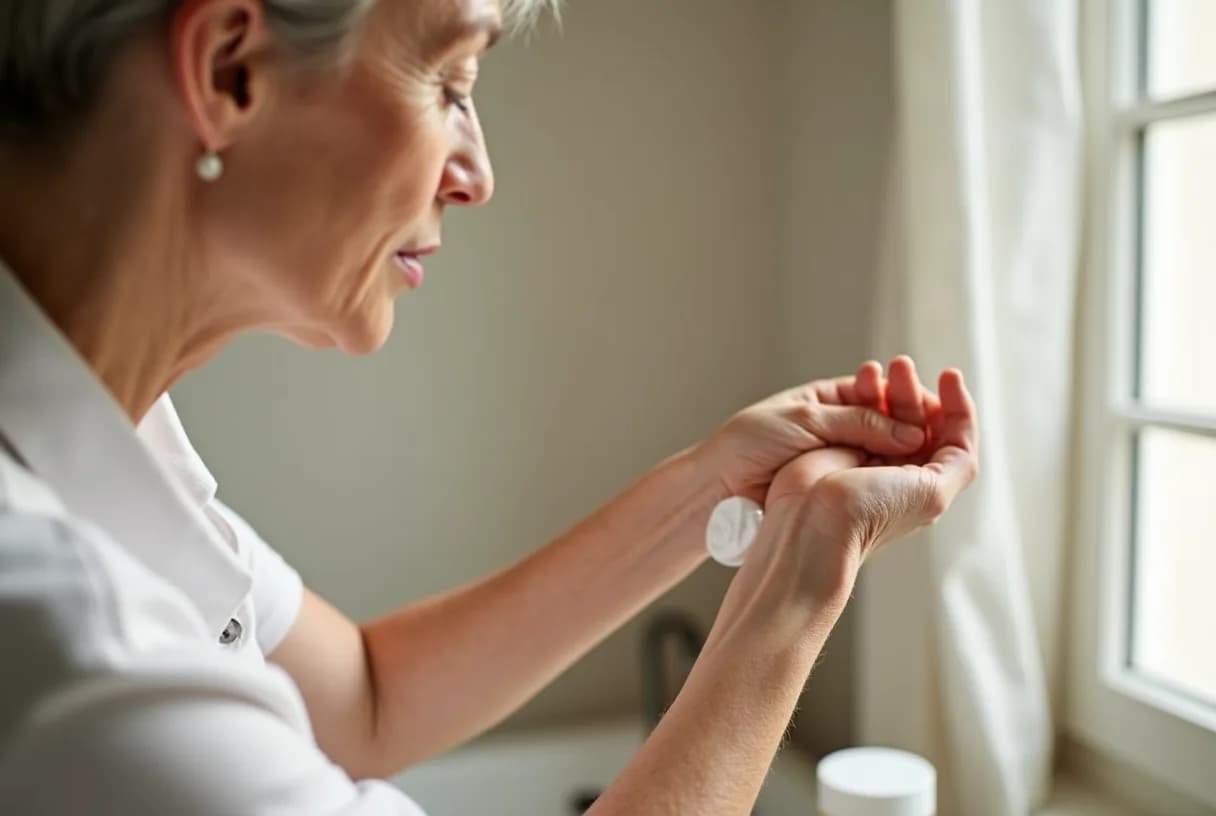
Dark spots are one of the most common skin complaints in midlife, and they have a frustrating habit of appearing just as other changes do too. The good news is that most are harmless and several treatments genuinely help. The important caveat: not every spot is benign, so it pays to know which ones deserve a doctor's eye.
What is hyperpigmentation?
Hyperpigmentation simply means a patch of skin that looks darker than the skin around it. It happens when pigment-producing cells make extra melanin, the brown pigment that gives skin its colour. That excess can be triggered by sunlight, hormones, inflammation, or injury. Hyperpigmentation is a cosmetic issue, not a disease in itself, but because a few serious conditions can also look like a dark spot, it is worth understanding the common, harmless types so you can recognise the unusual ones.
The common types of dark spots
Not all dark spots are the same, and the type matters because it shapes what will (and will not) help.
| Type | What it looks like | Main driver |
|---|---|---|
| Age spots (sun spots, "liver" spots) | Small, flat, tan-to-brown spots on sun-exposed areas — face, hands, shoulders | Years of cumulative sun exposure; nothing to do with the liver despite the old name |
| Melasma | Larger, blotchy brown or grey-brown patches, often symmetrical across cheeks, forehead or upper lip | Hormones plus sun; common in pregnancy and perimenopause and menopause |
| Post-inflammatory hyperpigmentation | Flat marks left behind after a spot, cut, or irritation has healed | Inflammation from acne, eczema, or picking and over-treating skin |
Melasma is especially relevant to women in midlife. Falling and fluctuating estrogen and other hormonal shifts can make pigment cells more reactive, which is why these patches often flare during pregnancy and around the menopause transition. Melasma is also the most stubborn type, prone to fading and then returning with sun or hormone changes. Lower estrogen drives several midlife skin shifts at once — alongside pigment changes, skin tends to get drier and lose firmness as collagen declines around menopause — so dark spots rarely arrive alone.
Timelines differ by type, which is worth knowing before you judge whether a treatment is working. Post-inflammatory marks from acne or a scratch often fade on their own over a few months once the skin is no longer being irritated. Long-standing sun spots and melasma are slower and far less predictable, and melasma in particular can return whenever sun exposure or hormones rise again.
Why sunscreen is the foundation
If there is one thread running through every type of hyperpigmentation, it is ultraviolet light. Sun exposure both creates new spots and darkens existing ones, and it can undo months of careful fading in a few unprotected afternoons. That makes daily sunscreen the single most effective step for both preventing and treating dark spots — more powerful than any serum, and the best-evidenced way to protect skin and lower skin-cancer risk.
- Use a broad-spectrum sunscreen with SPF 30 or higher on days you will be outdoors, and make it a daily habit if your skin is prone to melasma.
- Apply generously and reapply when outdoors for long stretches.
- Tinted mineral sunscreens add a layer of protection against visible light, which can worsen melasma in particular.
- Pair sunscreen with shade and a hat for the strongest protection.
No fading treatment works well without this step, because you are constantly fighting fresh pigment if skin stays unprotected.
Evidence-based fading options
Several ingredients can lighten dark spots, but expectations matter. Fading is slow, gradual and inconsistent — think weeks to months, not days — and results vary from person to person. A topical can soften and even out tone, but it cannot strip away years of pigment overnight or guarantee a clear complexion. These are described here, not prescribed; what suits your skin is best decided with a clinician or pharmacist.
| Ingredient | What it does | Notes |
|---|---|---|
| Topical vitamin C | An antioxidant that helps brighten and may modestly even tone | Best used in the morning under sunscreen |
| Retinoids | Speed cell turnover, which can fade pigment over time | Commonly irritate; introduce slowly |
| Niacinamide | Helps limit pigment transfer; calms and is well tolerated | Gentle; good for sensitive skin |
| Azelaic acid | Targets excess pigment and is generally considered suitable in pregnancy | A useful option for melasma and post-acne marks |
A note on retinoids
A retinoid can help fade pigment, but start low and slow — every few nights at first — because they commonly cause dryness and irritation, which can paradoxically trigger more post-inflammatory pigment. Always pair them with daily sunscreen. Avoid retinoids in pregnancy and while breastfeeding, and treat prescription-strength tretinoin as a clinician's decision. For where these fit alongside other steps, see our anti-aging skincare routine guide.
Clinician-led options
Some of the most effective treatments are only available through, or are best supervised by, a clinician. Prescription hydroquinone is a long-established skin-lightening agent, but it is used in courses under guidance because overuse can irritate skin or, rarely, cause its own pigment problems. Tranexamic acid, taken as a tablet or applied topically, is increasingly used for stubborn melasma and is also a clinician decision, as the oral form is not suitable for everyone. These are not products to source and self-prescribe online; a proper assessment matters.
In-clinic procedures
For spots that do not respond to topicals, a dermatologist may discuss in-office treatments such as certain chemical peels or lasers. These can work faster but carry real risks — including, on some skin tones, a rebound of more pigment, sometimes called post-inflammatory hyperpigmentation. Melasma especially can flare after aggressive treatment, which is why a cautious, tested approach beats chasing fast results. This is exactly why such procedures should be done by trained professionals after a proper assessment, not pursued through at-home gadgets.
What not to do
Some habits make pigmentation worse rather than better:
- Picking or squeezing spots and acne drives post-inflammatory pigmentation and can scar.
- Over-treating — layering too many strong actives or scrubbing aggressively — irritates skin and triggers more pigment.
- Skipping sunscreen while using actives, which leaves new and treated spots exposed.
- Patch-testing nothing — always trial a new active on a small area and add one product at a time.
Be patient and consistent. Protecting skin to prevent new spots is often more rewarding than chasing the fade of old ones.
When to see a clinician or dermatologist
This is the most important section. A "spot" is usually harmless, but some are not — and a dark mark can occasionally be a skin cancer, including melanoma. Never assume a dark spot is just an age spot. Get any spot or mole checked promptly if it shows the ABCDE warning signs:
- Asymmetry — one half does not match the other.
- Border — edges that are irregular, ragged or blurred.
- Colour — more than one shade, or uneven brown, black, red or grey.
- Diameter — larger than a pencil eraser (though smaller spots can still be a concern).
- Evolving — anything new, growing, or changing in size, shape or colour.
Also see a clinician for any spot that itches, bleeds, crusts, or will not heal, for pigmentation that is spreading or distressing you, or for persistent irritation, severe acne or rosacea while you are treating dark spots. If you are unsure, get it looked at — a quick check is always worth it. This article is educational and is not a diagnosis or a substitute for personal medical advice.