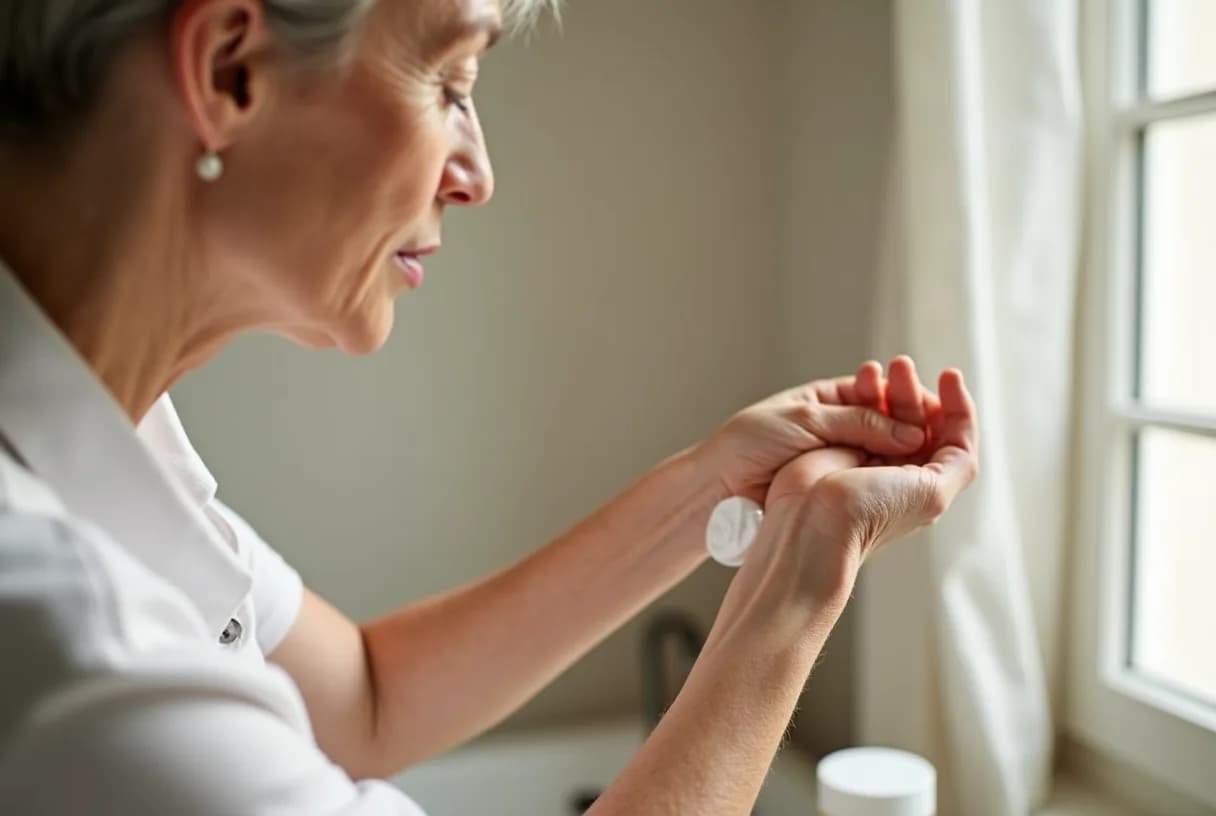
If you do one thing for your skin, make it daily sunscreen. The reason is simple and well supported by evidence: most of the visible aging we blame on time — fine lines, sagging, brown spots, rough texture — is actually driven by years of ultraviolet (UV) exposure. Protecting against that is the closest thing skincare has to a proven anti-aging step.
Photoaging: why the sun ages skin most
Dermatologists estimate that the large majority of visible facial aging comes from sun exposure rather than the passage of years alone. This sun-driven damage is called photoaging. UV light penetrates the skin and breaks down collagen and elastin — the proteins that keep skin firm and springy — while triggering low-grade inflammation and the free-radical damage that antioxidants help neutralise.
The result is the pattern most of us recognise as "aging": deeper wrinkles, crepey or sagging skin, broken capillaries, and uneven pigment. Much of the brown patchiness people notice in midlife is sun-driven, too — the age spots and hyperpigmentation that show up on the face, chest, and backs of the hands. (For the underlying biology of uneven tone, see our glossary entry on hyperpigmentation.) A useful way to see this for yourself: compare the skin on the underside of your forearm, which rarely sees the sun, with the back of your hand.
Does sunscreen actually prevent aging?
This is one of the better-evidenced claims in all of skincare. Because sunscreen blocks the UV that causes photoaging, using it consistently slows the formation of new wrinkles and pigment over time, and protects the results of any other anti-aging products you use. It is not a magic eraser — it works by prevention, so the payoff builds over months and years rather than overnight. Sunscreen cannot rebuild collagen you have already lost the way a clinical procedure might; what it does is stop you from losing more.
The other half of the message matters just as much: daily SPF also lowers your risk of skin cancer. So this is one rare case where the vanity goal and the health goal point to exactly the same habit.
How to choose the best sunscreen for your face
"Best sunscreen for face" really comes down to a few non-negotiables — and then the one you will actually wear every day. Look for these on the label:
| What to look for | Why it matters |
|---|---|
| Broad-spectrum | Protects against both UVA (aging, deeper) and UVB (burning) rays. Non-broad-spectrum products only address burning. |
| SPF 30 or higher | SPF 30 is the widely recommended minimum for daily use; higher SPF gives a little more margin, especially outdoors. |
| Water-resistant (40 or 80 min) | Useful if you sweat or swim — but it is not "waterproof," so you still reapply. |
| A texture you like | The best SPF is the one you apply every single morning. Lotions, gels, fluids, and tinted formulas all count. |
Mineral vs chemical filters
Both types are considered effective when used correctly. The difference is how they work:
- Mineral (physical) sunscreens use zinc oxide or titanium dioxide to sit on the skin and deflect UV. They tend to be gentler, which suits sensitive, reactive, or rosacea-prone skin, and the U.S. FDA recognises these two ingredients as generally safe and effective. The trade-off is a possible white cast, though tinted mineral formulas help.
- Chemical sunscreens absorb UV and convert it to heat. They are usually lighter and easier to rub in clear, which many people prefer for everyday wear under make-up.
If your skin is dry — common in midlife — look for a moisturising base or pair SPF with a ceramide or hyaluronic acid moisturiser underneath.
How to apply enough — and reapply
Under-applying is the most common mistake, and it quietly cuts the protection you actually get. A few practical rules:
- Use enough. For the face and neck, that is roughly a teaspoon; about a shot-glass amount covers an exposed body. A thin smear gives far less than the SPF on the bottle.
- Apply every morning, year-round — UVA passes through clouds and windows.
- Reapply every two hours when you are outdoors, and after swimming, sweating, or towelling off.
- Don't forget the ears, hairline, neck, chest, and hands — classic spots for sun damage.
Sunscreen is one layer — not the whole defence
No sunscreen blocks 100% of UV, so dermatologists frame it as one part of sun-smart behaviour rather than a free pass. Combine your daily SPF with:
- Shade, especially in the middle of the day when UV is strongest.
- Clothing, including long sleeves and UPF-rated fabrics.
- A wide-brimmed hat and UV-blocking sunglasses.
How sunscreen fits with your other active ingredients
Sunscreen is the partner that makes the rest of an evidence-based routine work — it is the foundation of any sensible anti-aging skincare routine.
- With vitamin C in the morning. A vitamin C serum adds antioxidant defence against daytime free-radical damage; layering SPF on top is the standard AM pairing.
- With a retinoid at night. If you use retinol or a prescription retinoid, daily sunscreen is essential — retinoids can make skin more sun-sensitive, and unprotected UV undoes the very repair you are working toward. Start retinoids low and slow, and avoid them in pregnancy and breastfeeding.
A simple AM/PM framework
| Time | Steps |
|---|---|
| Morning | Gentle cleanse → optional vitamin C serum → moisturiser → broad-spectrum SPF 30+ |
| Evening | Cleanse → retinoid (a few nights a week to start) → moisturiser. No SPF needed at night. |
Introduce one new active at a time and patch-test it first.
Why this matters more in midlife
Around menopause, falling estrogen speeds up collagen loss, so skin becomes thinner, drier, and less able to bounce back. Decades of accumulated sun damage become more visible at exactly the time the skin is more fragile. You cannot undo earlier exposure, but daily sunscreen from today forward protects the collagen you still have and is the most reliable anti-aging step you can take at any age.
When to see a clinician or dermatologist
Sunscreen lowers but does not eliminate skin-cancer risk, so keep an eye on your skin and book a prompt check for anything new, changing, or unusual. Dermatologists use the ABCDE guide for moles and spots:
- A — Asymmetry: one half doesn't match the other.
- B — Border: irregular, ragged, or blurred edges.
- C — Colour: more than one colour, or uneven shades.
- D — Diameter: larger than a pencil eraser (about 6 mm).
- E — Evolving: changing in size, shape, or colour — or a spot that itches, bleeds, or won't heal.
Any of these warrants a prompt visit to a clinician or dermatologist. Also see one for persistent irritation from a new product, or sun-damage concerns you'd like assessed. This article is educational and is not a diagnosis.