Honest verdict: For most people without diabetes, a continuous glucose monitor (CGM) is an interesting short experiment, not a proven health upgrade. CGMs are genuinely transformative for people with diabetes — especially anyone on insulin — but the evidence that they improve weight or long-term health in people without diabetes is limited and still emerging. Post-meal glucose rises are normal physiology, and there is no good evidence that chasing a perfectly flat line makes a healthy person healthier.
Quick verdict — is a CGM worth it for you?
- Clearly worth it You have diabetes, especially if you use insulin — a prescription CGM is standard, evidence-based care.
- Reasonable trial You have prediabetes, PCOS, or insulin resistance and want to see how specific meals affect you — use it for a few weeks with a clinician, not forever.
- Optional curiosity You're metabolically healthy, the budget is fun money, and you treat the data as a food-and-movement experiment rather than a diagnosis.
- Probably skip You want to “optimize” a normal glucose curve, or you're prone to food anxiety — the payoff is unproven and the stress is real.
- See a doctor You have symptoms like shakiness, unexplained weight change, or extreme thirst — you need a real lab work-up, not a wellness sensor.
What a CGM actually is — and who it was built for
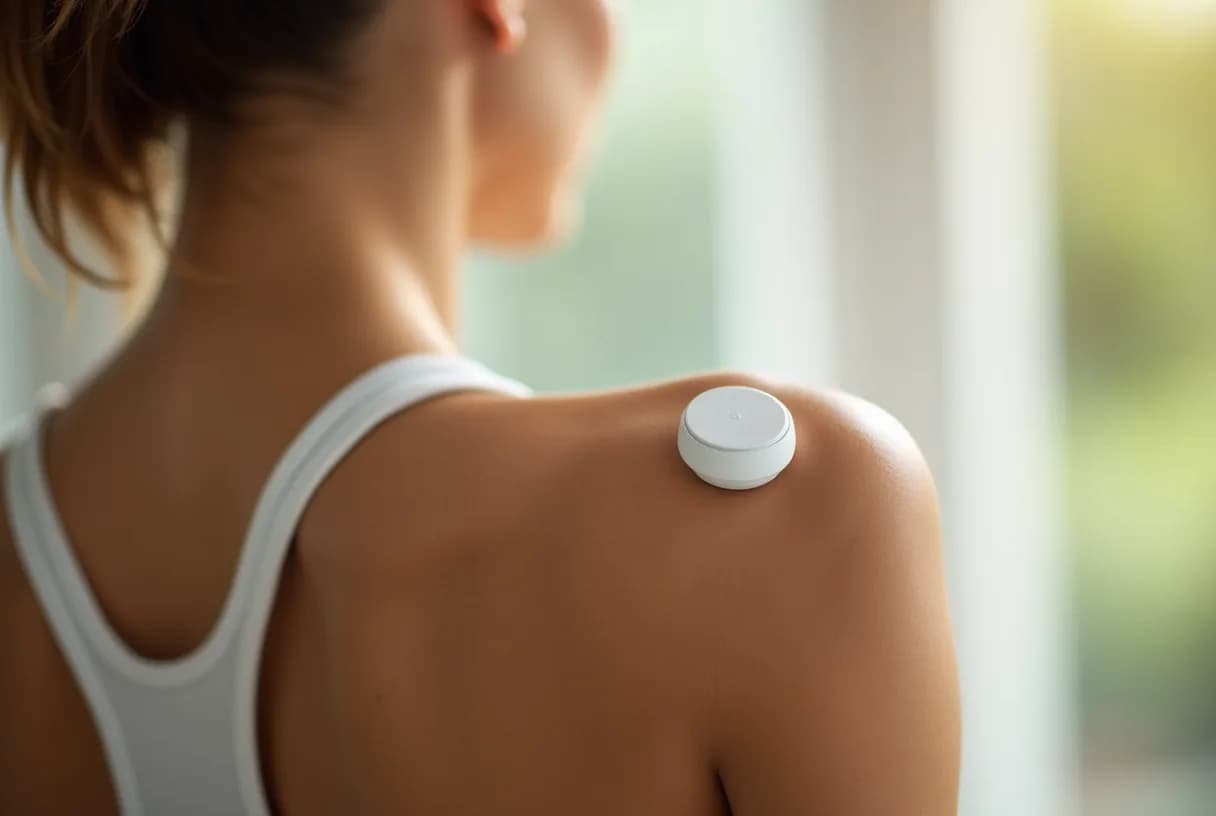
A continuous glucose monitor is a coin-sized sensor worn on the back of the upper arm. A tiny filament sits just under the skin and estimates glucose in your interstitial fluid, sending a reading to your phone every few minutes. The technology was designed for diabetes, where knowing your glucose in real time can prevent dangerous highs and lows. As Johns Hopkins diabetes researcher Elizabeth Selvin has put it, for people with type 1 diabetes and their families, CGMs have been “truly revolutionary.”
The consumer wave is newer. In March 2024 the FDA cleared the first over-the-counter CGM, Dexcom's Stelo, for adults 18 and older who are not on insulin; it reached U.S. shelves that August. Abbott's Lingo and Libre Rio followed. These sensors are sold for general wellness — not to diagnose or manage disease — and importantly, they are not meant for anyone with problematic low blood sugar, because they lack the urgent-low alarms built into medical CGMs.
Are glucose “spikes” in healthy people a problem?
This is the crux, and the marketing usually gets it wrong. In a person without diabetes, glucose rises after a carbohydrate meal, peaks around 30–60 minutes later — typically staying under about 140 mg/dL — and settles back to baseline within two to three hours. That rise and fall is not damage; it is your metabolism doing its job. A short glucose bump after oatmeal or a banana is normal, and treating every peak as an emergency misreads healthy physiology.
What genuinely fascinates researchers is variability: two people can eat the identical meal and produce very different curves. Some of that reflects real metabolic differences, some reflects sleep, stress, and activity, and some is measurement noise. It's a compelling observation — but interesting is not the same as clinically actionable. To understand what a normal curve even looks like, see our guide to blood sugar levels by age.
Does a CGM help you lose weight or get healthier?
Here the honest answer disappoints the ads. A randomized trial led by researchers at NYU found that, on average, wearing a CGM did not help people without diabetes lower their glucose meaningfully — and it did not beat a standard diet for weight loss. The average result was essentially neutral. Individual stories vary (some people cut back on the foods that spiked them most; a few felt worse), which is exactly why scientists are still trying to figure out who, if anyone, benefits.
| Common marketing claim | What the evidence actually shows |
|---|---|
| “A flatter glucose line means you're healthier” | Normal post-meal rises are physiologic. No trial shows that flattening a healthy person's curve improves weight, energy, or long-term outcomes. |
| “A CGM helps you lose weight” | A randomized trial found CGM did not outperform a standard diet for weight loss in people without diabetes, on average. |
| “Spikes reveal hidden prediabetes” | The American Diabetes Association still relies on fasting glucose and A1c to screen for prediabetes and diabetes. A wellness CGM is not a diagnostic test. |
| “Everyone reacts differently, so you need one” | Responses do vary between people — but variation alone doesn't prove that owning a sensor changes your health. |
Who might genuinely benefit?
There are real scenarios where a CGM earns its cost, mostly as a learning tool rather than a treatment:
- Prediabetes or a strong family history. Seeing how your body handles specific meals can motivate change — though standard labs still define your risk, and a CGM doesn't replace them.
- PCOS or known insulin resistance. Many women with PCOS have insulin resistance, and a short CGM trial can make the abstract concrete — which foods, portions, and walks move your numbers. Read more on the PCOS and insulin-resistance link.
- Genuine curiosity, budget permitting. Two to four weeks of data can nudge better habits — more fiber, protein, and a post-meal walk — and our roundup of foods that steady blood sugar covers the same lessons for free.
- Suspected reactive lows. If you get shaky and foggy a few hours after meals, that's worth a clinician conversation about reactive hypoglycemia — but note OTC sensors aren't validated to diagnose it.
A midlife note. Metabolism shifts around menopause, and it's not your imagination. In the ZOE PREDICT study, postmenopausal women showed less favorable post-meal glucose responses than premenopausal women — a real signal that the estrogen decline of midlife changes how the body handles carbohydrates. That makes the curiosity understandable. But a CGM measures the shift; it doesn't fix it. The proven levers — strength training, protein, fiber, sleep, and, where indicated, medication — are the same with or without a sensor on your arm.
In every case the honest framing is the same: use it for a defined window, interpret it with help, and don't let a consumer gadget become your doctor. If your real question is diabetes risk, an A1c and fasting glucose answer it more cheaply and more accurately.
What does a CGM cost in 2026?
Prices below are current as of 2026 and vary by retailer, plan, and promotions — verify before you buy. The over-the-counter tier is roughly “$50 per two-week sensor,” while app-plus-coaching subscriptions cost far more over a year.
| Option | Prescription? | Typical price | Best suited to |
|---|---|---|---|
| OTC biosensor (e.g., Dexcom Stelo) | No | About $89 per shipment on subscription (two ~15-day sensors, roughly a month); around $99 one-time | Curiosity; prediabetes; type 2 not on insulin |
| OTC wellness sensor (e.g., Abbott Lingo, Libre Rio) | No | Roughly $49–$89 per month depending on the plan | General wellness and habit tracking |
| App + dietitian coaching (e.g., Levels, Nutrisense, Signos) | No (OTC sensor + membership) | Roughly $130–$180 per month, or about $600–$1,800 per year | People who want guided interpretation of the data |
| Prescription CGM (e.g., Dexcom G7, FreeStyle Libre 3) | Yes | Depends on insurance; often not covered without a diabetes diagnosis | Clinician-directed use in diagnosed diabetes |
A quiet point the ads skip: insurance generally won't cover a CGM for a person without diabetes, so this is usually an out-of-pocket wellness purchase. If you're weighing a prescription device for a diagnosed condition, our cost & coverage estimator can help you think through what your plan might pay.
How accurate is the number on your phone?
Consumer CGMs are impressively good but not lab-perfect. Modern sensors run a mean absolute relative difference (MARD) under about 10% versus a laboratory reference — close enough for trends, not precise enough to obsess over a single digit. And because sensors read interstitial fluid, they lag actual blood glucose by roughly 5 to 20 minutes, a gap that widens exactly when things move fast: right after eating or during exercise. That means some dramatic “spikes” on your app are partly a timing artifact, not a true blood-sugar emergency. Never confirm a diagnosis from a wellness sensor — use a lab test.
The honest downsides
- Food anxiety and over-restriction. Researchers reviewing CGM in healthy people flag a real risk that constant data drives disordered eating or exercise. If numbers make you fearful of fruit, oats, or carrots, the device is costing you more than money.
- Misreading normal. Without context, a normal 130 mg/dL post-lunch reading can feel alarming. Data without interpretation breeds bad decisions.
- Recurring cost. Sensors are consumable. A curiosity month is one thing; an open-ended subscription is a different budget line.
- Not for everyone. OTC sensors aren't designed for anyone with problematic hypoglycemia or for insulin dosing — those situations need a prescription device and medical oversight.
When to see a doctor instead of buying a sensor
Skip the wellness gadget and book a clinician if you have symptoms that deserve a real work-up: excessive thirst or urination, unexplained weight loss, blurred vision, recurrent shakiness or confusion between meals, or a family history that has you worried about diabetes. A fasting glucose and A1c are inexpensive, validated, and diagnostic — everything a consumer CGM is not. A sensor is a reference tool for curiosity and habit change, never a substitute for diagnosis or treatment.
The bottom line
Continuous glucose monitors are a real medical breakthrough — for diabetes. For a healthy person, they're a fascinating, pricey window into your own metabolism whose health payoff is, so far, unproven. If you have prediabetes, PCOS, or plain curiosity and the budget, a short, clinician-informed trial can teach you something useful about your food and movement. If you're chasing a flat line because an ad told you spikes are dangerous, save your money: your after-lunch bump is almost certainly your body working exactly as designed. Explore more in our weight & metabolism section.