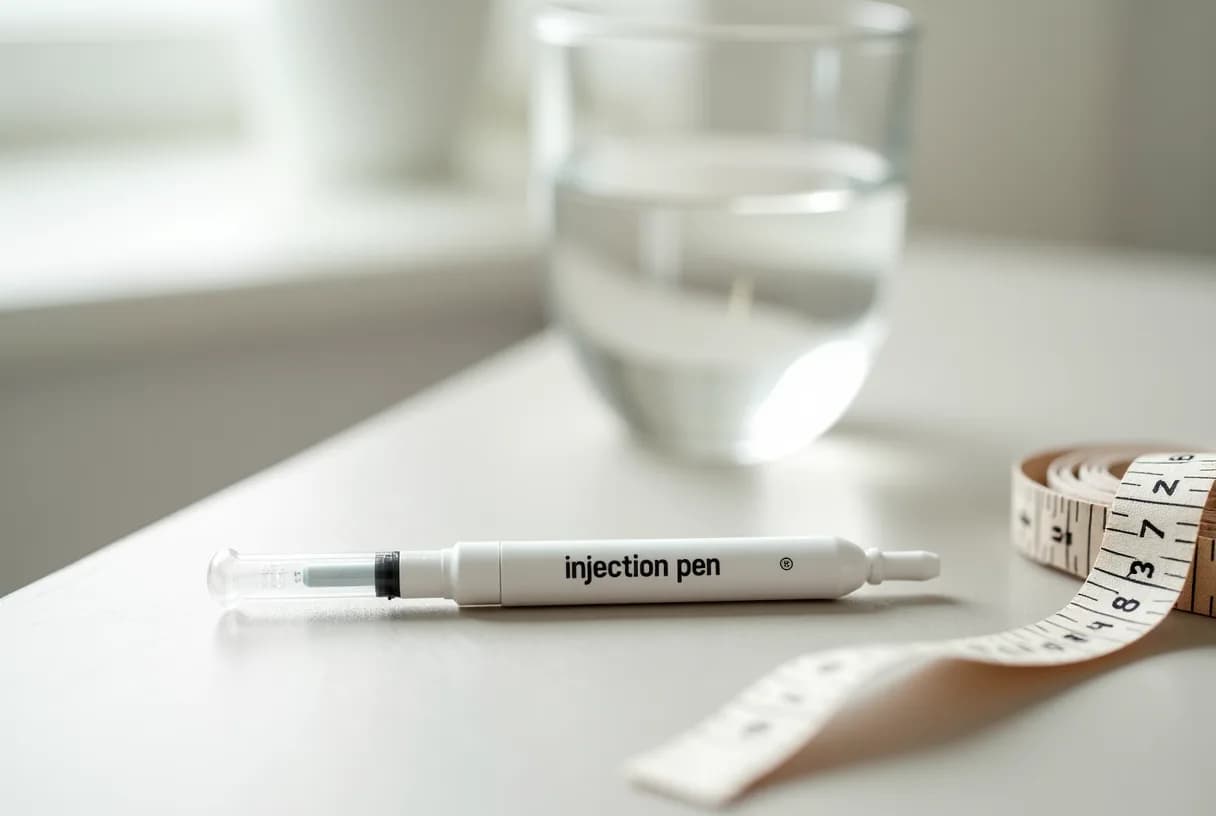
GLP-1 medications are prescription drugs that copy a natural gut hormone — glucagon-like peptide-1 — to quiet appetite, slow digestion, and steady blood sugar. The FDA-approved options are built on two molecules: semaglutide (sold as Ozempic, Wegovy, and the pill Rybelsus) and tirzepatide (Mounjaro and Zepbound), plus the older daily injection liraglutide (Saxenda). In obesity trials they produce roughly 15% average body-weight loss with semaglutide and up to about 21–22% with tirzepatide. They are chronic, prescriber-led treatments — not a quick fix and not a cure.
This hub maps the whole topic and points you to the right deep dive: what these drugs are, whether you qualify, what they cost, their side effects, the details that matter specifically for women in midlife, and what's still investigational. If you want the biology first, start with our plain-English primer, GLP-1s explained. For everything metabolic, our weight & metabolism hub is the wider home.
What GLP-1 medications are and how they work
GLP-1 receptor agonists mimic a hormone your gut releases after eating. They slow how quickly the stomach empties, increase the feeling of fullness, and turn down the brain's hunger and "food noise" signals, while improving the body's insulin response. Tirzepatide goes a step further as a dual agonist, also activating the GIP receptor, which appears to explain its larger average weight loss. For the full mechanism, see how GLP-1 drugs work, our drug page on semaglutide, and tirzepatide (Mounjaro and Zepbound).
The most confusing part is the branding. The same molecule is sold under different names for different conditions: semaglutide is Ozempic (type 2 diabetes), Wegovy (obesity, plus cardiovascular risk reduction as of 2024), and the daily tablet Rybelsus (diabetes — see oral semaglutide); tirzepatide is Mounjaro (diabetes) and Zepbound (obesity, and now obstructive sleep apnea, the first drug ever approved for it). Only the obesity-labeled brands — Wegovy, Zepbound, and Saxenda — are FDA-approved specifically for weight; the diabetes brands are sometimes prescribed off-label. Compare the pairs in Wegovy vs Ozempic, Mounjaro vs Ozempic, and Zepbound vs Wegovy.
| Brand | Molecule & form | FDA-approved for | Average trial weight loss |
|---|---|---|---|
| Wegovy | Semaglutide, weekly injection | Chronic weight management; cardiovascular risk reduction | ~15% at 68 weeks (STEP 1) |
| Ozempic | Semaglutide, weekly injection | Type 2 diabetes | Weight loss is off-label; lower than the obesity dose |
| Rybelsus | Semaglutide, daily tablet | Type 2 diabetes | Modest; not an approved weight-loss drug |
| Zepbound | Tirzepatide, weekly injection | Chronic weight management; obstructive sleep apnea | Up to ~21–22.5% at 72 weeks (SURMOUNT-1) |
| Mounjaro | Tirzepatide, weekly injection | Type 2 diabetes | Weight loss is off-label |
| Saxenda | Liraglutide, daily injection | Chronic weight management | ~8% at 56 weeks (SCALE) |
Do you qualify, and how much will you lose?
FDA labels for the weight-management brands generally apply to adults with a BMI of 30 or higher, or 27 or higher with a weight-related condition such as high blood pressure, type 2 diabetes, or sleep apnea. Eligibility is ultimately a clinical decision, not a formula, and prescribers weigh your full history. Our GLP-1 eligibility checker and weight-loss projector can help you frame the conversation — they are educational, not a diagnosis.
On results: in the pivotal STEP 1 trial, adults on semaglutide 2.4 mg lost an average of 14.9% of body weight over 68 weeks, versus 2.4% on placebo, with 86% reaching at least 5% loss. In SURMOUNT-1, tirzepatide produced average losses of roughly 16% to 22.5% depending on the studied dose, and about one in three people on the top dose lost a quarter of their body weight. A head-to-head trial, SURMOUNT-5, found tirzepatide outperformed semaglutide (about 20.2% versus 13.7% over 72 weeks). These are averages — individual results vary widely, and every trial paired the drug with diet and activity changes. If a GLP-1 isn't the right fit, see Ozempic alternatives.
What GLP-1 drugs cost and how coverage works
Without insurance, the branded weight-loss drugs list around $1,000–$1,350 a month, though manufacturer savings programs and newer cash-pay vial options can lower that. Coverage is the real hurdle. Many commercial plans require prior authorization, Medicaid coverage for obesity varies by state (only a minority of states cover anti-obesity drugs through Medicaid), and Medicare has historically not paid for a GLP-1 prescribed purely for weight loss — though it may cover one for an approved condition such as diabetes, cardiovascular risk, or sleep apnea. Work through the details in GLP-1 insurance coverage, does Medicare cover GLP-1s, and does Medicaid cover GLP-1s. For price breakdowns see Ozempic cost, Wegovy cost, and Zepbound cost. If you hit a wall, prior authorization and how to appeal a denial walk through the next steps, and the cost & coverage estimator helps you ballpark your out-of-pocket.
Side effects and safety
The most common side effects are gastrointestinal — nausea, vomiting, diarrhea, and constipation — usually worst early on and eased by the slow, prescriber-set dose increases. Rarer but serious risks include pancreatitis and gallbladder problems. Both classes carry a boxed warning about thyroid C-cell tumors seen in rodents, so they are not used by people with a personal or family history of medullary thyroid cancer or MEN2 syndrome. Read the full picture in semaglutide side effects and tirzepatide side effects, and note that alcohol tolerance can change too (GLP-1s and alcohol).
Rapid weight loss also brings changes worth planning for: facial volume loss ("Ozempic face"), hair shedding, and loss of muscle and bone density — the last two especially important to protect with adequate protein and strength training. On the upside, the metabolic benefits can extend beyond the scale, including improvements in fatty liver.
What women in midlife specifically need to know
This is where a generic guide stops and we don't. Falling estrogen in perimenopause and menopause shifts fat toward the abdomen and lowers muscle mass, which is why weight often climbs in your 40s and 50s despite no change in habits. GLP-1 drugs can help, but protecting muscle and bone matters more at this life stage than at any other — read GLP-1s for menopause weight gain alongside our menopause hub.
For PCOS, where insulin resistance drives weight and cycle problems, GLP-1s can improve metabolic markers and sometimes restore ovulation, often used alongside or after metformin — see our PCOS section. That fertility effect cuts both ways: these drugs are not used in pregnancy and are typically stopped before trying to conceive, which our guide on GLP-1s, fertility, and pregnancy explains.
One contraception detail is easy to miss and genuinely important: tirzepatide (Mounjaro and Zepbound) can reduce the effectiveness of birth-control pills, so the label advises adding a barrier method or switching to a non-oral contraceptive for four weeks after starting and after each dose increase. Semaglutide does not carry this warning. The full details are in GLP-1s and birth control and Ozempic side effects in women.
Starting, dosing, stopping, and regain
Every GLP-1 is started low and increased gradually — a schedule your prescriber sets and adjusts, never something to self-manage. We describe how titration generally works in the dosing schedule guide and what to do about a missed dose, but the specifics belong between you and your clinician. Our GLP-1 timeline sets realistic week-by-week expectations.
Because obesity is a chronic condition, appetite and weight tend to return when the drug stops — see what happens when you stop and weight regain. That's not personal failure; it's how a chronic-disease medication behaves, and it's a key reason clinicians frame these as long-term tools rather than a course you finish.
Compounded versions, telehealth, shortages, and hype
When semaglutide and tirzepatide were in official shortage, pharmacies were temporarily allowed to make compounded copies; as the FDA declared those shortages resolved, that legal window largely closed. The history and current status are in shortages and compounding status, compounded semaglutide vs Wegovy, and compounded tirzepatide vs Zepbound. Compounded products are not FDA-approved and vary in quality, and we don't cover sourcing them. Legitimate telehealth does exist — how to get GLP-1s online safely explains how to tell a real clinic from a grey-market seller. And be skeptical of shortcuts: "natural Ozempic", berberine, patches, microdosing, and unregulated weight-loss peptides are mostly marketing, not medicine.
What's coming next
Several next-generation drugs are in late-stage trials but are not FDA-approved and cannot be prescribed in the US. Retatrutide, a triple agonist, and survodutide are in phase 3; CagriSema (cagrilintide plus semaglutide) is under regulatory review; and mazdutide is approved in China but not the United States. Early numbers look striking, but "investigational" means the full safety and effectiveness picture isn't settled — and any online offer to sell these drugs today should be treated as a red flag.
When to see a doctor
Talk to a clinician before starting if you're pregnant or planning pregnancy, have a history of thyroid cancer or pancreatitis, or take oral contraceptives (especially with tirzepatide). While on treatment, seek prompt care for severe or persistent abdominal pain, ongoing vomiting with signs of dehydration, or symptoms of a serious allergic reaction. A GLP-1 is a reference point for a conversation with a prescriber — not a self-diagnosis or a self-treatment plan. Browse our drug guides and interactive tools to prepare for that visit.