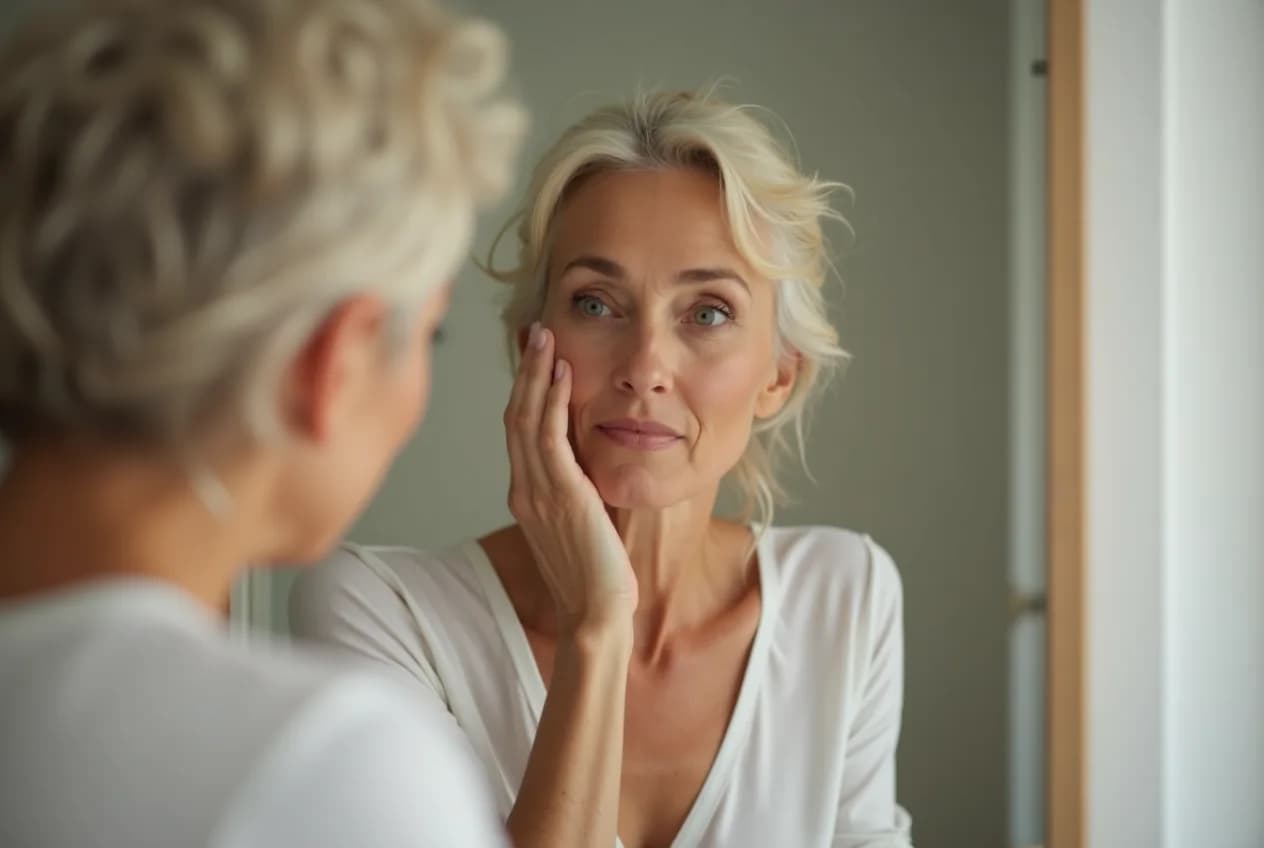
If you've lost a noticeable amount of weight and your face suddenly looks thinner, more lined, or somehow older, you may have run into the term "Ozempic face." It sounds alarming and drug-specific — but the reality is calmer and more reassuring than the name suggests.
What is "Ozempic face"?
"Ozempic face" is a viral, non-medical nickname popularized on social media. It describes the cluster of facial changes some people notice after rapid, significant weight loss: hollowed cheeks and temples, looser or saggier skin along the jaw, more visible folds and fine lines, and an overall gaunt or older appearance. It is not a diagnosis, not a recognized medical condition, and — despite the name — not a unique effect of GLP-1 medications like semaglutide (Ozempic and Wegovy).
The face simply got caught up in something the whole body does when you lose weight quickly.
The honest science: it's fat loss, not a drug effect
Your face contains its own pads of fat, layered over muscle and bone, that give cheeks their fullness and the skin something to rest on. When you lose body fat, you lose it everywhere — including your face. You can't choose where fat comes off, and the face is no exception.
So the change isn't the drug "melting" your face. It's volume leaving a place where, on a smaller surface, the loss shows up clearly. Two things make it more obvious:
- Speed. When weight drops fast, skin doesn't have time to retract and adapt to a smaller frame, so it can look loose or deflated.
- The amount lost. Larger losses mean a bigger change in facial volume, and a more visible before-and-after difference.
This is the part the viral framing gets wrong. GLP-1 drugs are simply very effective at producing fast, substantial weight loss, so the facial change shows up more often in people using them — but the mechanism is ordinary fat loss, not a special property of the medicine.
Why midlife makes "Ozempic face" more noticeable
The same weight loss tends to show more in a midlife face than a younger one, and hormones are part of the reason. As estrogen declines through perimenopause and menopause, skin gradually loses collagen and elastin — the proteins that keep it firm and springy. Research suggests skin collagen declines meaningfully in the years around menopause.
So if your skin's elasticity is already declining, it's less able to "shrink to fit" after volume is lost. Add the fact that midlife is exactly when many women are addressing menopause-related weight gain — sometimes alongside thyroid or other hormonal shifts covered in our thyroid and weight guide — and you can see why this conversation lands so heavily with women in their 40s and 50s.
The same thing happens with ANY rapid weight loss
This is the key reassurance: facial hollowing is not unique to Ozempic, Wegovy, or GLP-1 drugs at all. The same change can follow:
- Rapid weight loss from intensive dieting or very low-calorie plans
- Weight loss after bariatric surgery
- Large losses from any cause, including illness
People have described a "gaunt after dieting" look for decades. The phenomenon is old; only the catchy, drug-branded name is new. Reframing it this way matters, because it shifts the question from "is this drug harming my face?" to the more useful "how can I lose weight in a way that's kinder to my whole body?"
What can reduce or help "Ozempic face"
You can't fully control where fat comes off, but you can strongly influence how the process treats your skin and the structure underneath it. The most effective "Ozempic face fix" is upstream — in how you lose the weight in the first place.
Lose weight at a steadier pace
A slower, gradual rate of loss gives skin more time to adapt and tends to produce a less dramatic facial change. This is one reason crash dieting backfires — more on that below.
Protect muscle with protein and strength training
Rapid weight loss costs you muscle as well as fat, and muscle loss can leave the face and body looking more deflated. Keeping protein adequate and doing regular strength training helps preserve lean tissue, which supports your overall frame and face. It's also good for metabolism and bone.
Support your skin
- Stay hydrated and eat enough overall — very restrictive eating leaves skin looking dull and drawn.
- Daily sun protection is one of the most evidence-based ways to preserve collagen over time.
- A simple skin-care routine with a moisturizer and a retinoid (if your clinician agrees) can support skin quality.
Cosmetic procedures: a personal, clinician-guided choice
Some people choose treatments such as dermal fillers, biostimulators, or skin-tightening procedures to restore facial volume. These can help, but they are elective, cost money, carry their own risks, and are entirely optional. There is no obligation to "fix" a face that is simply smaller and healthier. If you're considering this route, discuss it with a qualified, board-certified clinician — not a social-media trend.
| Approach | What it does | Worth knowing |
|---|---|---|
| Steadier weight-loss pace | Gives skin time to adapt | Most protective; reduces the effect at the source |
| Protein + strength training | Preserves muscle and structure | Benefits whole-body health, not just the face |
| Hydration, sun protection, skin care | Supports skin quality | Low-risk, broadly beneficial habits |
| Cosmetic procedures | Restores volume or tightens skin | Optional, costs money, has risks — clinician-guided |
What NOT to do: don't crash-diet to "catch up"
It can be tempting to speed things up — eat far less, push for faster results. Don't. Crash dieting makes the very thing you're worried about worse: faster loss gives skin even less time to adapt, and severe restriction accelerates muscle loss, which leaves both face and body looking more deflated. Extreme dieting can also harm your relationship with food and your nutrition. A steadier pace with enough protein is genuinely the better-looking and healthier path.
When to seek medical care
"Ozempic face" itself is a cosmetic, not a medical, concern — but the weight-loss journey around it deserves real support. Talk with a clinician if:
- You're considering or currently using a GLP-1 medication and want to understand whether it's appropriate for you — these are prescription drugs, suitability is always an individual clinical decision, and you should never use someone else's prescription or an unverified online or "compounded" source.
- You're losing weight faster than feels comfortable, or losing weight without trying, which should always be evaluated.
- You feel weak, dizzy, or unusually fatigued, which can signal inadequate nutrition or muscle loss — see our note on midlife fatigue if it lingers.
- You're considering cosmetic procedures and want a qualified, board-certified opinion.
- Worry about your appearance is affecting your mood, eating, or daily life.
The bottom line: a thinner face after real weight loss is normal physiology, not a warning sign. Losing weight steadily, eating enough protein, staying active, and protecting your skin will serve your face — and the rest of you — far better than any quick fix.