Visceral fat is the deep fat packed inside your abdomen, around the liver, intestines and pancreas, and it behaves nothing like the soft fat you can pinch under your skin. Because it sits out of sight, the bathroom scale and even BMI routinely miss it. That is precisely the problem: visceral fat is metabolically active, releasing inflammatory signals and free fatty acids that drive insulin resistance, type 2 diabetes and heart disease. It is a health issue, not a cosmetic one, and for women it tends to climb sharply around menopause, often while the number on the scale barely moves.
What visceral fat actually is, and how it differs from the fat you can pinch
Body fat comes in two main forms. Subcutaneous fat sits just under the skin; it is the layer you can grab on your hips, thighs or belly. Visceral fat is stored deeper, wrapped around and between the organs in the abdominal cavity, and you cannot pinch it. Someone can look slim, have a "normal" weight, and still carry a lot of it, a pattern researchers sometimes call TOFI (thin outside, fat inside).
The two fats are not just in different places; they behave differently. Subcutaneous fat is largely a storage depot. Visceral fat drains directly into the liver through the portal vein and secretes a steady stream of hormones and inflammatory compounds (adipokines and cytokines). That biological difference is why your waistline can matter more to your metabolic health than your total weight.
Why visceral fat is a health problem, not a vanity one
Visceral fat is linked, often independently of overall body weight, to a cluster of serious conditions:
- Insulin resistance and type 2 diabetes. Free fatty acids and inflammatory signals from visceral fat make muscle, liver and fat cells less responsive to insulin, pushing blood sugar up. If you already notice signs of insulin resistance, central fat is often part of the picture.
- Heart disease. In its 2021 scientific statement, the American Heart Association concluded that abdominal obesity is a cardiovascular risk marker independent of BMI. In a meta-analysis of more than 300,000 adults, higher central adiposity raised the risk of coronary artery disease and cardiovascular death at every BMI level, including in people whose BMI was in the "normal" range.
- Chronic inflammation and fatty liver. Visceral fat fuels persistent low-grade inflammation and is a key driver of non-alcoholic fatty liver disease, higher triglycerides and higher blood pressure, which together define metabolic syndrome.
None of this means a soft belly is a moral failing, or that thinness equals health. It means the location of fat carries information your weight alone cannot give you.
How visceral fat is measured, and why the scale and BMI miss it
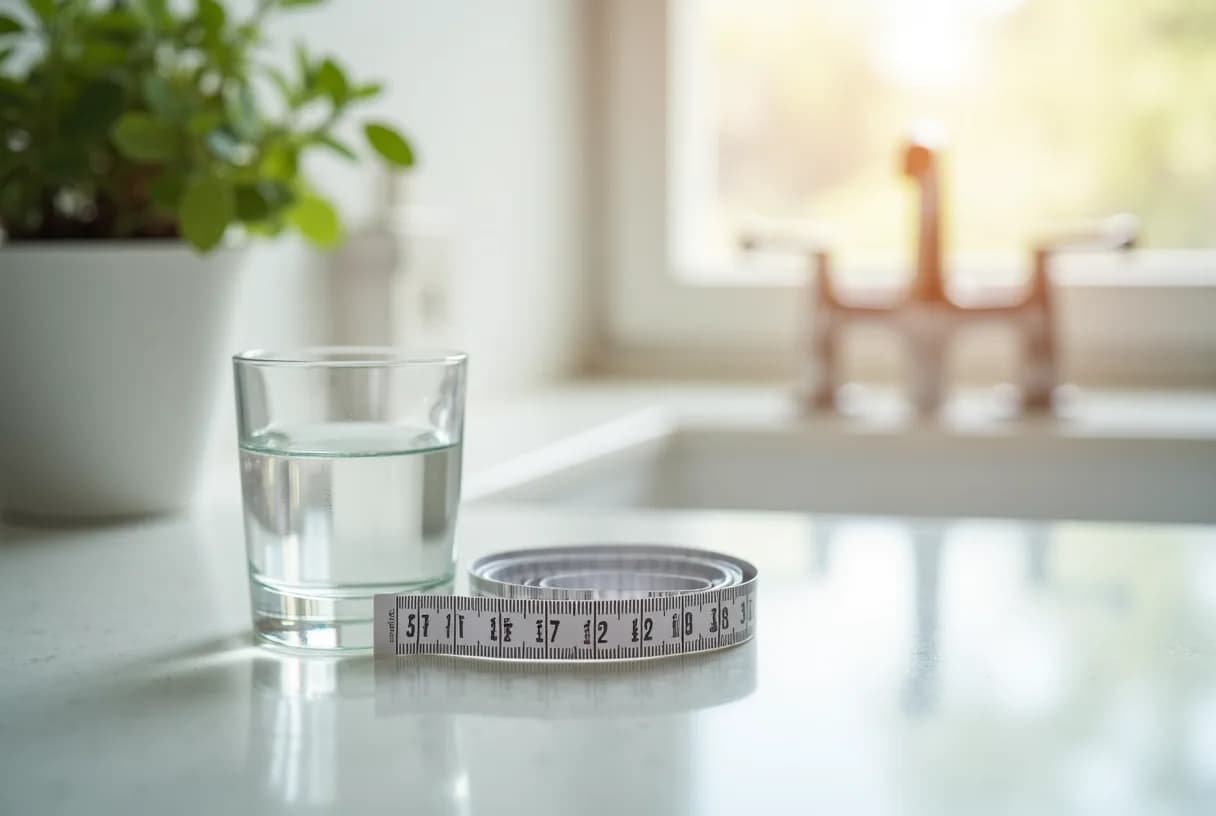
You do not need a lab to get a useful read. A cloth tape measure tells you more about metabolic risk than the scale does. Measure your waist against bare skin at the level of your navel (or the midpoint between the lowest rib and the top of the hip bone), at the end of a normal breath out. Do not suck in.
| Measure | Target for women | What it tells you |
|---|---|---|
| Waist circumference | Under 35 in (88 cm) | A simple proxy for visceral fat. At or above 35 in signals raised heart and diabetes risk, even at a "normal" weight. |
| Waist-to-height ratio | Under 0.5 (waist less than half your height) | The best low-cost central-fat measure. 0.5 to 0.59 = increased risk; 0.6 or above = high risk (NICE). |
| BMI | 18.5 to 24.9 is "normal" | Says nothing about where fat sits. You can have a normal BMI and high visceral fat. |
| Bathroom scale | No useful cutoff | Cannot separate fat from muscle, or visceral from subcutaneous. A poor guide to metabolic risk. |
| DEXA, CT or MRI | Clinician-ordered | Directly quantifies visceral fat. Most accurate, but rarely needed to take action. |
| Blood work (glucose/A1c, triglycerides, BP) | See lab targets | Shows the metabolic consequences of visceral fat, often the earliest warning sign. |
Two low-cost numbers do most of the work. A waist circumference of 35 inches (88 cm) or more in women signals raised cardiometabolic risk, per long-standing US National Institutes of Health guidance; women at or above that threshold have been shown to be roughly twice as likely to die of heart disease as those with much smaller waists, regardless of BMI. Even simpler is the waist-to-height ratio: keep your waist under half your height (a ratio below 0.5). The UK's NICE guideline treats 0.5 to 0.59 as increased risk and 0.6 or above as high risk. If you want a precise measurement, a DEXA scan, CT or MRI can quantify visceral fat directly, but most people do not need imaging to act on a tape measure. For how the same weight can mean very different things, see our explainer on what BMI does and doesn't tell women.
Why menopause drives visceral fat up
Before menopause, estrogen steers fat toward the hips and thighs, the "pear-shaped" gynoid pattern. As estrogen falls through perimenopause, storage shifts toward the abdomen, and more of it goes visceral. In one four-year longitudinal study that followed women through the transition, visceral fat rose about 11% as estradiol fell and FSH rose, while daily energy expenditure dropped. The redistribution can happen even when total weight is stable, which is why jeans get tight while the scale holds. This is distinct from the mostly cosmetic menopausal belly fat people notice first; here the concern is what is happening metabolically. We cover the broader shift in menopause weight gain.
What actually reduces visceral fat, graded honestly
Here is the good news buried in the biology: visceral fat is often the first fat mobilized when you lose weight, so it tends to respond faster than the subcutaneous fat you can see. You cannot choose where you lose it, but the levers below are what the evidence supports.
- Overall fat loss through sustained calorie balance (strong evidence). A modest, maintainable energy deficit from food quality and portion, not a crash diet, reliably shrinks visceral fat. Because the deficit has to be sustained, approaches you can keep for years beat any 30-day reset.
- Resistance training to protect muscle (strong evidence, especially in midlife). Muscle is metabolically valuable and it declines with age and menopause (see muscle loss in menopause). Lifting weights preserves lean mass while you lose fat and improves insulin sensitivity. Our guide to strength training for women covers where to start.
- Aerobic activity (good evidence). Regular moderate-to-vigorous exercise reduces visceral fat even when the scale barely moves, because you can trade fat for muscle at the same weight.
- Sleep, alcohol and stress (moderate evidence). Short sleep and heavy alcohol use are both associated with more central fat, and chronic stress with elevated cortisol favors abdominal storage. Protecting sleep and managing stress will not melt fat on their own, but they make the other levers work.
- Enough protein (good evidence). Adequate protein helps preserve muscle in a deficit and supports fullness; see protein needs for women.
- GLP-1 medications, where clinically indicated (strong, and clinician-led). Drugs such as semaglutide and tirzepatide reduce visceral fat substantially. In the SURMOUNT-1 body-composition substudy, tirzepatide cut visceral fat mass by about 40% versus 7% on placebo, with roughly three-quarters of the weight lost coming from fat. These are prescription medicines with real side effects and some lean-mass loss (a reason to pair them with resistance training and protein), and whether they are appropriate is a decision for you and a clinician, not a supplement you self-start. We cover this in GLP-1s for menopausal weight gain.
What doesn't work: detox teas, waist trainers and spot reduction
Plenty of products promise to "target belly fat." The evidence says they do not:
- You cannot spot-reduce. A 2021 systematic review of 13 controlled trials (1,158 people) found that targeted exercise does not preferentially burn fat over the working muscle. Crunches strengthen the muscle under the fat; they do not melt the fat on top of it.
- "Detox" teas and slimming supplements. No tea, berberine capsule or "fat-burner" has been shown to selectively remove visceral fat, and many detox teas simply contain laxatives. Supplements are not regulated like drugs, can interact with medications, and vary in what is actually in the bottle, so look for third-party testing (NSF or USP) and run anything new past a pharmacist, especially alongside prescription medicines.
- Waist trainers and "sweat" belts. These compress and dehydrate; they do nothing to the fat inside the abdominal wall.
When to see a doctor
Visceral fat is a reason for a check-up, not a crisis. Talk to a clinician if:
- Your waist is at or above 35 inches (88 cm), or your waist-to-height ratio is 0.5 or higher. Ask for a fasting glucose or A1c, a lipid panel and a blood pressure reading; you can keep track of results with our lab-results explainer.
- You have symptoms of high blood sugar, such as excessive thirst, frequent urination, blurred vision or unexplained fatigue.
- You have gained abdominal weight rapidly or unexpectedly, which occasionally signals a thyroid or hormonal cause worth ruling out.
- You are considering a GLP-1 medication or another prescription approach; that is a conversation for a clinician who can weigh your full history. Need one? Start with find care.
Two red flags are worth naming even though they sit outside the fat conversation: chest pain, pressure or breathlessness needs emergency care, and any bleeding after menopause should be evaluated promptly regardless of your weight.
The bottom line: stop weighing the problem and start measuring it. A tape measure around your waist, checked against your height, tells you more about your future health than the scale ever will, and the same everyday habits that shrink visceral fat are the ones that protect your heart through menopause.