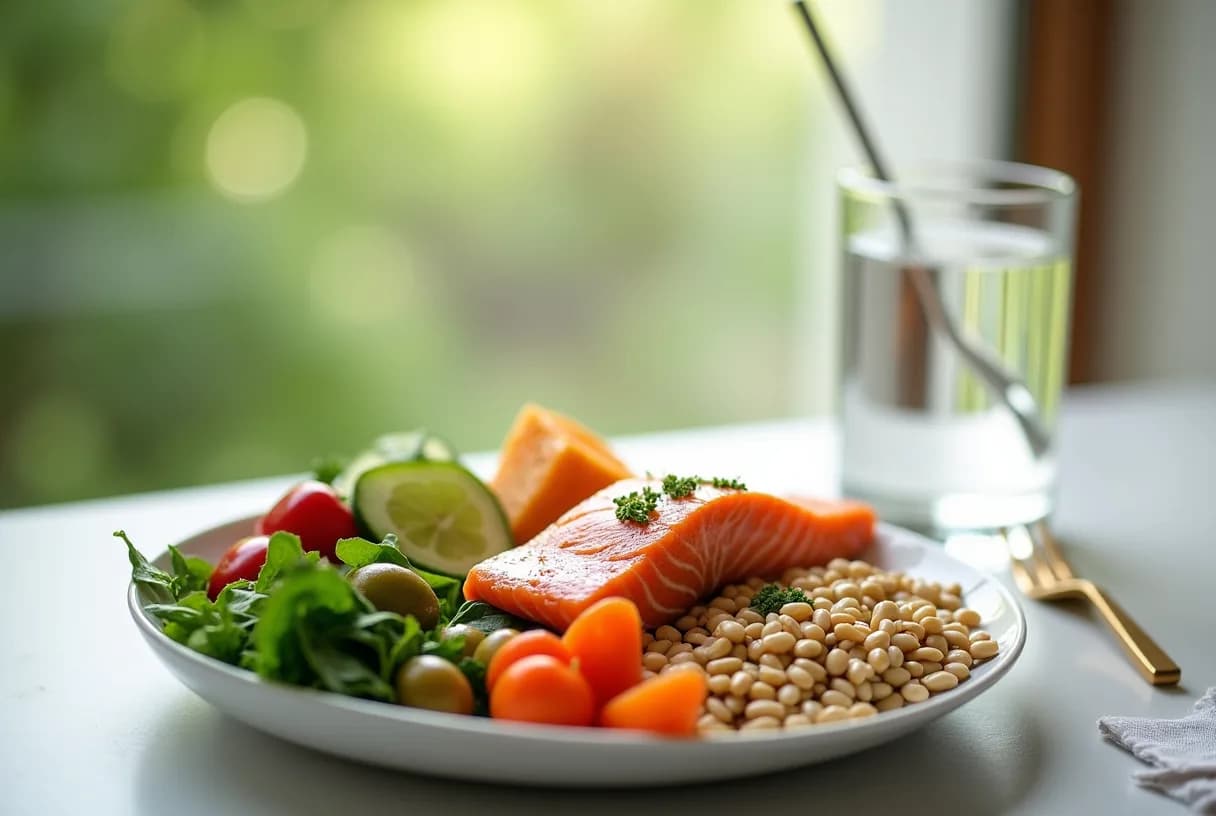
The foods that best lower and steady blood sugar are high-fiber plants, protein, and healthy fats — non-starchy vegetables, beans and lentils, whole intact grains, nuts, seeds, and berries. They work by slowing how fast carbohydrate turns into glucose, so you get a gentler rise and fewer crashes. Pairing carbs with protein or fat, choosing lower-glycemic swaps, and eating vegetables and protein before starch all blunt the after-meal spike. Food is a powerful lever, but it supports rather than replaces medication for diabetes.
There is no single "blood-sugar-lowering" superfood. What steadies glucose is a pattern: fiber and protein at most meals, fewer refined carbs and sugary drinks, and a few simple habits around how and when you eat. Below is what the evidence supports, and where it's weaker than the internet claims.
Which foods actually help steady blood sugar?
Every food and strategy in the table works through the same basic mechanism — it slows the speed at which carbohydrate reaches your bloodstream, or it crowds out the fast, refined carbs that spike it. Choose several to combine; the effects stack.
| Food or strategy | How it helps | Everyday examples |
|---|---|---|
| Soluble fiber | Forms a gel that slows glucose absorption and feeds gut bacteria | Oats, beans, lentils, chia, flax, apples, psyllium |
| Non-starchy vegetables | Very low in carbohydrate, high in fiber and water — fill the plate without spiking | Leafy greens, broccoli, peppers, zucchini, cauliflower, green beans |
| Legumes (beans, lentils, chickpeas) | Low-glycemic carbohydrate plus protein and fiber; lower post-meal glucose and, over months, A1c | Lentil soup, chickpeas, black beans, split peas |
| Protein | Slows stomach emptying, blunts the carb rise, and increases fullness | Eggs, fish, poultry, tofu, tempeh, Greek yogurt |
| Healthy fats | Slow digestion of a mixed meal so glucose arrives more gradually | Olive oil, nuts, seeds, avocado |
| Whole, intact grains | Fiber and grain structure raise glucose more slowly than refined grains | Steel-cut oats, barley, quinoa, bulgur, brown rice |
| Lower-GI swaps | Same meal, gentler curve — trade the fast carb for a slower one | Whole-grain for white bread; berries for juice; sweet potato with skin |
| Meal order (veggies and protein first) | Eating carbohydrate last lowers post-meal glucose and insulin | Salad and protein before the rice or bread |
| Vinegar with a meal | Modestly lowers post-meal glucose in several small studies | A tablespoon in salad dressing before a starchy meal |
| Movement after eating | Working muscles pull glucose out of the blood | A 10–15 minute walk after a meal |
Fiber is the through-line. Soluble fiber in particular slows digestion and softens the glucose curve, which is one reason whole oats, beans, and chia sit near the top of most lists — oats for women and chia seeds both deliver a meaningful soluble-fiber dose. If your diet is low in fiber, most people benefit from adding it through food first; a fiber supplement can help fill a gap but isn't a substitute for vegetables, beans, and whole grains.
How does the order you eat affect blood sugar?
Surprisingly, the sequence matters. In controlled studies, when people ate their vegetables and protein before the carbohydrate portion of a meal, their post-meal glucose and insulin were substantially lower than when they ate the same foods carb-first. The fiber, protein, and fat get a head start in the stomach and slow how quickly the starch is absorbed.
The practical version is simple: start with the salad or vegetables, move to the protein, and save the rice, bread, potato, or pasta for last. You don't have to be rigid about it — even loosely front-loading fiber and protein helps. Pairing is the same idea in one bite: an apple with peanut butter, crackers with cheese, or oatmeal with nuts and seeds produces a gentler rise than the carb alone.
How do you build a blood-sugar-steady plate?
The most durable framework — used by diabetes educators because it needs no counting — is the plate method. Picture a standard 9-inch plate:
- Fill half with non-starchy vegetables. Leafy greens, broccoli, peppers, tomatoes, cauliflower, green beans — as much variety and color as you like.
- Fill one quarter with protein. Fish, chicken, eggs, tofu, tempeh, or beans. This is your appetite and spike control.
- Fill one quarter with a high-fiber carbohydrate. Beans, lentils, whole intact grains, or a piece of fruit — a portion, not a pile.
- Add a little healthy fat. Olive oil, avocado, nuts, or seeds to slow digestion and add satiety.
- Drink water or unsweetened tea or coffee. Swapping sugary drinks and juice for water is one of the single biggest wins for blood sugar.
A few easy swaps do a lot of the work: choose whole-grain over refined, whole fruit over juice, plain yogurt over sweetened, and cook potatoes, rice, and pasta then cool them (the resistant starch that forms produces a gentler rise even after gentle reheating). Portion still matters — even a "good" carb raises glucose if the serving is large.
What about vinegar, cinnamon, and other blood-sugar "hacks"?
Some hold up better than others, and it's worth being honest about the difference:
- Vinegar: A tablespoon of vinegar with a carb-heavy meal modestly lowers the post-meal glucose spike in several small trials — a real but small effect, not a treatment. It's a reasonable, low-cost habit if you enjoy it; it won't offset a high-sugar diet.
- Cinnamon: Evidence is inconsistent and mostly unimpressive. It's fine as a flavorful way to sweeten oatmeal or yogurt without sugar, but don't count on it to move your numbers.
- Supplements and "cleanses": No pill, tea, or detox regimen reliably lowers blood sugar the way food pattern, movement, and (when needed) medication do. Be skeptical of anything promising dramatic drops, and check anything you take against a supplement scorecard before spending money.
The unglamorous levers — fiber, protein, fewer refined carbs, a walk after meals, adequate sleep, and managing stress — outperform every "hack." Even a short post-meal walk meaningfully lowers the glucose peak, which is part of why walking earns its place in a metabolic routine.
Does this support or replace diabetes treatment?
This is the honest caveat: food supports blood-sugar control; it does not replace medical care. For prediabetes and early type 2 diabetes, diet and activity can be genuinely powerful — many people lower their glucose and A1c substantially, and some return to a non-diabetic range. But if you have been prescribed medication such as metformin or insulin, do not start, stop, or change the dose on your own based on how you're eating. Diet changes can shift how much medication you need, and that has to be adjusted with your clinician — especially with insulin or sulfonylureas, where cutting carbs suddenly can cause dangerous low blood sugar. Use food as one tool alongside your prescribed treatment, not instead of it.
How blood sugar shifts in midlife and with PCOS
Hormones change the picture. Falling estrogen in perimenopause and menopause tends to reduce insulin sensitivity, so the same meal can spike glucose more than it did a decade earlier — one reason blood-sugar-steady eating matters more with age and often shows up as midsection weight gain. PCOS and insulin resistance travel together too, making fiber, protein, and lower-GI choices especially useful for many women. If you're tracking your own numbers, our blood-sugar-levels-by-age guide explains what fasting and post-meal readings mean, and the lab-results decoder helps you read an A1c or glucose result. For the bigger metabolic context, see how metabolism changes with age.
When should you see a doctor?
Food is a starting point, not a diagnosis. Talk to a clinician if you notice:
- Frequent thirst, urinating often, blurred vision, unusual fatigue, slow-healing cuts, or unexplained weight loss — possible signs of high blood sugar that warrant testing.
- Shakiness, sweating, confusion, or dizziness a few hours after eating, especially if it eases when you eat — this can signal reactive hypoglycemia and deserves evaluation rather than guesswork.
- A family history of diabetes, a prior gestational-diabetes pregnancy, PCOS, or being over 45 and never screened — ask about an A1c or fasting glucose test.
- Blood sugar that stays high despite eating well — or, if you're on diabetes medication, any uncertainty about how your food changes should affect your dose.
If you're building a broader plan, our weight and metabolism and nutrition sections cover the eating patterns, movement, and sleep habits that steady blood sugar over the long run — and a registered dietitian or diabetes educator can tailor any of this to your labs and medications.