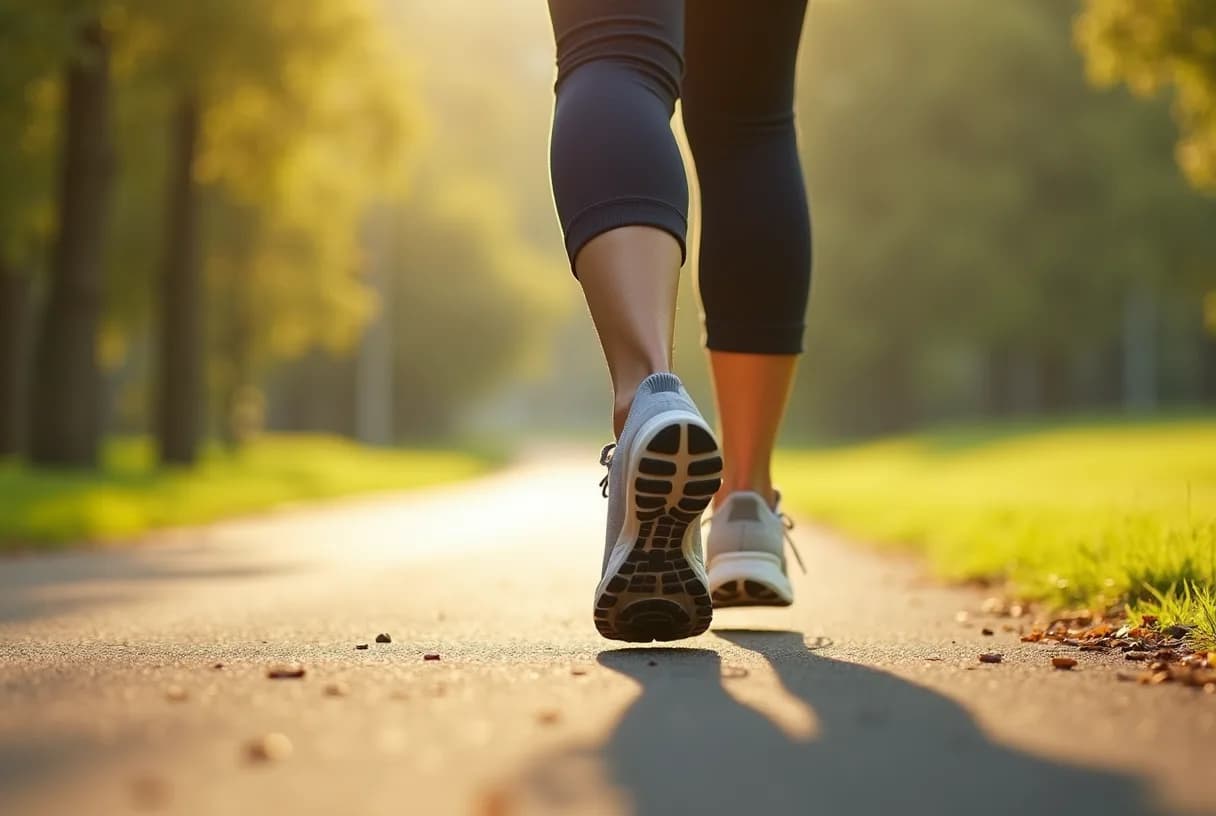
Yes, walking can help you lose weight, but rarely on its own and rarely as fast as the internet promises. Walking burns calories, improves how your body handles blood sugar, lifts your mood, and is easy enough to keep doing for years, which is what actually matters. The catch is that weight loss still comes down to overall energy balance, so what you eat and whether you build muscle shape your results just as much as your daily steps.
How walking actually affects your weight
Weight change follows a simple principle that is hard to live out: to lose fat, your body needs to use more energy than it takes in over time. Walking adds to the "energy out" side of that equation. A brisk walk burns real calories, and because it is gentle on your joints and doesn't leave you exhausted, most people can do it most days. That consistency is walking's quiet superpower. An intense workout you dread and skip burns fewer calories over a month than an easy walk you genuinely enjoy.
But walking also has effects that don't show up on the scale. It improves insulin sensitivity, meaning your muscles pull glucose out of your bloodstream more efficiently, which matters especially in midlife as this process naturally becomes less efficient. A short walk after meals can blunt the rise in blood sugar. Walking also lowers stress hormones and lifts mood, and a calmer, better-slept person tends to make steadier food choices. None of these are dramatic on their own. Together they tilt the odds in your favor.
Why walking alone often disappoints
Here is the honest part. Many people start walking, feel great, and see the scale barely move. A few things explain this. First, calorie burn from a single walk is smaller than fitness trackers suggest, and it is easy to "eat back" those calories without noticing, sometimes with a single snack. Second, the body is adaptive: as you get fitter, you burn slightly fewer calories doing the same walk, and you may unconsciously move less the rest of the day. Third, muscle burned as fuel during aggressive dieting lowers your resting metabolism, which is one reason strength training belongs alongside walking.
This is not a reason to skip walking. It is a reason to stop expecting walking to be a standalone weight-loss engine. Think of it as the reliable base of a broader routine rather than the whole plan.
Steps, pace, duration, and incline: what to aim for
You may have heard "10,000 steps." It is a fine goal, but it started as a marketing slogan, not a medical prescription. Research increasingly suggests meaningful health benefits appear well below that number, and more steps generally help up to a point. The best target is one you will actually hit: if you currently walk 3,000 steps, aiming for 5,000 to 7,000 is a bigger win than fixating on 10,000 and giving up.
General physical activity guidance suggests adults aim for at least 150 minutes of moderate-intensity activity per week, which brisk walking meets, plus muscle-strengthening on two or more days, according to the U.S. physical activity guidelines. For weight loss specifically, more may be needed. Here is how the variables you can adjust compare.
| Variable | What to do | Why it helps |
|---|---|---|
| Pace | Walk briskly enough that talking is possible but singing is not | Higher intensity burns more calories per minute |
| Duration | Extend walks gradually toward 30-60 minutes | More time under effort means more total calories |
| Incline | Add hills or a treadmill incline | Uphill work recruits more muscle and raises effort |
| Frequency | Walk most days rather than one long weekend session | Consistency and after-meal walks steady blood sugar |
| Load | Optional light backpack once you are conditioned | Modestly increases energy cost; add cautiously |
Pace is usually the highest-value lever. A brisk walk where your breathing deepens does far more than a slow stroll. Incline is a close second because hills turn an easy walk into genuine effort without needing to walk faster or longer. The American Heart Association highlights walking as one of the simplest ways to reach recommended activity levels.
The part that matters most: diet
You cannot reliably out-walk your fork. It is genuinely difficult to burn enough through walking to overcome a consistent calorie surplus from food. That is not a dig at walking; it is math. This is why the most effective approach pairs walking with modest, sustainable changes to what you eat, not a punishing diet.
Focus on changes you can keep: more protein and fiber to stay full, more vegetables, fewer sugary drinks, and portions that leave you satisfied rather than stuffed. A small, steady calorie reduction paired with daily walking is far more durable than crash dieting, which tends to backfire. The NHS healthy weight guidance and CDC advice on losing weight both emphasize slow, steady loss of roughly one to two pounds per week as the sustainable target.
Why strength training belongs alongside walking
Walking is aerobic exercise; it does little to build or preserve muscle. That gap matters. Muscle is metabolically active tissue, and preserving it while losing fat keeps your resting metabolism higher and your body stronger and more functional. This is especially important in midlife and after menopause, when muscle and bone are naturally more vulnerable to loss.
Adding two short strength sessions a week, using bodyweight, resistance bands, or weights, complements walking beautifully. Walking handles endurance, calorie burn, and blood sugar; strength work protects the muscle and bone that keep your metabolism and independence intact. The NIAMS guidance on exercise for bone health notes that weight-bearing and resistance exercise both support bone strength as we age.
Setting realistic expectations
If you start walking most days, eat a little more mindfully, and add some strength work, you can reasonably expect gradual fat loss, better energy, steadier blood sugar, improved mood, and clothes that fit differently, sometimes before the scale moves much. What you should not expect is rapid transformation from walking alone. Progress that is slow is progress that lasts. Muscle gain and water shifts can also mask fat loss on the scale, so track how you feel and how clothes fit, not just weight.
Staying safe as you ramp up
Walking is one of the safest forms of exercise, which is a big part of its appeal. Still, a few sensible cautions apply. Increase gradually: add time or intensity in small steps rather than jumping from inactivity to daily hour-long hill walks, which invites foot, ankle, and knee strain. Wear supportive shoes, stay hydrated, and warm up with a few minutes of easier walking.
Most importantly, if you have a heart condition, chest pain, dizziness, or you have been very inactive, talk with a clinician before significantly increasing intensity. This is standard, sensible advice, not alarmism. The Mayo Clinic guide to walking for fitness offers a good starting framework, and your own doctor can tailor it to your health history, medications, and joints. If new symptoms appear during exercise, stop and seek advice rather than pushing through.
The bottom line
Walking is not a weight-loss miracle, and any source promising otherwise is overselling it. What walking is, is one of the most sustainable, joint-friendly, mood-lifting, blood-sugar-steadying habits you can build, and a genuine contributor to a calorie deficit when paired with sensible eating and strength training. Its greatest strength is that you will keep doing it. Lace up, start where you are, build gradually, and let the consistency compound.