Ovulation itself lasts only about 12 to 24 hours — that's how long the egg survives and can be fertilized once your ovary releases it. But your chance of getting pregnant lasts far longer than a single day. The fertile window is about six days: the five days leading up to ovulation plus ovulation day. The reason is simple biology — sperm can live for several days inside the reproductive tract, so intercourse a few days before the egg is released can still result in pregnancy. In other words, the egg is the short-lived part; the sperm's staying power is what stretches the window open.
How long does ovulation actually last?
Ovulation is a single event: a mature egg is released from the ovary and swept into the fallopian tube. From that moment, the egg is viable for roughly 12 to 24 hours. If it isn't fertilized in that window, it breaks down and is reabsorbed, and your period follows about two weeks later.
So when people ask "how long does ovulation last," there are really two answers. The release-and-fertility of the egg lasts under a day. But the practical fertile window — the days when sex could lead to pregnancy — is much wider. Confusing the two is the single most common reason people mistime trying to conceive (or wrongly assume they're "safe").
What is the fertile window, and why is it about six days?
Your fertile window is the stretch of the cycle when pregnancy is possible. It runs from about five days before ovulation through ovulation day — roughly six days total. Two facts define its edges:
- Sperm survival (the front edge): Healthy sperm can survive up to about five days in fertile cervical mucus, so they can be waiting when the egg arrives.
- Egg survival (the back edge): The egg only lasts 12–24 hours, so the window closes fast once ovulation happens.
Not all six days are equal. The most fertile days are the two to three days right before ovulation, plus ovulation day itself. Intercourse then gives sperm the best chance of already being in place. By the day after ovulation, the odds drop sharply.
When does ovulation happen in your cycle?
A stubborn myth says everyone ovulates on "day 14." That's only a rough average for a textbook 28-day cycle. The more reliable rule is that ovulation usually happens about 14 days before your next period, because the second half of the cycle (the luteal phase) is fairly consistent — around 12 to 14 days for most people.
What that means in practice:
- A 28-day cycle → ovulation around day 14.
- A 35-day cycle → ovulation closer to day 21.
- A 24-day cycle → ovulation nearer day 10.
The first half of the cycle (the follicular phase) is where most of the variation lives, which is why cycle length shifts the timing of ovulation more than the length of your period does. If you want to see how the phases connect, our guide to the menstrual cycle phases walks through each stage, and the interactive menstrual cycle explorer lets you map ovulation onto your own cycle length.
How can you tell you're ovulating?
No single sign is perfect, but stacking two or three gives a clear picture. Some methods predict ovulation before it happens (useful for timing sex); others only confirm it after the fact (useful for spotting your pattern over months).
| Method | What it tells you | Timing |
|---|---|---|
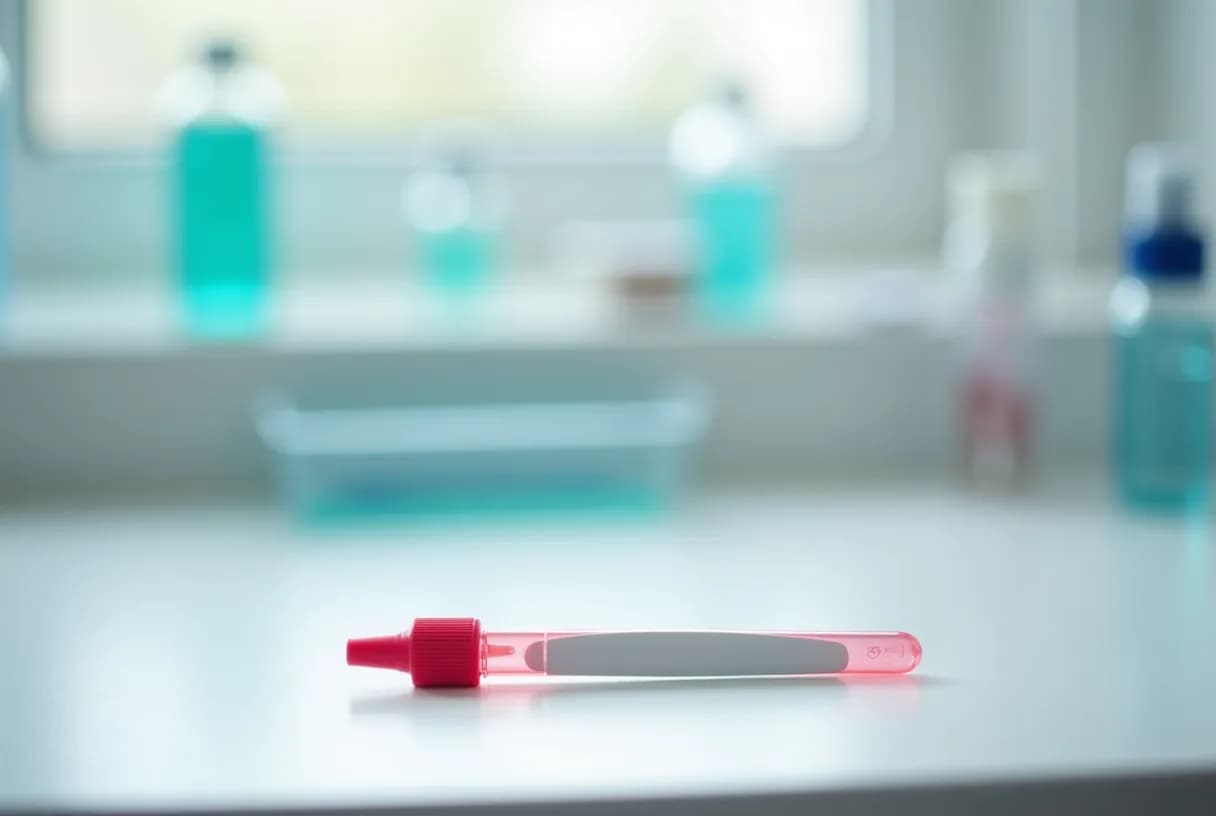
| LH ovulation test (OPK) | Detects the luteinizing hormone surge that triggers egg release. | Turns positive ~24–36 hours before ovulation. Predictive — flags your one to two most fertile days. |
| Cervical mucus | Rising estrogen makes mucus clear, slippery and stretchy, like raw egg white. | Peaks in the ~2–3 days before ovulation. Predictive, in real time, and free. |
| Basal body temperature (BBT) | A small sustained rise (~0.3–0.6°F) driven by progesterone shows an egg was released. | Confirms ovulation after it happens — best for learning your pattern, not for last-minute timing. |
| Cycle tracking / calendar | Estimates the window from your average cycle length (ovulation ~14 days before the next period). | A rough backdrop — least precise, and unreliable if your cycles vary. |
| Ovulation pain (mittelschmerz) | A one-sided lower-pelvic twinge some people feel as the egg releases. | Around ovulation, but only about 1 in 5 notice it — unreliable on its own. |
| Cervical position | The cervix tends to sit higher, softer and more open near ovulation. | Around the fertile window; subjective and takes practice to read. |
Cervical mucus is worth learning to read because it's free and changes in a predictable order: dry or sticky just after your period, then creamy, then clear, wet and stretchy at peak fertility, then thick or dry again after ovulation. You can log these signs alongside test results in our period and ovulation tracker to see the pattern build over a few cycles.
Trying to conceive vs. trying to avoid pregnancy
If you're trying to conceive
Aim for the two to three days before ovulation and ovulation day — that's the peak. Practical tips:
- Have sex every 1–2 days across the fertile window rather than saving up for one "perfect" day.
- Don't wait for your temperature to rise. By the time BBT jumps, ovulation has already happened and the window is closing. Use LH tests and mucus to get ahead of it.
- A positive OPK plus egg-white mucus is a strong "go" signal for the next couple of days.
- Preconception nutrition matters before you conceive, not just after — many clinicians suggest a folate-containing prenatal or women's multivitamin in the months you're trying. Check specifics with your own clinician.
If you're trying to avoid pregnancy
Fertility-awareness-based methods (FABMs) use these same signs to identify — and then avoid — the fertile window. They can work, but effectiveness varies widely by method and by how carefully and consistently you use it; typical, real-world use is far less forgiving than perfect use. A few honest caveats:
- Because sperm can survive up to five days, treat the whole fertile window plus a buffer as unsafe, not just ovulation day.
- Methods that combine signals (mucus and temperature — the "symptothermal" approach) are more reliable than calendar math alone.
- If your cycles are irregular, calendar-only prediction is especially risky.
- If you want to rely on an FABM for contraception, learning it from a certified instructor or clinician dramatically improves your odds of using it correctly.
How do age and perimenopause change ovulation?
Ovulation isn't guaranteed every cycle, and it becomes less predictable with age. Occasional cycles without ovulation (anovulatory cycles) are normal — you can even have a period-like bleed without releasing an egg. These become more common in the years approaching menopause.
Two shifts matter most:
- Fertility declines with age. Both egg quantity and quality fall, with a steeper drop after the mid-30s and again after 40.
- Perimenopause scrambles the signals. Cycles first shorten, then lengthen and turn irregular, so "14 days before your next period" stops being predictable when you can't predict the next period. LH levels also rise and swing, which means ovulation predictor kits can show false positives even in cycles where you don't ovulate — one reason kits are less trustworthy in your 40s.
Importantly, irregular does not mean infertile. You can still ovulate — and conceive — until you've gone a full 12 months without a period, which is the definition of menopause. If you're avoiding pregnancy, contraception still matters through perimenopause. If your cycles have become erratic, our guide to irregular periods in perimenopause explains what's typical and what's worth flagging, and the wider menopause section covers the transition in depth.
When to see a doctor
Talk with a healthcare professional if:
- You've been trying to conceive for 12 months without success (under 35), or 6 months (35 or older) — or sooner if you already know of a fertility issue.
- You see no signs of ovulation across several cycles despite tracking.
- Your cycles are consistently shorter than 21 days or longer than 35 days, or wildly irregular.
- Your periods stop for three or more months and you're not pregnant.
- You have symptoms that could point to a hormonal cause such as PCOS or a thyroid issue — irregular cycles, unusual hair growth or acne, or fatigue and weight changes. Our PCOS guide is a useful starting point, and the thyroid health section covers cycle-related thyroid symptoms.
- Ovulation pain is severe, one-sided and lasting rather than a brief mild twinge.
None of these is a diagnosis — they're signals worth a conversation. A clinician can check whether you're ovulating with simple bloodwork and, if needed, look for treatable causes.
The bottom line
Ovulation lasts under a day, but your fertile window lasts about six — and the difference is entirely about how long sperm can wait for the egg. Whether you're trying to conceive or trying not to, the goal is the same: learn to spot ovulation before it happens, using a couple of signs together rather than one. For more on how the whole cycle fits together, explore the menstrual health hub.