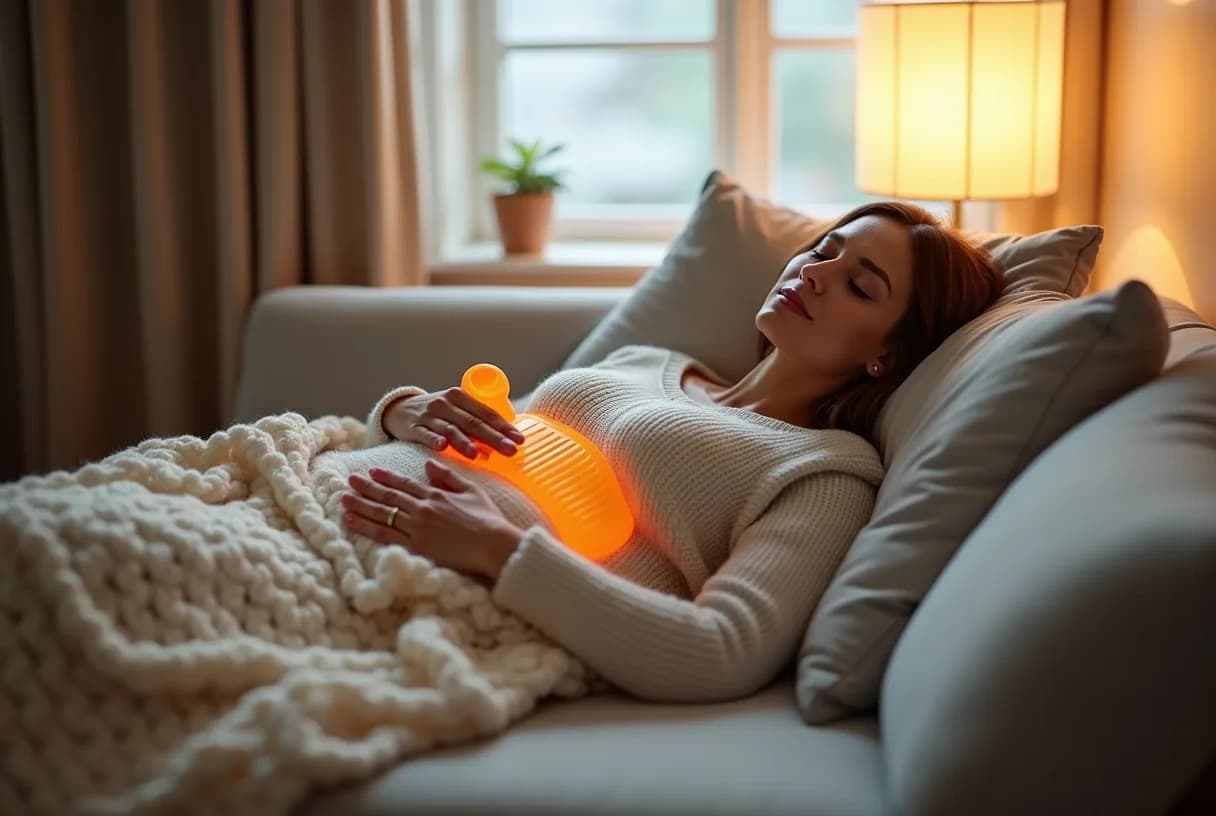
The fastest, best-supported menstrual cramp relief is heat plus a well-timed over-the-counter anti-inflammatory (NSAID). Put a heating pad or hot water bottle on your lower belly and, if NSAIDs are right for you, take ibuprofen or naproxen at the first sign of cramps instead of waiting for the pain to peak. Randomized trials show local heat can ease cramps about as well as ibuprofen, and both work by turning down the prostaglandins that make your uterus contract. Gentle movement, a TENS unit, and a few supplements with modest evidence can help on top of that.
Why do menstrual cramps happen?
Just before your period, the lining of your uterus releases hormone-like chemicals called prostaglandins. These trigger the muscular uterine wall to contract and squeeze the lining out. Higher prostaglandin levels mean stronger, more painful contractions — and they can briefly cut off blood flow to the muscle, which is part of why cramps can feel like a deep, gripping ache. Prostaglandins also explain the "package deal" of period symptoms: the same chemicals can cause nausea, loose stools, headache, and lightheadedness.
Cramps with no underlying disease are called primary dysmenorrhea. They usually start within a year or two of your first period, arrive with or just before bleeding, and last one to three days. When cramps are caused by a condition such as endometriosis or adenomyosis, that's secondary dysmenorrhea — and it tends to behave differently (more on the red flags below). For the bigger picture on painful periods, see our companion guide to period pain and how it fits into your menstrual cycle phases.
What actually works for cramp relief — and how fast?
Here's the honest scorecard. "How fast" is roughly how quickly you'll feel a difference; "evidence" reflects how strong the research is, not a guarantee it'll work for you.
| Approach | How fast | What the evidence shows | How to use it well |
|---|---|---|---|
| Heat (heating pad, hot water bottle, heat wrap) | Minutes to ~30 min | Strong. Trials found continuous low-level heat on the lower abdomen relieved cramps about as well as ibuprofen, and heat plus an NSAID beat either alone. | Aim for comfortably warm (not scalding) on your lower belly or lower back; a stick-on heat wrap lets you stay mobile. |
| NSAIDs (ibuprofen, naproxen) | 30–60 min | Strong. NSAIDs block prostaglandins and consistently reduce cramp pain better than placebo or acetaminophen. | Start at the first twinge or first day of bleeding, take with food, and use the lowest effective label dose. Follow the package and ask a pharmacist if you have stomach, kidney, asthma, or bleeding concerns. |
| TENS (transcutaneous electrical nerve stimulation) | During use | Moderate. High-frequency TENS reduces cramp pain for many users; it's drug-free and can be layered with heat. | Place pads on the lower abdomen or back per the device instructions; use during a flare. |
| Magnesium | Weeks (daily use) | Limited but promising. Small studies suggest daily magnesium may lower prostaglandins and ease cramps over a cycle or two. | A preventive, not a rescue. Take daily; see our best time to take magnesium guide. |
| Omega-3 (fish oil) | Weeks (daily use) | Limited. Several trials report lower menstrual pain and less need for pain relievers with regular omega-3. | Take daily with food for at least one to two cycles before judging it. |
| Movement / exercise | During and after; benefit builds over weeks | Moderate. Reviews find regular aerobic or stretching exercise reduces cramp intensity. | Light walking, yoga, or stretching during your period; consistent activity across the month helps most. |
Fast relief tonight: a step-by-step plan
If you're hurting right now, stack the fastest-acting options in this order:
- Heat first. Get a heating pad, hot water bottle, or heat wrap onto your lower belly or lower back — this is the quickest non-drug lever you have.
- Consider an NSAID early. If ibuprofen or naproxen is appropriate for you, taking it sooner rather than later gives it the best chance to get ahead of the prostaglandins. Take it with food.
- Change position. Curl onto your side with knees to your chest, or try a child's-pose stretch — both take pressure off the lower abdomen.
- Move gently. A short slow walk or a few minutes of easy stretching can loosen a cramping uterus more than lying rigid.
- Add a TENS unit if you have one. It stacks safely with heat and pain relievers.
- Hydrate and slow your breathing. Warm fluids and long, slow exhales won't cure a cramp, but they calm the "everything hurts" spiral and ease the nausea that rides along with prostaglandins.
Curious how long a given remedy needs before it's fair to judge? Our how long until it works tool sets realistic timelines for heat, NSAIDs, and supplements.
The NSAID timing trick: why "start early" matters
NSAIDs don't just mask pain — they stop your body from making new prostaglandins. That's why the timing is the trick: once prostaglandins are already flooding your system and cramps have peaked, you're playing catch-up. Many people get noticeably better relief when they begin at the very first sign of cramps or bleeding, and some clinicians suggest starting a day before your period is due if your cycle is predictable. A period and ovulation tracker makes that timing far easier by flagging when your period is likely to arrive.
Important: this guide can't tell you whether to start or stop any medication, or at what dose. Read the label, respect the maximums, and check with a pharmacist or clinician if you have a health condition, take other medicines, or find you need pain relievers every single cycle.
Do supplements really help period cramps?
Some do, modestly — and none work overnight. Think of them as prevention you build over weeks, not a rescue for tonight.
- Magnesium may lower prostaglandin activity and relax muscle; the evidence is limited but encouraging. Forms and timing matter, so start with our best time to take magnesium guide and our vetted best magnesium for women roundup.
- Omega-3 (fish oil) has several small trials showing less menstrual pain and lower reliance on pain relievers.
- Vitamin B1 (thiamine) reduced cramp severity in an older large trial; evidence is thin but the safety profile is reassuring.
Supplements aren't regulated like medicines, quality varies, and a few interact with prescriptions — so bring anything new to your clinician or pharmacist first. To compare products on evidence rather than marketing, run them through our supplement scorecard, and browse the wider supplements library or our buyer's guides for context.
Movement, sleep, and diet: the quieter fixes
These won't stop a cramp in ten minutes, but they lower your baseline pain month to month.
- Move regularly. Aerobic exercise, yoga, and stretching all show benefit in reviews — and gentle movement during your period usually helps rather than hurts.
- Protect your sleep. Poor sleep amplifies pain sensitivity; a consistent schedule around your period pays off.
- Eat anti-inflammatory. Diets richer in vegetables, fruit, whole grains, and omega-3 fats — and lighter on ultra-processed food, excess salt, and alcohol — are linked to less cramping. Staying hydrated can ease the bloating that makes cramps feel worse.
Common myths about period cramps
- "Cramps are just in your head." No — they're a measurable prostaglandin-driven muscle response.
- "Heat is an old wives' tale." Heat is one of the best-evidenced options there is, rivaling ibuprofen in head-to-head trials.
- "You should rest completely and not move." Gentle movement generally eases cramps; lying rigid often doesn't help.
- "Severe pain every month is just normal." Common isn't the same as normal. Pain that disrupts your life or shrugs off NSAIDs and heat deserves a workup.
- "Nothing can be done besides the pill." Hormonal options are one effective route, but heat, NSAIDs, TENS, exercise, and supplements all have a place — and the right plan is often a combination.
When are cramps NOT normal? Red flags and when to see a doctor
Most cramps are primary dysmenorrhea and respond to the steps above. But cramps can also be a signal. See a clinician if you notice any of the following:
- Pain severe enough to regularly keep you from work, school, or normal life despite NSAIDs and heat.
- Cramps that are getting worse over the years rather than staying the same or easing.
- Pain outside your period — during sex, bowel movements, urination, or around ovulation.
- Very heavy bleeding, soaking through a pad or tampon every hour or two, or passing large clots (see heavy periods and period blood clots).
- A new or sudden change in your usual cramp pattern after years of mild periods.
- Cramps with fever, unusual vaginal discharge, or pain when you pee — which can point to infection.
- Painful periods alongside trouble getting pregnant.
These patterns can be signs of endometriosis (tissue like the uterine lining growing outside the uterus), adenomyosis (that tissue growing into the uterine muscle — often heavy, worsening cramps; see our adenomyosis guide), fibroids, or pelvic infection. We can't diagnose you here, but a clinician can — and these conditions are far more treatable when caught early. If your pain sits deeper in the pelvis or feels different from typical cramps, our guide to pelvic pain can help you describe it. And because cramps often travel with mood and PMS symptoms, our PMS and PMDD guide is worth a look too.
Bottom line: reach for heat and, if appropriate, a well-timed NSAID first; layer in movement, TENS, and evidence-backed supplements over time; and treat cramps that are severe, worsening, or "not like you" as a reason to be seen — not something to endure. Explore more in our menstrual health hub.