Perimenopause is the years-long transition leading up to menopause, when estrogen and progesterone swing unpredictably rather than simply fade. A thoughtful perimenopause diet won't stop the change, but it can soften everyday symptoms and quietly protect your bones, heart, and metabolism for the decades ahead. This guide — part of our complete guide to menopause — sticks to what the evidence supports, without the fads.
Why a perimenopause diet is its own thing
Eating advice for the transition overlaps with the general menopause diet, but the perimenopausal years have their own quirks. Estrogen doesn't drop in a straight line here — it lurches up and down, which is why perimenopause symptoms tend to come and go. A few things set this stage apart:
- You're usually still having periods. Cycles can become heavier or closer together (see irregular periods in perimenopause), and heavy bleeding can quietly deplete iron.
- Your metabolism is starting to shift. Many women become somewhat more prone to insulin resistance and to gaining weight around the middle, sometimes before any other change is obvious.
- It's a banking window. Bone and muscle loss accelerate around the final period, so the years before it are your best chance to build and defend both.
The foundation: a Mediterranean-style pattern
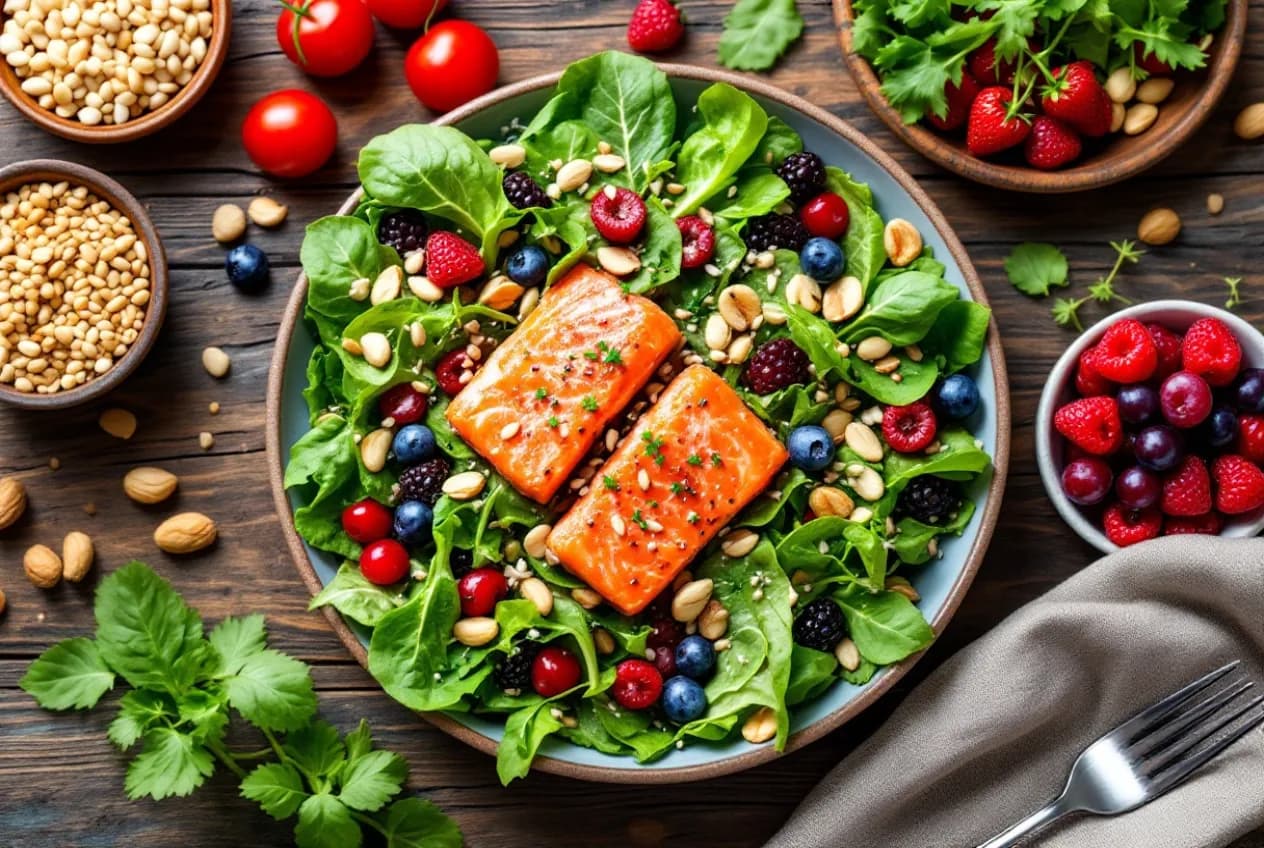
If you change one thing, make it the overall shape of your plate. A Mediterranean-style pattern — plenty of vegetables and fruit, whole grains, legumes, fish, nuts, seeds, and olive oil, with less red and processed meat — has the strongest and most consistent evidence for this stage of life.[5] It supports heart health (cardiovascular risk climbs as estrogen falls), helps steady weight and blood sugar, and in some studies is linked to fewer or milder hot flashes.[6] Just as important, it is a pattern you can live with for years rather than a restrictive diet you abandon in a month. Think of it as a flexible direction to lean toward, not a rigid plan to follow perfectly.
What to prioritise in a perimenopause diet
Within that pattern, a handful of nutrients earn extra attention during the transition:
| Nutrient | Why it matters in perimenopause | Good sources |
|---|---|---|
| Protein | Preserves muscle, which starts to decline and protects metabolism, strength, and bone | Fish, poultry, eggs, dairy, beans, lentils, tofu |
| Calcium + vitamin D | Bone loss speeds up near the final period; both nutrients support bone strength | Dairy, fortified plant milks, leafy greens; sunlight or a supplement for vitamin D |
| Fibre & whole grains | Steady blood sugar, cholesterol, appetite, and gut health | Vegetables, fruit, beans, oats, whole grains |
| Iron (if periods are heavy) | Heavy or frequent bleeding can lower iron and leave you tired | Lean red meat, beans, lentils, fortified cereals, leafy greens |
| Healthy fats (omega-3) | Support heart health and, possibly, mood | Oily fish, walnuts, flaxseed, olive oil |
| Phytoestrogens | Plant compounds with modest evidence for easing hot flashes | Soy, edamame, tofu, tempeh, flaxseed |
A useful habit is to include a serving of protein at each meal rather than saving it all for dinner; needs tend to rise a little with age, though exact targets are debated and best personalised with a clinician or dietitian. For bone, general guidance puts calcium at roughly 1,000-1,200 mg a day and vitamin D at about 600-800 IU (15-20 micrograms) for women in this age range, though your own target depends on your diet, sun exposure, and any bone concerns — food first where you can, with a supplement only to fill a genuine gap.[2] Building fibre up gradually and drinking enough fluid helps your gut adjust and can ease the bloating that tends to come and go in these years. If your periods are heavy it is worth keeping an eye on iron, and on vitamin B12 if you eat little or no meat — a clinician can check your levels rather than leaving you to guess.
Phytoestrogen foods: worth a try, not a cure
Phytoestrogens are plant compounds that act weakly like estrogen in the body. Soy foods and flaxseed are the best-studied, and the evidence for easing hot flashes is real but modest and mixed — some women notice a difference, many don't.[3] Whole-food sources such as edamame, tofu, tempeh, and ground flaxseed are a sensible, nutritious place to start; you can read more in our guide to phytoestrogen foods. Concentrated soy or isoflavone supplements are a different question, and anyone with a history of hormone-sensitive cancer should talk to a clinician before using them.
What to limit — and what to simply time better
You don't need to ban anything. The goal is to shift the balance and notice your own triggers, because they vary a lot from person to person.
- Alcohol — a common trigger for hot flashes and night sweats that also fragments sleep, adds empty calories, and raises breast-cancer risk.[4] If you drink, keep it modest and watch how it affects your nights.
- Caffeine — for some women it worsens flashes and, later in the day, sleep. If your rest is already fragile, see whether an earlier cut-off helps; our guide to sleep problems in menopause has more.
- Added sugar and refined carbs — spike and crash blood sugar, which can amplify energy dips and cravings and make midsection weight easier to gain.
- Ultra-processed foods and excess salt — linked to weight gain and higher blood pressure, both of which matter more as heart risk rises.
Building a perimenopause-friendly plate
Nutrients are easier to act on when they become a habit rather than a daily calculation.
A simple plate template
- Fill about half your plate with vegetables or fruit.
- Add a palm-sized serving of protein at each meal to reach your daily needs.
- Choose a whole-grain or legume-based carbohydrate over a refined one.
- Include a little healthy fat — olive oil, nuts, seeds, or oily fish.
Small tweaks that pay off
- Front-load protein at breakfast to steady appetite and blood sugar through the day.
- Keep flax or soy foods on your regular rotation if you're testing them for flashes.
- Batch-cook beans, grains, and roasted vegetables so the easy choice is also the healthy one on tired evenings.
Diet is one lever, not the whole answer
Food works best alongside the rest of your routine. Regular strength training is the natural partner to a higher-protein diet — together they defend the muscle and bone you're trying to bank — while good sleep and stress management make hot flashes and cravings easier to handle. A perimenopause diet also does double duty for your heart health, which deserves attention as estrogen's protective effect wanes. Supplements are a separate decision and rarely a substitute for real food. And if symptoms are disrupting your life, effective medical options exist too, from hormone therapy to non-hormonal medicines; these carry both benefits and risks, are highly individual, and are best weighed with a clinician rather than started or stopped on your own.
When to check in with a clinician or dietitian
Diet is self-directed, but some situations call for professional input. Consider reaching out if:
- Your periods are very heavy, last longer than a week, come closer than three weeks apart, or you bleed after sex or between periods — this should always be evaluated.
- You feel persistently exhausted, which can signal low iron or another treatable cause.
- You're managing diabetes, high cholesterol, high blood pressure, or osteoporosis and want an eating plan tailored to it.
- You'd like a bone-health check or help reaching a healthy weight in a sustainable way.
A registered dietitian can turn these principles into a plan that fits your life, and your GP or a menopause specialist can rule out other causes for symptoms that food alone isn't fixing.