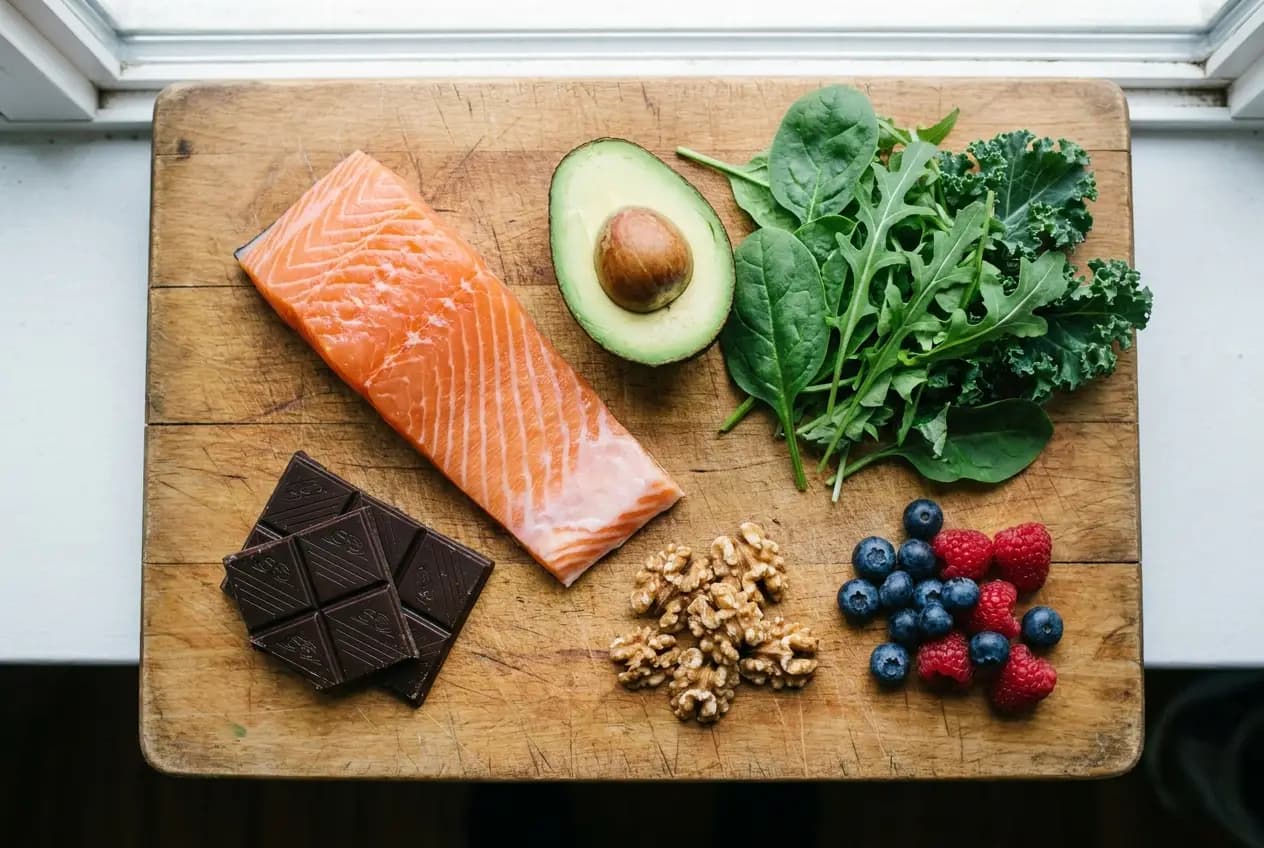
Search "foods that lower cortisol" and you will find dramatic promises: a smoothie that "flushes" stress hormones, a "cortisol cocktail" that resets your body by Friday. The honest answer is gentler and more useful. No single food meaningfully drops your cortisol, but the overall way you eat can genuinely help your body cope with stress — and that is what indirectly supports a healthier cortisol rhythm.
The honest headline: no single food "lowers" cortisol
Cortisol is a vital hormone with a natural daily rhythm, and your body tightly self-regulates it (the basics are covered in our cortisol glossary entry and what is cortisol). You cannot "detox" or "flush" it with a drink — that idea is firmly in myth territory. The viral "cortisol cocktail" (usually coconut water, citrus and salt) is mostly hydration and electrolytes. It will not harm most people, but there is no good evidence it lowers cortisol.
It is also worth remembering that symptoms often blamed on "high cortisol" — fatigue, weight changes, poor sleep, low mood — are nonspecific and overlap with stress, perimenopause, thyroid problems and anxiety. Food can support how you feel, but it is not a test or a cure.
The real mechanism: steady blood sugar and less inflammation
Here is the part that is actually evidence-based. Two things food can influence are blood sugar control and inflammation — and both interact with your stress-response system.
- Blood-sugar swings act like a stressor. Big spikes and crashes (often from refined carbs and sugary drinks on an empty stomach) can trigger the body's stress response. Eating in a way that keeps blood sugar steadier gives your system fewer of those small alarms.
- Chronic inflammation and stress feed each other. An overall anti-inflammatory, balanced diet supports a body that is better equipped to handle stress, rather than adding to its load.
So the goal is not an "anti cortisol diet" of magic foods. It is a steady, nourishing eating pattern that takes pressure off your body.
The eating patterns with the best evidence
When people ask what foods reduce cortisol, the strongest answer is a pattern, not a product.
A Mediterranean-style diet
A Mediterranean-style way of eating — vegetables, fruit, whole grains, legumes, olive oil, nuts and fish — is among the most studied anti-inflammatory patterns, and it overlaps strongly with the best diet for menopause. It is a sensible foundation for a "cortisol diet" precisely because it is balanced rather than extreme.
Enough protein and fibre
Including protein and fibre at meals slows digestion and blunts blood-sugar spikes, which helps you feel fuller and steadier. Think beans and lentils, eggs, fish, yoghurt, plus vegetables, oats and whole grains.
Regular meals — not crash diets
This one surprises people: severe under-eating can raise cortisol. The evidence is strongest for fasting and very-low-calorie crash diets, which can act as physiological stressors and nudge cortisol up; moderate, sustainable calorie reduction shows much weaker and mixed effects. Aggressive very-low-carb plans may add to that stress for some people, though the evidence here is less clear. The practical takeaway is simple: regular, adequate meals are usually kinder to your stress system than extreme restriction.
Omega-3 sources
Oily fish (salmon, sardines, mackerel) and plant sources like walnuts, chia and flaxseed provide omega-3 fats, which fit the anti-inflammatory pattern. Evidence on omega-3s and cortisol specifically is limited and mixed, so treat them as part of a healthy diet, not a cortisol cure.
Magnesium-rich foods
Magnesium is involved in the stress response, and many people fall short. Food sources include leafy greens, nuts, seeds, beans, whole grains and a little dark chocolate. For more on this nutrient — and the caveats around supplements — see magnesium for menopause.
What to limit: caffeine, alcohol and added sugar
What you cut back on matters as much as what you add.
- Excess caffeine can raise cortisol and disrupt sleep, which compounds stress. You do not have to quit; watch the total, and avoid it late in the day.
- Alcohol fragments sleep and can interfere with stress regulation, so keeping it modest helps.
- Added sugar and refined carbs drive the blood-sugar swings described above. Reducing sugary drinks and snacks is one of the more practical changes you can make.
A brief gut-brain note
Your gut and brain communicate constantly, and a fibre-rich, diverse diet that feeds beneficial gut bacteria is an emerging area of stress research. The science is young and far from settled, so view it as another reason to eat plenty of plants — not as a precise cortisol lever.
Foods to favour and foods to limit
| Favour (most days) | Limit (smaller amounts) |
|---|---|
| Vegetables and fruit | Sugary drinks and juice |
| Whole grains and oats | Refined carbs and white bread |
| Beans, lentils, nuts and seeds | Highly processed snacks |
| Oily fish and other lean protein | Excess caffeine, especially late |
| Olive oil and leafy greens (magnesium) | Regular or heavy alcohol |
| Yoghurt and other fermented foods | Skipping meals / crash diets |
Notice the overlap with general healthy eating. That is the point: a cortisol-friendly plate is just a balanced one.
How this fits the bigger picture
Diet is one foundation among several. Sleep, movement and stress management usually matter at least as much — sometimes more. Food works best alongside the basics covered in how to lower cortisol, cortisol and sleep and regular exercise. If you are in midlife, the shifts described in cortisol and menopause add useful context too. And before reaching for capsules, read our honest take on cortisol supplements and ashwagandha — the evidence is limited and there are real safety caveats.
One firm caution: avoid extreme "cortisol detox" or "cortisol reset" diets. Severe restriction is more likely to stress your body than soothe it.
When to seek medical care
This is general nutrition guidance, not personalised medical advice. For a plan tailored to you — especially if you have diabetes or prediabetes, are pregnant, take medication, or have a history of disordered eating — speak with a doctor or registered dietitian.
See a clinician promptly if you have symptoms that worry you rather than assuming they are a "cortisol" problem. Genuine cortisol disorders are uncommon but serious, and only a clinician can diagnose them with proper tests. Get medical advice if you notice:
- Unexplained weight gain or loss, a rounded face, or purple stretch marks (see Cushing's syndrome)
- Persistent fatigue, dizziness, salt cravings, or darkening skin (which can point to adrenal problems)
- Symptoms that overlap with the thyroid, perimenopause or anxiety — these deserve a proper assessment rather than a guess
"Adrenal fatigue" is not a recognised medical diagnosis, so be wary of programmes that promise to fix it with food or supplements. A balanced diet helps your whole body, including how you handle stress — but lasting symptoms are a reason to get checked, not to chase another viral drink.